
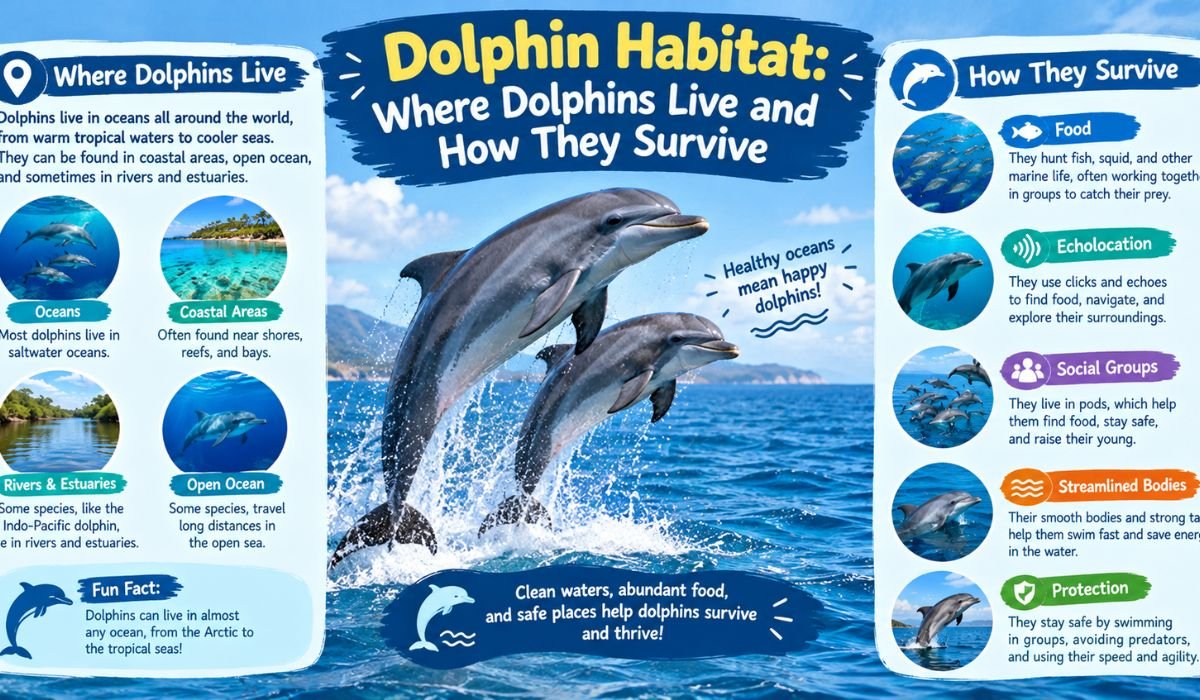
Dolphins are highly intelligent marine mammals found in oceans, coastal waters, rivers, and estuaries around the world. Their habitats vary depending on the species, with some dolphins preferring warm tropical seas while others live in cooler temperate waters. Understanding dolphin habitat helps explain how these remarkable animals find food, avoid predators, communicate and survive in different aquatic environments.
What Is a Dolphin Habitat?
A dolphin habitat is the natural aquatic environment where dolphins live, feed, travel, communicate, and reproduce. Most dolphins are adapted to life in saltwater, although several species are found in freshwater rivers or coastal areas.
The exact dolphin habitat depends on the species. Some dolphins spend most of their lives in the open ocean, while others stay close to shore. Water temperature, depth, food availability, and ocean conditions all influence where dolphins can thrive.
Where Do Dolphins Live?
Dolphins live in many parts of the world’s oceans and seas. They can be found in tropical, subtropical, and temperate waters.
Common environments include:
- Open oceans
- Coastal waters
- Continental shelves
- Bays and lagoons
- Estuaries
- Shallow seas
- Large rivers for certain species
For example, bottlenose dolphins are commonly associated with coastal waters, bays, and shallow seas. Spinner dolphins can be found in tropical and subtropical ocean regions, while several river dolphin species are adapted to freshwater environments.
Ocean Dolphin Habitats
Most dolphin species live in marine environments. Their dolphin habitat can range from shallow coastal waters to deep offshore areas.
Coastal Waters
Coastal habitats are particularly important for many dolphins because they can provide abundant food. Fish, squid, and other marine animals are often plentiful in these areas.
Coastal dolphins may also use bays, lagoons, and estuaries as feeding and resting areas. These environments can provide protection from strong offshore currents and waves.
Open Ocean
Some dolphins spend much of their time far from land. Open-ocean habitats provide access to large areas where dolphins can follow schools of fish and other prey.
Species that live offshore may travel considerable distances while searching for food. Their streamlined bodies and powerful tails allow them to swim efficiently over long distances.
Deep-Water Habitats
Certain dolphins are associated with deeper offshore waters. These habitats can contain squid and deep-water fish that become important food sources.
Dolphins that regularly travel through deeper water have adaptations that help them navigate and locate prey. Echolocation is especially valuable when visibility is limited.
Read Related Post: Giraffe Habitat: Where Giraffes Live and What They Need to Survive
Freshwater Dolphin Habitats
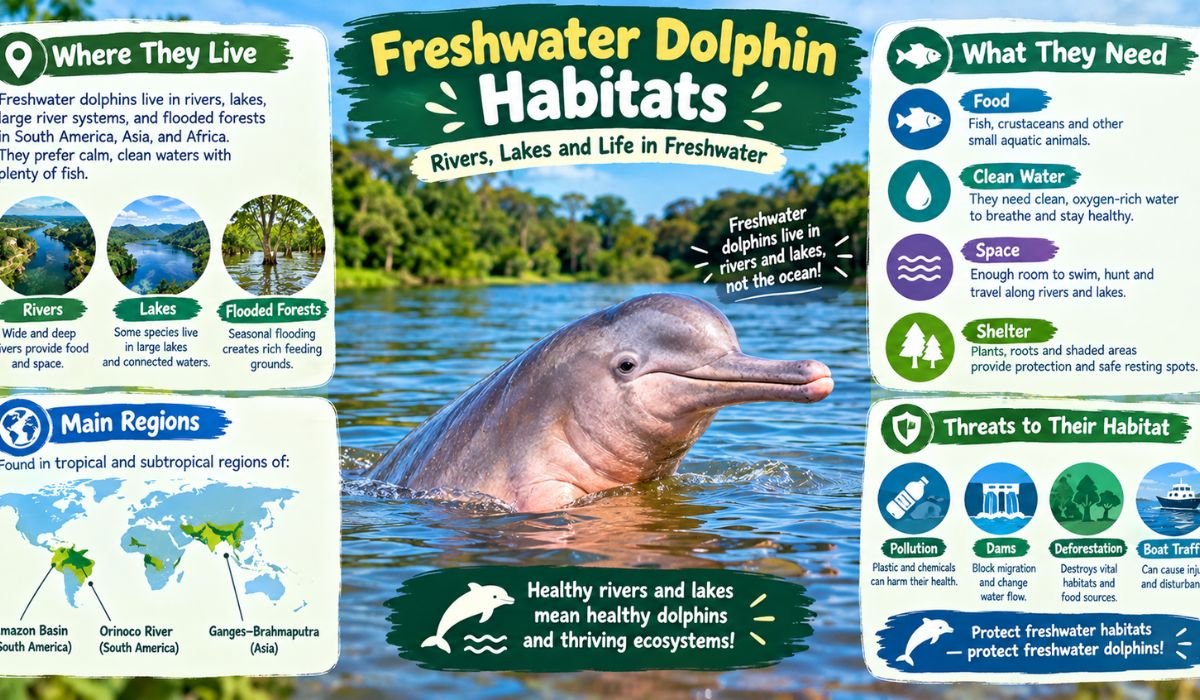
Not all dolphins live in the ocean. Some species have adapted to freshwater rivers.
River dolphins can inhabit large river systems, floodplains, channels, and connected wetlands. Their environments are often very different from those of oceanic dolphins.
Freshwater habitats may contain muddy or cloudy water with limited visibility. Echolocation can therefore be extremely useful for locating prey and navigating around underwater obstacles.
River dolphins are also affected by changes in water levels, pollution, fishing activity, dams, and habitat alteration.
What Makes a Good Dolphin Habitat?
Several environmental factors determine whether an area can support dolphins.
Abundant Food
Food is one of the most important factors. Dolphins need a reliable supply of prey such as fish, squid, and crustaceans.
Areas where prey gather can attract dolphins for feeding. Seasonal changes in fish populations can also influence dolphin movements.
Suitable Water Temperature
Different dolphin species tolerate different water temperatures. Many species prefer warm or temperate waters, while others are adapted to cooler environments.
A suitable dolphin habitat provides environmental conditions that allow dolphins to maintain their body temperature and obtain sufficient food.
Safe Breeding Areas
Some dolphins use particular coastal or sheltered areas for important stages of their life cycle. Protected waters can provide calmer conditions for mothers and young dolphins.
Young dolphins remain dependent on their mothers while learning how to find food and navigate their environment.
Space to Travel
Dolphins are active swimmers and often travel long distances. A healthy habitat needs enough space for them to search for food, socialize, migrate, and avoid threats.
How Dolphins Adapt to Their Habitat
Dolphins have numerous physical and behavioral adaptations that help them survive in aquatic environments.
Streamlined Bodies
A dolphin’s streamlined body reduces resistance as it moves through water. This allows dolphins to swim efficiently while searching for food or traveling between areas.
Powerful Tails
Dolphins use their flukes, or tail fins, to generate forward movement. Strong tail muscles allow them to accelerate quickly and maintain swimming speeds when necessary.
Echolocation
Echolocation is one of the most important adaptations associated with the dolphin habitat.
Dolphins produce clicking sounds and interpret returning echoes. This helps them detect objects, identify prey, and navigate through dark or murky water.
Social Behavior
Many dolphin species live in social groups called pods. Living together can provide opportunities for cooperation, communication, and protection.
Dolphins may work together when searching for or catching prey. Social relationships are also important for raising young and learning behaviors.
How Dolphins Find Food in Their Habitat
Dolphins are active predators that eat different types of prey depending on their species and environment.
Common foods include:
- Fish
- Squid
- Octopuses
- Crustaceans
- Other small marine animals
Dolphins use their senses and echolocation to locate prey. Some species cooperate while hunting, while others search for food individually.
The availability of prey can cause dolphins to change their movements. When food becomes scarce in one location, they may travel to another area with better feeding opportunities.
Dolphin Habitat and Migration
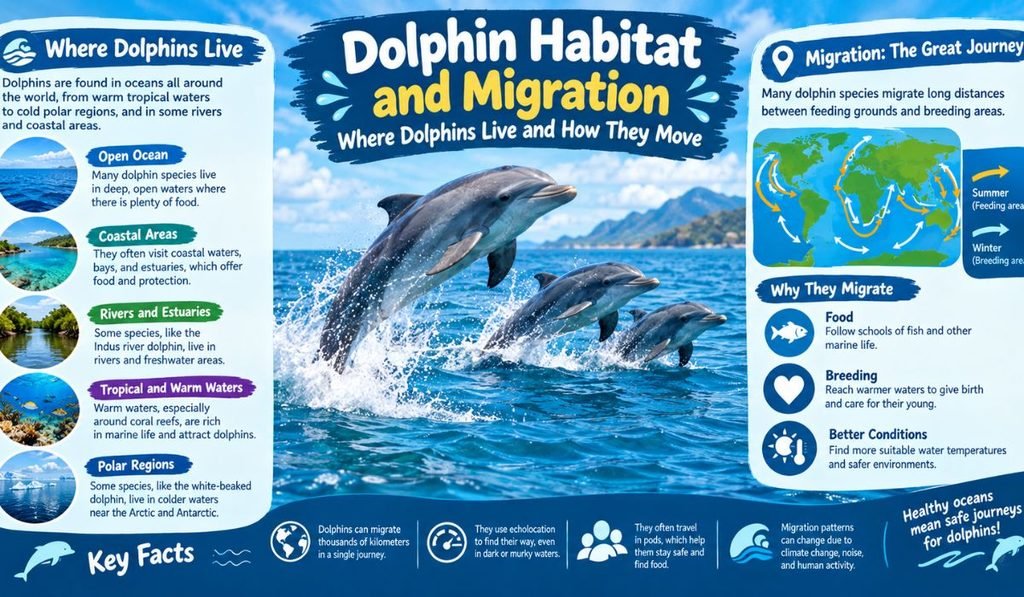
Some dolphins remain within relatively small home ranges, while others travel across much larger areas.
Movements can be influenced by:
- Food availability
- Water temperature
- Seasonal changes
- Breeding
- Ocean currents
- Human activity
Not every dolphin species migrates in the same way. Some populations move seasonally, while others remain in the same general region throughout the year.
Threats to Dolphin Habitats
Human activities can significantly affect the environments where dolphins live.
Pollution
Plastic waste, chemicals, oil pollution, and other contaminants can damage aquatic ecosystems. Pollution can also affect the fish and other prey dolphins depend on.
Fishing Activity
Dolphins can become accidentally caught in fishing nets and other fishing equipment. This is known as bycatch and is a major concern for some dolphin populations.
Habitat Destruction
Coastal development, dredging, shipping, and changes to waterways can alter important dolphin habitats.
River dolphins face additional threats from dams, water extraction, mining, and changes to natural river systems.
Noise Pollution
Underwater noise from ships, construction, and other human activities can interfere with how dolphins communicate and use sound.
Because dolphins depend heavily on sound, excessive underwater noise can make it harder for them to detect prey, communicate, and navigate.
How Can Dolphin Habitats Be Protected?
Protecting a healthy dolphin habitat requires protecting the wider aquatic ecosystem.
Important conservation measures include:
- Reducing plastic and chemical pollution
- Limiting harmful fishing practices
- Reducing accidental bycatch
- Protecting important coastal areas
- Maintaining healthy river systems
- Managing underwater noise
- Creating and enforcing marine protected areas
- Supporting responsible wildlife tourism
Protecting dolphins also means protecting the fish, plants, and other organisms that make aquatic ecosystems healthy.
FAQ’s
Where do dolphins live?
Dolphins live in oceans, seas, coastal waters, bays, estuaries, and, for some species, freshwater rivers. Their exact habitat depends on the species.
What is the ideal dolphin habitat?
A suitable dolphin habitat generally provides adequate food, appropriate water conditions, space to travel, and relatively safe areas for social activity and reproduction.
Do dolphins live in freshwater?
Yes. Several dolphin species are adapted to freshwater river systems. These dolphins have specialized adaptations for navigating and finding food in rivers.
Do dolphins live in warm or cold water?
Dolphins can live in a range of water temperatures. Many species prefer tropical or temperate waters, while some are adapted to cooler marine environments.
How do dolphins survive in their habitat?
Dolphins survive through adaptations such as streamlined bodies, powerful tails, echolocation, efficient breathing, strong swimming abilities, and complex social behavior.
What threatens dolphin habitat?
Pollution, fishing bycatch, habitat destruction, underwater noise, climate-related changes, and declining prey populations can threaten dolphin habitats.
Conclusion
A healthy dolphin habitat provides dolphins with food, suitable water conditions, space to move, and safe areas for important life activities. While most dolphins live in marine environments, some species have adapted to rivers and freshwater ecosystems.
Their remarkable adaptations, including echolocation and streamlined bodies, allow them to survive in a wide variety of aquatic environments. Protecting these habitats is essential for maintaining healthy dolphin populations and the ecosystems they depend on.

Hi, I’m Amelia, an SEO and content specialist with several years of experience researching and creating informative content for online audiences. At Animal Attack Facts, I focus on animal behavior, animal attacks on humans, and interesting facts about land animals, marine animals, birds, reptiles, and insects. My goal is to provide clear, useful, and engaging information that helps readers better understand wildlife and stay informed about animal encounters.
1 thought on “Dolphin Habitat: Where Dolphins Live and How They Survive”