
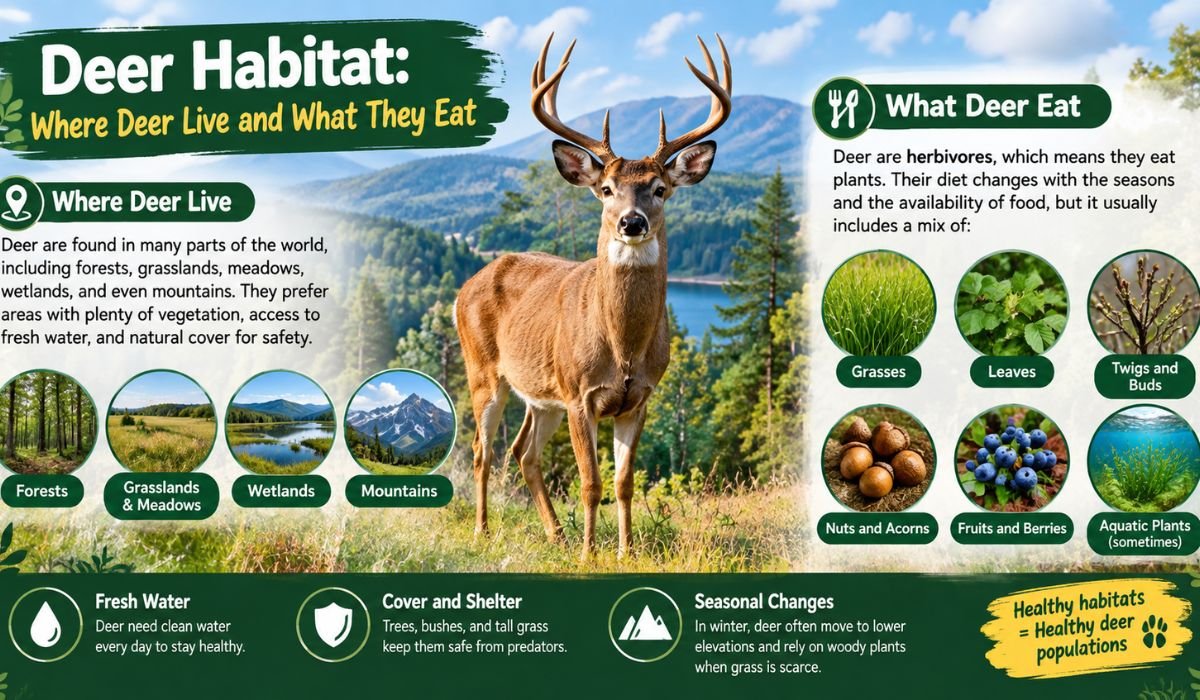
Deer live in a wide variety of environments, including forests, grasslands, wetlands, mountains, and open woodlands. Their habitats provide the food, water, shelter, and protection they need to survive. Different deer species have adapted to different climates, from cold northern forests to warm tropical regions. Understanding deer habitat helps explain how these animals find food, avoid predators and raise their young.
Deer are herbivores that mainly eat leaves, grasses, shoots, fruits, and other plant materials. Their diets depend on the season, the type of vegetation available, and the environment in which they live. Some deer prefer dense forests, while others thrive in open grasslands or areas where woodland meets farmland.
What Is a Deer Habitat?
A deer habitat is a natural environment that provides the resources a deer needs to live and reproduce. A suitable habitat includes enough food, reliable water sources, safe resting places, and vegetation that offers protection from predators and harsh weather.
The exact requirements vary by species. White-tailed deer often inhabit forests, brushy areas, and farmland edges, while reindeer are adapted to tundra and boreal forests. Some deer, such as the sika deer, can live in forests, grasslands, and marshy areas.
A healthy deer habitat usually contains a mixture of vegetation types. Different plants provide food throughout the year, while trees, shrubs, and tall grasses create hiding places and shelter.
Where Do Deer Live?
Deer live on several continents, including North America, South America, Europe, Asia, and parts of northern Africa. Their distribution depends on the species, climate, available vegetation, and access to water.
1. Forests and Woodlands
Forests are among the most important habitats for many deer species. Trees and shrubs provide shade, shelter, and protection, while the forest floor offers leaves, grasses, nuts, berries, and young plants.
White-tailed deer commonly inhabit deciduous and mixed forests. Red deer are associated with woodlands and forest edges in parts of Europe and Asia. Forest habitats are especially useful because deer can move between feeding areas and sheltered resting locations.
2. Grasslands and Open Fields
Some deer live in grasslands, meadows, and open fields where grasses and other low-growing plants are abundant. These areas can provide plenty of food, especially during seasons when fresh vegetation is growing.
However, open habitats offer less cover than dense forests. Deer often rely on nearby shrubs, woodland patches, or tall grasses for protection. Many populations use a combination of open feeding areas and wooded shelter.
3. Mountains and Highland Regions
Several deer species inhabit mountainous regions, where they may encounter steep slopes, rocky terrain, and changing weather conditions. Mountain habitats offer different types of vegetation depending on elevation.
Mule deer, for example, occur in mountainous and semi-arid regions of western North America. They may move between higher elevations in warmer months and lower elevations during winter to find food and avoid deep snow.
4. Wetlands and Marshes
Wetlands, marshes, and areas near rivers can provide deer with water, aquatic plants, and thick vegetation. These habitats may also contain nearby woodlands that offer shelter.
White-tailed deer frequently use wetland edges and river corridors. Such environments provide a combination of feeding opportunities and cover, although flooding and seasonal changes can affect the availability of suitable habitat.
5. Tundra and Cold Northern Regions
Reindeer, known as caribou in North America, are adapted to cold northern environments. They inhabit Arctic tundra and boreal forests, where temperatures can become extremely low.
Their diet includes grasses, sedges, shrubs, and lichens, depending on the season and location. Reindeer have physical and behavioral adaptations that help them survive cold conditions and travel across large areas in search of food.
What Do Deer Eat in Their Natural Habitat?
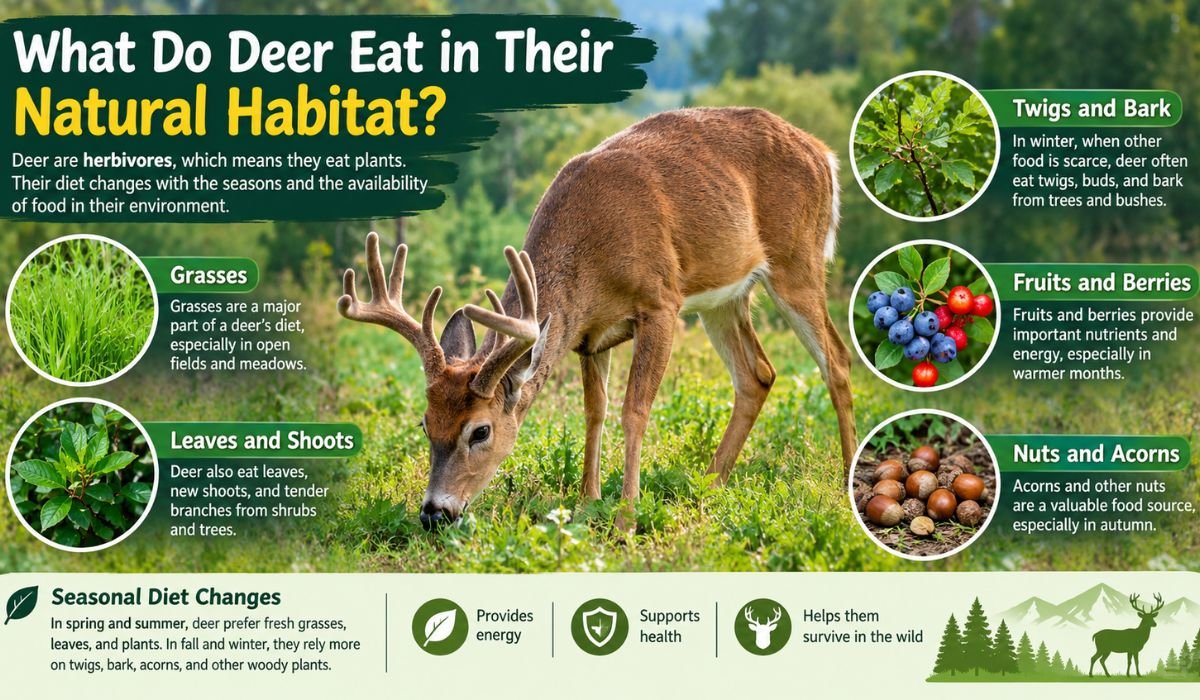
Deer are herbivores, meaning their diets consist primarily of plant material. The foods they eat depend on the plants available in their habitat and the time of year.
Common foods include:
- Leaves: Deer browse on leaves from trees and shrubs.
- Grasses: Many species graze on grasses when they are fresh and abundant.
- Shoots and buds: Young plant growth provides valuable nutrients.
- Fruits and berries: Seasonal fruits offer energy and variety.
- Acorns and nuts: These foods can be important in woodland habitats.
- Agricultural crops: Deer sometimes feed on corn, soybeans, grains, and other crops near farmland.
- Lichens: Reindeer and caribou rely heavily on lichens in certain habitats, especially during winter.
Deer do not eat exactly the same foods throughout the year. They adjust their feeding habits according to what is available. This flexibility allows many species to survive in changing environments.
Read Related Post: Shark Habitat: Where Sharks Live and How They Survive
How Does Deer Habitat Affect Their Diet?
The relationship between food and habitat is essential to deer survival. Different environments contain different plant species, so deer adapt their diets to local conditions.
Forest-Dwelling Deer
Deer living in forests often browse on leaves, twigs, buds, shrubs, and fallen fruits. In autumn, acorns and other nuts may become important sources of energy. During winter, they may depend more heavily on woody plants when fresh vegetation is limited.
Grassland Deer
Deer that use open grasslands have access to grasses, herbs, and other low-growing vegetation. These foods can be plentiful during spring and summer, but their availability may decrease during dry periods or winter.
Deer in Agricultural Areas
In regions where farmland borders woodland, deer may feed on crops as well as wild plants. Agricultural fields can provide abundant food, but they may also expose deer to roads, people, and other hazards.
Reindeer in Northern Habitats
Reindeer have diets suited to cold environments. During warmer months, they consume grasses, sedges, leaves, and other fresh vegetation. In winter, lichens can become a particularly important food source where available.
What Do Deer Need to Survive in Their Habitat?
A suitable deer habitat must provide more than food. Several environmental factors influence whether deer can survive and reproduce successfully.
Food and Water
Deer need enough nutritious vegetation to maintain their energy, grow, and reproduce. Water is also essential, although their water requirements can partly be met through moisture in plants and other foods.
Habitats with diverse vegetation generally offer more feeding options across changing seasons.
Shelter and Cover
Trees, shrubs, tall grasses, and other vegetation give deer places to rest and hide. Cover helps them avoid predators and provides protection from wind, rain, heat, and snow.
Young deer benefit particularly from suitable vegetation because it provides places to remain concealed during their early weeks of life.
Space to Move
Deer need room to search for food, find mates, and reach seasonal resources. Some species remain within relatively small home ranges when resources are abundant, while others travel long distances as conditions change.
Roads, fences, urban development, and other barriers can interfere with these movements.
Suitable Climate
Each species has its own environmental tolerances. Reindeer are well adapted to cold climates, while other deer species thrive in temperate forests or warmer regions.
Changes in temperature, rainfall, snow cover, and drought can affect food availability and the suitability of a habitat.
How Do Deer Adapt to Seasonal Habitat Changes?
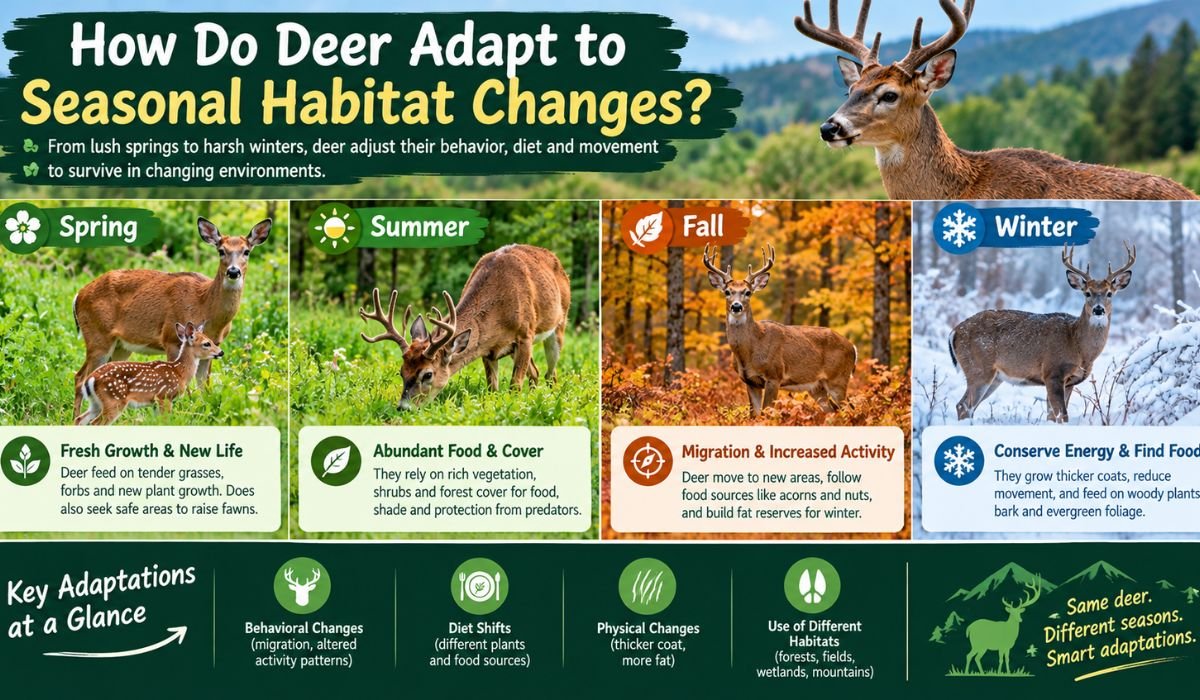
Deer adjust their behavior and feeding patterns as the seasons change. These adaptations help them cope with changing temperatures and food supplies.
Spring: Fresh shoots, leaves, grasses, and other young plants become available. This growth provides valuable nutrition after winter.
Summer: Vegetation is often plentiful, and deer can feed on a broad selection of plants. They may rest in shaded areas during hot weather.
Autumn: Fruits, berries, acorns, and other seasonal foods can help deer build energy reserves before winter. Many species also experience their breeding season during autumn.
Winter: Food becomes harder to find in colder regions. Deer may browse on twigs, buds, evergreen plants, or other vegetation that remains available. Some populations move to areas with less snow and easier access to food.
Seasonal movement differs among species and populations. Some deer migrate over long distances, while others make shorter movements between feeding and resting areas.
What Threats Affect Deer Habitat?
Deer habitats face several threats that can reduce available food, shelter, and safe movement routes.
Habitat Loss and Fragmentation
Expanding cities, roads, agriculture, and industrial development can destroy natural habitats. Remaining habitat may become divided into smaller patches, making it harder for deer to reach food, water, and breeding areas.
Deforestation
Removing forests reduces shelter and changes the availability of plants that deer depend on. Although some deer can use young regrowth and forest edges, extensive forest loss can damage the overall quality of their habitat.
Climate Change
Changes in temperature, rainfall, drought patterns, and snow conditions can affect vegetation and seasonal food supplies. Species adapted to particular climates may face increasing challenges as their environments change.
Human-Wildlife Conflicts
When natural food and shelter become limited, deer may enter farms, gardens, and residential areas. This can lead to crop damage, vehicle collisions, and conflict with people.
Protecting connected natural areas and maintaining suitable vegetation can help reduce some of these problems.
How Can Deer Habitats Be Protected?
Protecting deer habitat requires conserving the natural environments that support their daily needs.
Important conservation measures include:
- Preserving forests, grasslands, wetlands, and other natural ecosystems.
- Restoring damaged habitats with appropriate native vegetation.
- Maintaining wildlife corridors that connect separated habitat areas.
- Protecting water sources and natural feeding grounds.
- Managing roads and development to reduce habitat fragmentation.
- Supporting responsible land management and wildlife conservation programs.
People can also help by respecting wildlife, avoiding the disturbance of young deer, and supporting local habitat restoration projects.
Conservation strategies should consider the needs of local deer species and the broader ecosystem. A healthy habitat benefits many other animals and plants, not just deer.
Frequently Asked Questions About Deer Habitat
1. Where do deer live?
Deer live in forests, grasslands, wetlands, mountains, tundra, and other environments. Their preferred habitat depends on the species, climate, and availability of food, water, and shelter.
2. What is the best habitat for deer?
There is no single best habitat for every deer species. Many deer thrive in areas that combine nutritious vegetation, reliable water, protective cover, and enough space to move safely.
3. What do deer eat in their natural habitat?
Deer mainly eat leaves, grasses, shoots, buds, fruits, berries, and other plants. Some species, such as reindeer, also depend heavily on lichens during parts of the year.
4. Do deer live in forests or grasslands?
Many deer use both forests and grasslands. Forests provide shelter and browse, while grasslands offer grasses and other low-growing plants. Habitat edges allow deer to access both resources.
5. Do deer change their habitat during winter?
Some deer move to lower elevations or areas with less snow during winter. Others remain in the same general region and adjust their feeding habits to use the plants that are still available.
6. Can deer live near humans?
Yes, some deer populations live near farms, parks, gardens, and suburban neighborhoods. These areas may provide food, but roads, buildings, and human activity can create additional risks.
7. Why is deer habitat important?
Deer habitat provides the food, water, shelter, and space needed for survival and reproduction. Protecting it also supports biodiversity and helps maintain healthy ecosystems.
Conclusion
Deer live in diverse environments, from temperate forests and open grasslands to wetlands, mountains, and Arctic tundra. Their habitat determines which foods are available and influences how they find shelter, respond to seasonal changes, and survive in different climates.
A suitable deer habitat provides nutritious vegetation, access to water, protective cover, and room to move. Although deer can adapt to many environments, habitat loss, fragmentation and climate change can threaten their long-term survival. Protecting natural landscapes and maintaining connected wildlife areas are important steps toward conserving deer populations and the ecosystems they depend on.

Hi, I’m Amelia, an SEO and content specialist with several years of experience researching and creating informative content for online audiences. At Animal Attack Facts, I focus on animal behavior, animal attacks on humans, and interesting facts about land animals, marine animals, birds, reptiles, and insects. My goal is to provide clear, useful, and engaging information that helps readers better understand wildlife and stay informed about animal encounters.
1 thought on “Deer Habitat: Where Deer Live and What They Eat”