
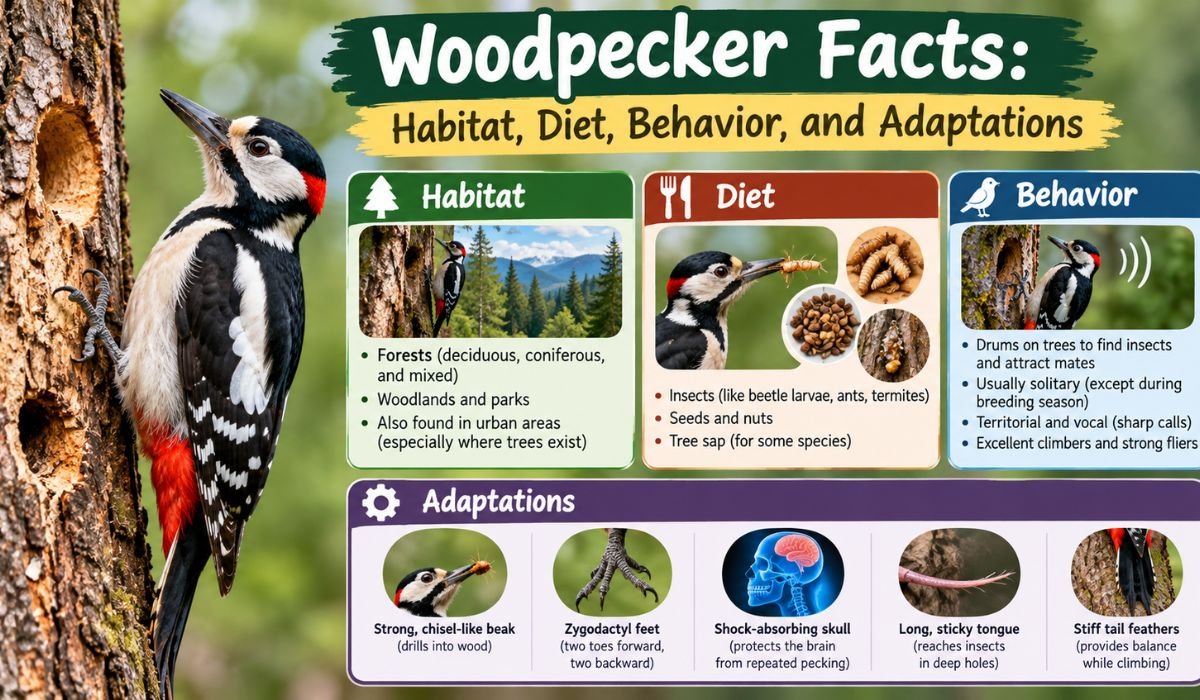
Woodpeckers are fascinating birds known for their strong bills, climbing abilities, and distinctive habit of tapping and drilling into tree trunks. Found in forests, woodlands, parks, and even suburban areas, these birds have specialized adaptations that help them find food, build nests, and communicate. From their unusual feet to their shock-absorbing skulls, there is much more to these birds than their famous pecking behavior.
In this guide to woodpecker facts, you will learn about their habitat, diet, behavior, physical adaptations, reproduction, and some surprising characteristics that make them unique among birds.
What Is a Woodpecker?
A woodpecker is a bird belonging to the family Picidae. There are more than 200 species of woodpeckers found across much of the world, although they are absent from Australia, New Zealand, Madagascar, and some oceanic islands.
Woodpeckers vary considerably in size, color, and appearance. Many have combinations of black, white, brown, green, or red feathers. Some species have brightly colored patches on their heads or wings.
One of the most recognizable woodpecker facts is that these birds are specially adapted for climbing tree trunks and extracting food from wood.
Their strong bills allow them to chip into bark and wood, while their specialized tongues help them reach insects hidden inside trees.
Where Do Woodpeckers Live?
Woodpeckers are primarily associated with wooded environments, but different species occupy a wide range of habitats.
Forests and Woodlands
Forests provide woodpeckers with several important resources, including trees for feeding, nesting, and shelter. Dead or damaged trees can be particularly valuable because they often contain insects and provide suitable nesting sites.
Woodpeckers can live in both deciduous and coniferous forests. Some species prefer mature forests, while others are comfortable in younger woodland.
Parks and Urban Areas
Some woodpecker species have adapted well to human environments. They may be seen in gardens, city parks, orchards, and suburban neighborhoods where mature trees are available.
This adaptability is another interesting point among woodpecker facts because not all woodpeckers depend on remote forests.
Read Related Post: Seahorse Facts: Habitat, Diet, Reproduction, and Behavior
Geographic Range
Woodpeckers occur naturally on several continents, including North America, South America, Europe, Africa, and Asia. Their exact distribution depends on the species.
What Do Woodpeckers Eat?
Woodpeckers have varied diets, although insects and other small invertebrates are important foods for many species.
Insects and Larvae
Ants, beetles, termites, caterpillars, and insect larvae can make up a significant part of a woodpecker’s diet. Birds often locate these creatures beneath bark or inside decaying wood.
A woodpecker may repeatedly strike a tree to create an opening and then use its long tongue to pull prey from a narrow cavity.
Fruits, Seeds, and Nuts
Woodpeckers are not exclusively insectivorous. Many species also eat berries, fruits, seeds, and nuts.
Their diet can change depending on the season and what food is available in their habitat.
Tree Sap
Some species, particularly sapsuckers, specialize in feeding on tree sap. They create rows of small holes in trees and return to drink the flowing sap. These holes can also attract insects, providing another food source.
These dietary adaptations are among the most useful woodpecker facts for understanding how different species survive in changing environments.
How Do Woodpeckers Peck Trees?
Pecking is one of the defining behaviors of these birds. Woodpeckers strike trees for several different reasons, including feeding, excavating nesting cavities, and communicating.
When searching for food, a woodpecker can rapidly strike the surface of a tree with its bill. If it detects an insect beneath the bark, it may continue drilling until it reaches the prey.
Woodpeckers also use their bills to create holes where they can lay eggs and raise their young.
Importantly, not every strike is necessarily related to feeding. Rapid tapping or drumming can also serve as a form of communication.
Woodpecker Adaptations
Woodpeckers have several specialized physical features that make their lifestyle possible.
Strong Bill
Their bills are relatively straight and pointed, allowing them to chip away at bark and wood. The shape and strength of the bill vary between species depending on their feeding habits.
Zygodactyl Feet
Many woodpeckers have two toes pointing forward and two pointing backward. This arrangement, called zygodactyl feet, gives them a strong grip on tree trunks and branches.
Their sharp claws help them cling to vertical surfaces while they search for food.
Stiff Tail Feathers
Woodpeckers often use their stiff tail feathers as additional support when climbing tree trunks. The tail can act like a prop, helping stabilize the bird against the tree.
Specialized Tongue
A woodpecker’s tongue is another remarkable adaptation. It can be unusually long and is useful for reaching insects hidden deep inside wood.
Depending on the species, the tongue may have structures that help grip or capture prey.
Protection During Pecking
Woodpeckers experience repeated impacts while drilling into trees. Their anatomy helps them tolerate these forces, with specialized skull and neck structures contributing to impact management.
Their adaptations do not make them completely immune to injury, but they allow them to perform behaviors that would be difficult for many other birds.
Woodpecker Behavior
Woodpeckers display a wide range of interesting behaviors.
Drumming
Instead of using only vocal calls, many woodpeckers communicate by rapidly striking surfaces with their bills. This behavior is commonly called drumming.
A bird may drum on a tree, branch, or even a human-made structure. The sound can communicate information to other woodpeckers, including territorial or courtship signals.
Territorial Behavior
Many woodpeckers defend territories, especially during breeding periods. They may use calls, displays, and drumming to communicate with rivals.
The size of a territory depends on the species and the availability of food and nesting sites.
Climbing Trees
Woodpeckers are excellent climbers. Their specialized feet and stiff tail feathers help them move vertically along tree trunks while searching for food.
These climbing abilities are a key part of woodpecker facts because they distinguish these birds from many other tree-dwelling species.
How Do Woodpeckers Reproduce?
Most woodpeckers nest in cavities that they excavate in trees. The male, female, or both may participate in creating the nest depending on the species.
The birds usually select suitable sections of wood where a cavity can be constructed. Dead or decaying trees can be especially useful because they are easier to excavate.
After mating, the female lays a clutch of eggs inside the cavity. Both parents may participate in incubating the eggs and caring for the young.
The chicks remain dependent on their parents for food until they become capable of leaving the nest and feeding independently.
Why Are Woodpeckers Important to Ecosystems?
Woodpeckers play several important roles in woodland ecosystems.
One of their most significant contributions is creating cavities in trees. These holes can later be used by other animals that are unable to excavate their own nesting cavities.
Woodpeckers also consume many insects, including insects living beneath bark or inside wood. In this way, they are part of the natural food web and contribute to ecosystem balance.
Their feeding activity can also create opportunities for other species by exposing insects and creating openings in trees.
Interesting Woodpecker Facts
Here are some additional woodpecker facts worth knowing:
- Woodpeckers belong to the family Picidae.
- There are more than 200 recognized woodpecker species.
- Many species have two toes facing forward and two facing backward.
- Their stiff tail feathers help support them while climbing.
- Woodpeckers use their bills for feeding, nesting, and communication.
- Some species feed heavily on ants and other insects.
- Some woodpeckers eat fruits, seeds, and nuts.
- Sapsuckers feed on tree sap.
- Many woodpeckers excavate their own nesting cavities.
- Abandoned woodpecker holes can provide shelter for other animals.
- Drumming can be used as a communication signal.
- Woodpeckers occur on several continents around the world.
- Their tongues are specially adapted for reaching food in narrow spaces.
- Some species can adapt to parks, gardens, and suburban environments.
- Woodpeckers can help reveal the presence of insects inside trees.
FAQ’s
What do woodpeckers eat?
Woodpeckers commonly eat insects and their larvae, including ants, beetles, and termites. Depending on the species, they may also consume fruits, berries, seeds, nuts, and tree sap.
Why do woodpeckers peck trees?
Woodpeckers peck trees for several reasons. They may be searching for insects, excavating a nesting cavity, or producing drumming sounds for communication.
Can woodpeckers damage trees?
Woodpecker activity can damage individual trees, particularly when birds repeatedly excavate weak or decaying sections. However, their feeding behavior is also a natural part of woodland ecosystems.
Where do woodpeckers build nests?
Most woodpeckers build nests inside cavities in trees. Many species excavate these cavities themselves using their strong bills.
How do woodpeckers climb trees?
Woodpeckers use their specialized feet and sharp claws to grip tree surfaces. Their stiff tail feathers can provide additional support as they climb.
Are woodpeckers helpful to forests?
Yes. Woodpeckers eat many insects and create tree cavities that can later provide nesting or shelter sites for other animals. Their activities contribute to the structure and biodiversity of forest ecosystems.
Conclusion
Woodpeckers are highly specialized birds with remarkable adaptations for living around trees. Their powerful bills, unusual feet, stiff tail feathers, and specialized tongues allow them to feed, climb, communicate, and create nesting cavities effectively.
From forests to suburban parks, different species have adapted to a variety of environments. These woodpecker facts show why these birds are an important and fascinating part of many ecosystems.

Hi, I’m Amelia, an SEO and content specialist with several years of experience researching and creating informative content for online audiences. At Animal Attack Facts, I focus on animal behavior, animal attacks on humans, and interesting facts about land animals, marine animals, birds, reptiles, and insects. My goal is to provide clear, useful, and engaging information that helps readers better understand wildlife and stay informed about animal encounters.
1 thought on “Woodpecker Facts: Habitat, Diet, Behavior, and Adaptations”