
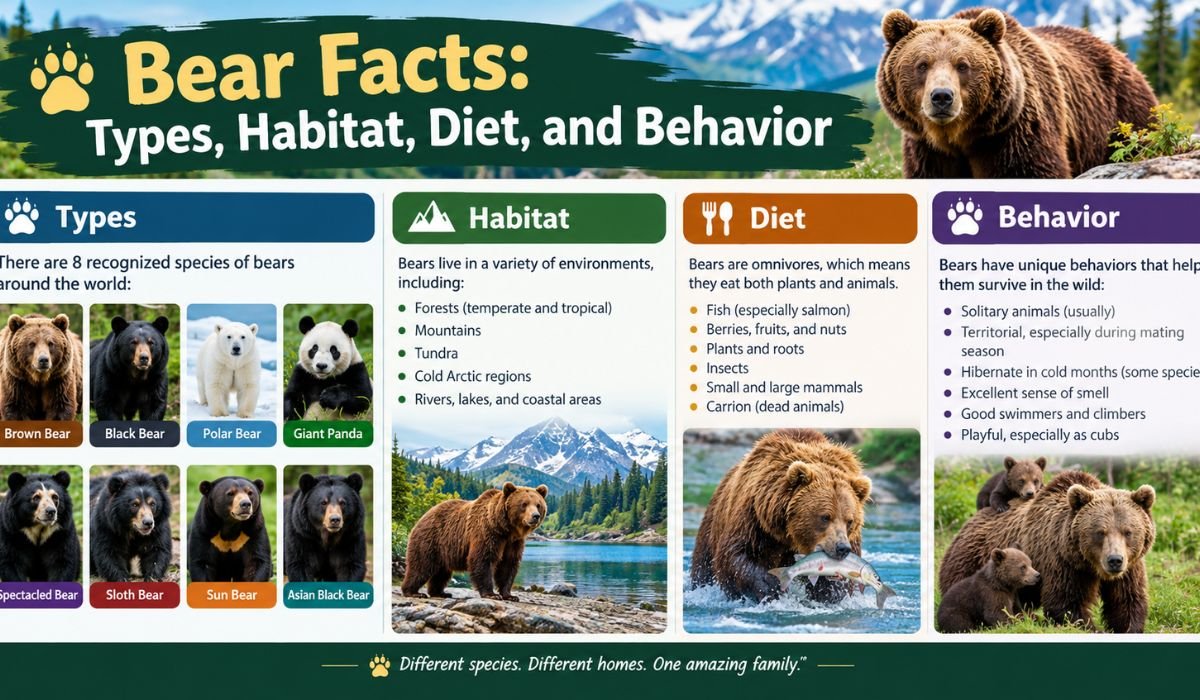
Bears are among the most recognizable mammals on Earth, known for their strength, intelligence, powerful bodies, and ability to live in a wide range of environments. From the frozen Arctic to dense forests and mountain regions, different bear species have developed unique adaptations that help them survive. These fascinating animals can be herbivores, carnivores, or omnivores depending on the species and available food.
Learning bear facts can help us understand the differences between species, their habitats, diets, social behavior, and important adaptations. Although bears are often portrayed as aggressive animals, their behavior is more complex and depends heavily on their species, environment, and circumstances.
Bear Facts About Different Bear Species
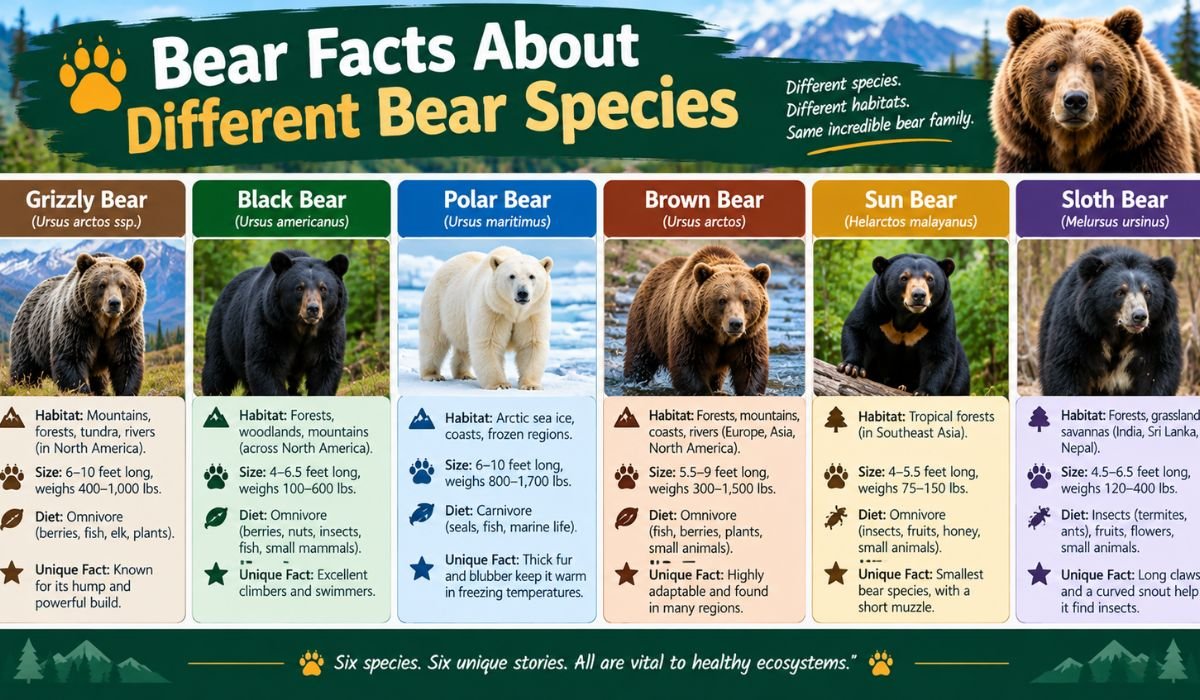
There are eight living bear species, and each has its own physical characteristics, habitat, and lifestyle. The eight species are the polar bear, brown bear, American black bear, Asian black bear, spectacled bear, sloth bear, sun bear, and giant panda.
Polar Bear
Polar bears are highly adapted to Arctic environments. They have thick fur, a layer of body fat, and large paws that help them move across snow and ice. Their diet consists mainly of seals, making them the most carnivorous of the living bear species.
Brown Bear
Brown bears include several populations and subspecies found across North America, Europe, and Asia. Grizzly bears are a well-known North American population of brown bears. Their diets can include plants, berries, insects, fish, and mammals.
American Black Bear
American black bears are found across much of North America. Despite their name, their fur can range from black and brown to cinnamon or even lighter shades. They are excellent climbers, especially when young.
Asian Black Bear
Also called the Asiatic black bear, this species lives in forests and mountainous areas across parts of Asia. It is recognizable by the pale crescent-shaped marking commonly found on its chest.
Giant Panda
The giant panda is famous for its black-and-white coat and bamboo-based diet. Although classified as a bear, its diet is highly specialized, with bamboo making up most of its food intake.
Read Related Post: Ant Facts: Colony, Diet, Habitat, and Behavior
Bear Facts About Habitat and Distribution
One of the most interesting bear facts is that bears occupy several different types of environments. Their habitats include forests, mountains, grasslands, tundra, wetlands, and Arctic sea ice.
Polar bears are strongly associated with Arctic sea ice, where they hunt seals. Brown bears can inhabit forests, alpine areas, coastal regions, and open landscapes. American black bears are adaptable and can live in forests, mountains, swamps, and areas close to human settlements.
Sun bears live in tropical forests of Southeast Asia, while spectacled bears are native to the Andes of South America. Sloth bears are found mainly in the Indian subcontinent.
The availability of food, water, shelter, and suitable seasonal conditions strongly influences where bears can survive.
Bear Facts About Diet
Bears have diverse diets, and their food choices vary significantly between species and habitats. Many bears are omnivorous and consume both plant and animal foods.
Brown bears may eat berries, roots, grasses, insects, fish, and small or large mammals. American black bears commonly consume fruits, nuts, insects, vegetation, and other available foods.
Sun bears feed on insects, honey, fruit, and other forest foods. Sloth bears are particularly well adapted to feeding on insects such as termites and ants.
Polar bears have a much more meat-based diet and rely heavily on seals in their Arctic habitat. Giant pandas are unusual because bamboo forms the overwhelming majority of their diet.
Seasonal food availability can also influence bear behavior. Bears may spend large amounts of time feeding when food is abundant to build energy reserves.
Bear Facts About Physical Adaptations
Many bear facts involve the remarkable physical features that help these animals survive.
Bears generally have strong limbs, large paws, powerful claws, and excellent senses of smell. Their claws vary between species and can be useful for climbing, digging, catching food, or breaking into nests and insect colonies.
Polar bears have broad paws that help distribute their weight when walking across snow and ice. Their paws can also assist with swimming.
Bears have thick fur that provides insulation in cold environments. Some species also develop substantial fat reserves before winter, helping them survive periods when food is less available.
Their powerful shoulders and forelimbs allow many species to dig, climb, move heavy objects, and search for food underground.
Bear Facts About Behavior
Bears are generally solitary animals, although their social behavior can vary depending on species and circumstances. Mothers and their cubs usually maintain strong family bonds during the early stages of the cubs’ lives.
Bears communicate through body language, vocalizations, scent marking, and physical signs left in their environment. They may use trees, rocks, or other objects to leave scent and visual signals.
Some bears are active during the day, while others may become more active around dawn, dusk, or nighttime. Their activity patterns can change depending on food availability, temperature, human activity, and habitat.
One important part of bear facts is that bears are not constantly aggressive. Like many wild animals, they may attempt to avoid humans when possible. However, bears can become defensive when they feel threatened, especially when protecting cubs or food.
How Do Bears Survive Winter?
Winter survival is another fascinating part of bear facts. Some bear species enter a period of reduced activity during cold months when food becomes difficult to find.
Brown bears and American black bears can spend extended periods in dens during winter. Their body temperature and metabolism decrease, allowing them to conserve energy.
The exact nature of this winter dormancy varies among species and populations. Bears can remain in their dens for long periods without eating or drinking.
Pregnant female bears may give birth while inside their winter dens. Cubs are extremely small at birth compared with their eventual adult size and depend on their mother for warmth and nourishment.
Polar bears have a different winter strategy. Pregnant females may create maternity dens in snow, where they give birth and care for their cubs before emerging.
Bear Cubs and Family Life
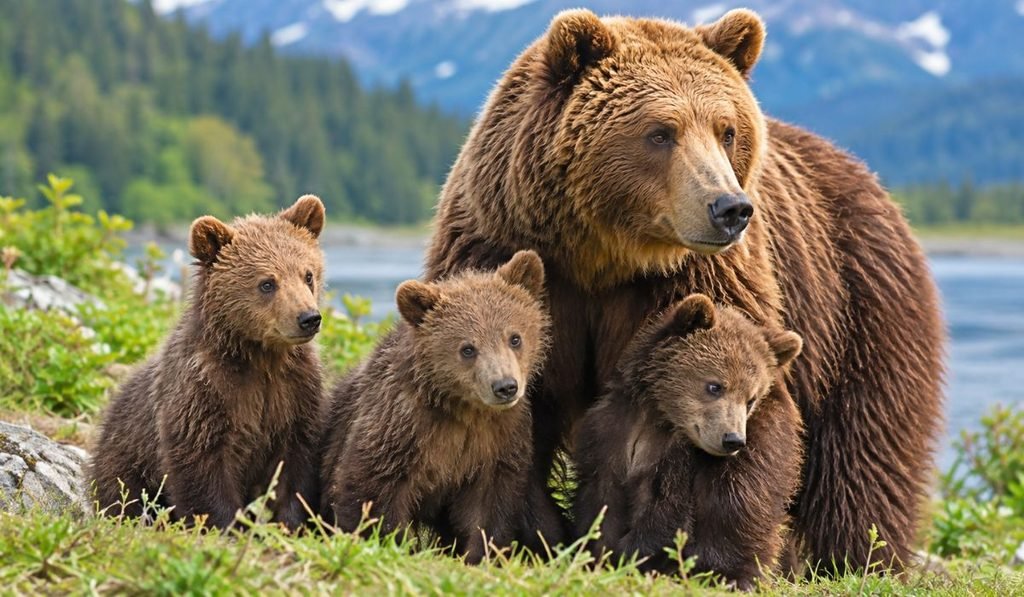
Young bears depend heavily on their mothers during the first part of their lives. Cubs are born relatively small and vulnerable, so the mother provides protection, warmth, and food.
Cubs learn important survival skills by following and observing their mother. They gradually learn how to find food, navigate their environment, and respond to potential dangers.
Mother bears can be highly protective of their young. This is one reason people should maintain a safe distance from wild bears and never approach cubs.
Family groups usually separate as young bears become independent. Adult bears then commonly return to a more solitary lifestyle.
Are Bears Good Climbers and Swimmers?
Several bear facts show how physically capable these animals can be. Many bears are strong swimmers, and some species can travel considerable distances through water.
Polar bears are particularly strong swimmers and can travel between areas of sea ice and land. Their body structure and large paws help them move through cold water.
American black bears are also capable climbers, especially when they are young. Their curved claws and strong limbs allow them to climb trees efficiently.
Not every bear species has the same abilities, however. Their climbing and swimming skills depend on body size, anatomy, habitat, and species-specific adaptations.
Bears and Their Role in Ecosystems
Bears can have important ecological roles. Because they consume many different types of food, they can influence populations of plants, insects, fish, and other animals.
When bears eat fruits and later move through their habitats, they can contribute to seed dispersal. Bears can also affect ecosystems by digging for roots or insects and by leaving food remains that become available to other animals.
Some bear species are also important indicators of ecosystem health because they require large areas of suitable habitat and dependable food resources.
Threats Facing Bears
Habitat loss, human-wildlife conflict, illegal hunting, climate change, and changes in food availability can threaten bear populations.
The severity of these threats differs by species and region. Polar bears, for example, are particularly affected by changes to Arctic sea ice because sea ice is important for their ability to hunt seals.
Other species face habitat fragmentation and conflicts with people when bears search for food near human communities.
Conservation programs can include habitat protection, wildlife corridors, anti-poaching measures, research, and efforts to reduce conflicts between people and bears.
Interesting Bear Facts
Here are some quick bear facts to remember:
- There are eight living bear species.
- Bears live in environments ranging from tropical forests to Arctic sea ice.
- Giant pandas are members of the bear family.
- Polar bears are highly specialized for Arctic life.
- Many bear species are omnivorous.
- Bears have an excellent sense of smell.
- Several bear species are capable swimmers.
- American black bears are skilled climbers.
- Brown bears include grizzly bears.
- Mother bears can be highly protective of their cubs.
- Bears can communicate using sounds, body language, and scent marking.
- Some bears spend winter months in dens with greatly reduced activity.
FAQ’s
What are the main types of bears?
The eight living bear species are polar bears, brown bears, American black bears, Asian black bears, spectacled bears, sloth bears, sun bears, and giant pandas.
What do bears eat?
Many bears are omnivores and eat a combination of plants and animals. Their diets can include fruits, nuts, insects, fish, roots, vegetation, and mammals. Polar bears mainly eat seals, while giant pandas primarily eat bamboo.
Where do bears live?
Bears live in many environments, including forests, mountains, grasslands, tropical forests, tundra, and Arctic sea ice. Their exact habitat depends on the species.
Are bears solitary animals?
Many adult bears are primarily solitary, but mothers live with their cubs for extended periods. Bears may also gather temporarily in areas where food is abundant.
How long do bears live?
Lifespan varies by species and living conditions. Bears can live for many years in the wild, while individuals in human care may sometimes live longer because of veterinary care and consistent food availability.
Can bears climb trees?
Some bear species are excellent climbers. American black bears are particularly well known for their climbing ability, especially when young. Climbing ability varies among species.
Why do bears hibernate?
Some bears enter a winter period of greatly reduced activity because food becomes scarce during cold months. This allows them to conserve energy while staying inside a den.
Conclusion
These bear facts show that bears are a diverse group of mammals with remarkable adaptations and behaviors. The eight living species differ greatly in appearance, habitat, diet, and lifestyle, from bamboo-eating giant pandas to seal-hunting polar bears.
Understanding bear facts also highlights the importance of protecting suitable habitats and reducing conflicts between bears and people. By learning about their natural behavior and ecological roles, we can better understand these powerful and fascinating animals.

Hi, I’m Amelia, an SEO and content specialist with several years of experience researching and creating informative content for online audiences. At Animal Attack Facts, I focus on animal behavior, animal attacks on humans, and interesting facts about land animals, marine animals, birds, reptiles, and insects. My goal is to provide clear, useful, and engaging information that helps readers better understand wildlife and stay informed about animal encounters.
1 thought on “Bear Facts: Types, Habitat, Diet, and Behavior”