
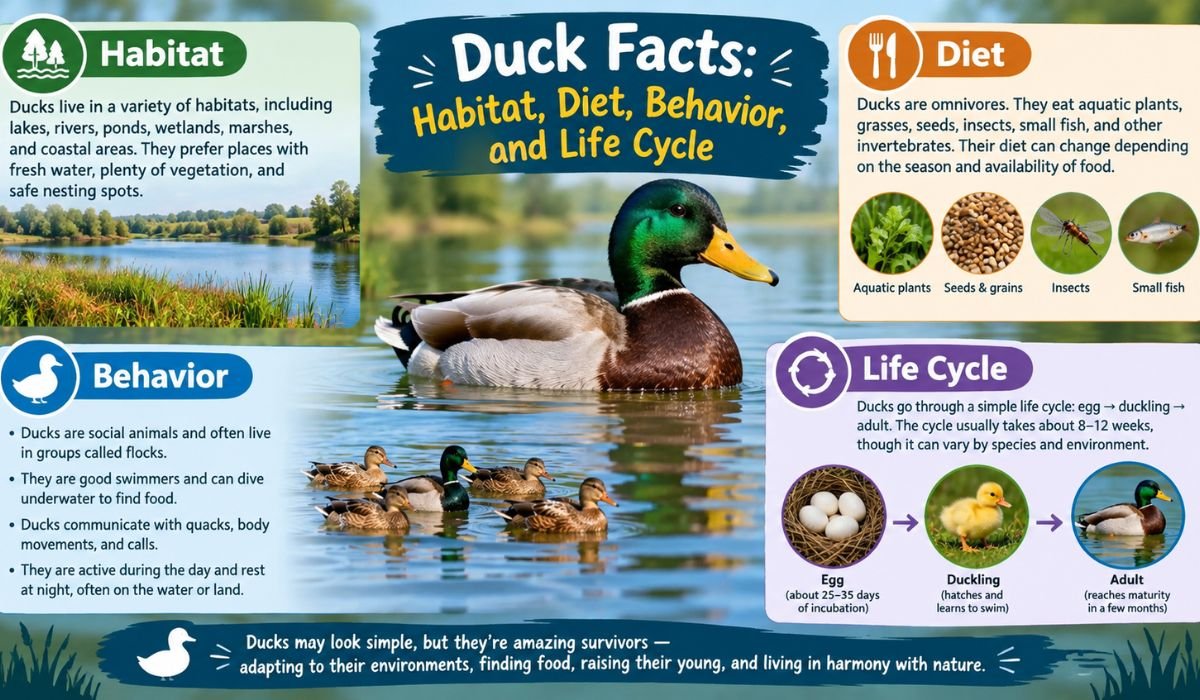
Ducks are familiar waterfowl found in ponds, lakes, rivers, wetlands, coastal areas, and even urban parks. They belong to the family Anatidae, which also includes geese and swans. With their waterproof feathers, webbed feet, and specialized bills, ducks are well adapted to life around water. These birds come in many sizes, colors, and shapes, with species living across almost every continent.
Learning duck facts reveals how these adaptable birds find food, communicate, raise their young, and survive in different environments. Some ducks spend most of their time on freshwater, while others are comfortable in saltwater habitats. Their behavior and feeding methods can also vary considerably between species.
What Are Ducks?
Ducks are waterfowl that are generally smaller than geese and swans, although there is considerable variation between species. Most ducks have relatively compact bodies, short necks, and broad bills.
There are many different types of ducks, including mallards, wood ducks, teal, diving ducks, and sea ducks. Some species are excellent swimmers, while others are especially skilled at flying or diving.
One interesting duck fact is that not every bird commonly called a duck belongs to the same closely related group. The word “duck” describes a broad collection of waterfowl rather than one single species.
Duck Habitat
Ducks can live in an impressive range of habitats. They are commonly associated with freshwater environments such as ponds, lakes, marshes, rivers, and wetlands. Some species also inhabit estuaries, coastal waters, and ocean environments.
Their habitat usually provides three important resources: food, water, and safe places for resting or nesting. Vegetation around wetlands can provide shelter from predators and suitable nesting locations.
Different species have different habitat preferences. Dabbling ducks often spend time in shallow water, where they can search for plants and small aquatic animals. Diving ducks are generally better adapted to deeper water and can submerge themselves to find food.
Urban parks can also provide suitable habitat for adaptable species such as mallards. However, natural wetlands remain especially important because they support a much wider variety of wildlife.
What Do Ducks Eat?
Ducks are generally omnivorous, meaning they can eat both plant and animal foods. Their diets vary according to species, age, season, and habitat.
Common foods include:
- Aquatic plants
- Seeds and grains
- Grass and leaves
- Algae
- Insects
- Snails and other small invertebrates
- Small aquatic animals
- Crustaceans
Dabbling ducks often feed near the water’s surface or tip their bodies forward to reach vegetation and other food below. Diving ducks can swim underwater to catch prey or collect aquatic plants.
Young ducklings often depend heavily on small invertebrates because these foods provide nutrients needed for growth. As they mature, their diet may include a greater proportion of plant material.
A useful duck fact is that their bills are adapted for feeding. Many ducks have structures along the edges of their bills that help them filter or strain food from water and mud.
Read Related Post: Octopus Habitat: Where Octopuses Live and How They Survive
Duck Physical Adaptations
Ducks have several physical characteristics that help them survive in aquatic environments.
Waterproof Feathers
Duck feathers are coated with oil produced by a special gland near the base of the tail. Ducks spread this oil across their feathers during grooming. The coating helps water roll off the outer feathers and keeps the underlying plumage relatively dry.
Webbed Feet
Their webbed feet act like paddles. When a duck pushes its feet backward through the water, the webbing helps provide propulsion. Ducks can also use their feet to steer and maintain balance while swimming.
Specialized Bills
Duck bills differ in shape depending on feeding habits. Some are broad and flat, while others are narrower. These differences allow different species to exploit different food sources.
Duck Behavior
Ducks display a wide range of behaviors related to feeding, communication, social interaction, reproduction, and protection.
Many ducks are social and can gather in groups, especially when resting or feeding. Some species form large flocks during migration or in areas where food is abundant.
Communication is also an important part of duck behavior. Ducks can produce calls, whistles, grunts, and other sounds. Vocalizations can help adults communicate with their young or alert other ducks to potential danger.
Ducks also spend considerable time grooming their feathers. This behavior helps maintain feather condition and distribute protective oils across their plumage.
Another interesting duck fact is that ducks can be active during different parts of the day depending on their species and environment. Some feed primarily during daylight, while others may become active around dawn, dusk, or at night.
How Do Ducks Swim?
Swimming is one of the most recognizable duck behaviors. Their streamlined bodies and webbed feet make them well suited to moving through water.
When swimming, ducks alternate their feet while using their legs to push water backward. Their body position allows them to move efficiently while keeping much of their body above the surface.
Some ducks are also capable divers. Diving species can use their feet and wings to move underwater while searching for food. They may remain submerged for varying amounts of time depending on the species and situation.
Duck Life Cycle
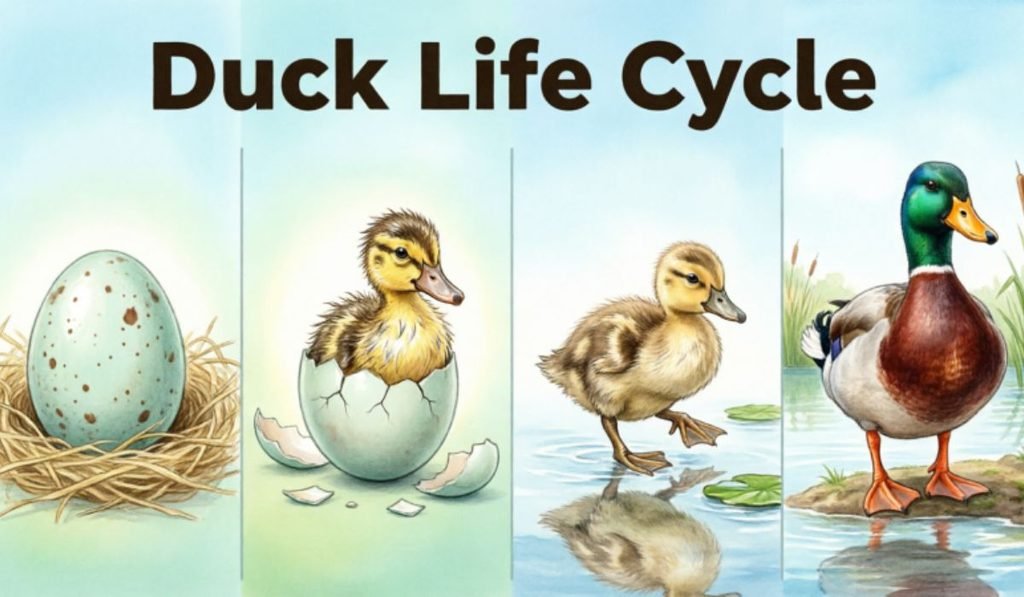
The duck life cycle begins when a female lays eggs in a nest. The number of eggs varies among species.
Eggs and Incubation
Female ducks generally build nests in protected locations using vegetation, feathers, and other available materials. Depending on the species, nests may be located close to water or in surrounding vegetation.
The female typically incubates the eggs by keeping them warm with her body. Incubation lasts for several weeks, although the exact period varies by species.
Ducklings
Ducklings usually hatch covered in soft down feathers. Many species produce young that are capable of walking and swimming soon after hatching.
The mother leads her ducklings toward suitable feeding and resting areas. Young ducks must still learn how to find food, avoid predators, and navigate their environment.
Juvenile and Adult Ducks
As ducklings grow, they gradually develop their adult feathers and physical characteristics. Their ability to fly improves as their bodies mature.
Eventually, young ducks become independent and reach sexual maturity. The age at which this happens varies among species.
This early development is an important duck fact because ducks have a relatively active start to life compared with many other birds.
Duck Reproduction
Most ducks reproduce by laying eggs in nests. Breeding behavior varies considerably between species.
During the breeding season, males may display distinctive plumage, calls, movements, or other behaviors to attract females. In some species, males have much brighter feathers than females, while in others the sexes look relatively similar.
After mating, the female generally takes primary responsibility for incubating the eggs and caring for the ducklings. However, parental behavior differs among duck species.
Where Do Ducks Migrate?
Many duck species migrate between breeding and wintering areas. Migration allows them to take advantage of seasonal food supplies and suitable breeding conditions.
Some ducks travel relatively short distances, while others migrate thousands of kilometers. Their routes can cross countries and geographic regions.
Migration often occurs during spring and autumn. Ducks may use wetlands, rivers, lakes, and coastal areas as important resting and feeding locations along the way.
Not every duck species migrates, however. Some populations remain in the same general region throughout the year when food and weather conditions are suitable.
How Do Ducks Protect Themselves?
Ducks face predators both on land and in water. Eggs and young ducklings are especially vulnerable.
Depending on their habitat, predators can include foxes, raccoons, large fish, birds of prey, snakes, and other animals.
Ducks use several strategies to improve survival. They can quickly enter water when threatened, fly away from danger, remain alert while feeding, and use vegetation for cover.
Some species also form groups, which can make it easier to detect approaching predators.
Interesting Duck Facts
There are many fascinating things to learn about these adaptable waterfowl.
- Ducks are found on every continent except Antarctica.
- Many ducks have waterproof outer feathers.
- Their webbed feet help them swim efficiently.
- Ducks can be excellent fliers despite their compact bodies.
- Some duck species can dive underwater to find food.
- Ducklings of many species can swim shortly after hatching.
- Ducks communicate through different calls and body movements.
- Some duck species migrate thousands of kilometers.
- Mallards are among the world’s most widely recognized duck species.
- Duck diets can include both plant and animal foods.
These duck facts demonstrate how versatile ducks are and why they can survive in such a wide range of environments.
Frequently Asked Questions About Duck Facts
What do ducks eat?
Ducks can eat plants, seeds, grains, algae, insects, snails, crustaceans, and other small aquatic organisms. Their exact diet depends on their species, age, and habitat.
Where do ducks live?
Ducks live in ponds, lakes, rivers, wetlands, marshes, coastal areas, estuaries, and other aquatic environments. Some adaptable species also live successfully in urban parks.
Can ducks swim underwater?
Yes. Many ducks can dive and swim underwater, particularly species adapted to deeper water. Diving allows them to search for aquatic plants and small animals.
How long do ducks live?
Lifespan varies greatly by species and environmental conditions. Wild ducks face predators, disease, habitat loss, and other challenges, while some individuals can survive for many years.
Can ducklings swim after hatching?
Many ducklings can swim soon after hatching. Their early ability to move through water helps them follow their mother and reach feeding areas.
Do all ducks migrate?
No. Some duck species migrate seasonally, while others remain in the same general region throughout the year. Migration patterns depend on species, population, climate, and food availability.
Conclusion
Ducks are highly adaptable waterfowl with specialized features that help them survive in aquatic environments. Their waterproof feathers, webbed feet, specialized bills, and varied feeding strategies allow them to thrive in habitats ranging from freshwater wetlands to coastal areas.
From their fascinating life cycle to their social behavior and migration patterns, duck facts show why these birds are such successful members of the world’s ecosystems. Whether swimming across a pond, searching for food in a wetland, or traveling between seasonal habitats, ducks have developed remarkable adaptations for survival.

Hi, I’m Amelia, an SEO and content specialist with several years of experience researching and creating informative content for online audiences. At Animal Attack Facts, I focus on animal behavior, animal attacks on humans, and interesting facts about land animals, marine animals, birds, reptiles, and insects. My goal is to provide clear, useful, and engaging information that helps readers better understand wildlife and stay informed about animal encounters.
1 thought on “Duck Facts: Habitat, Diet, Behavior, and Life Cycle”