
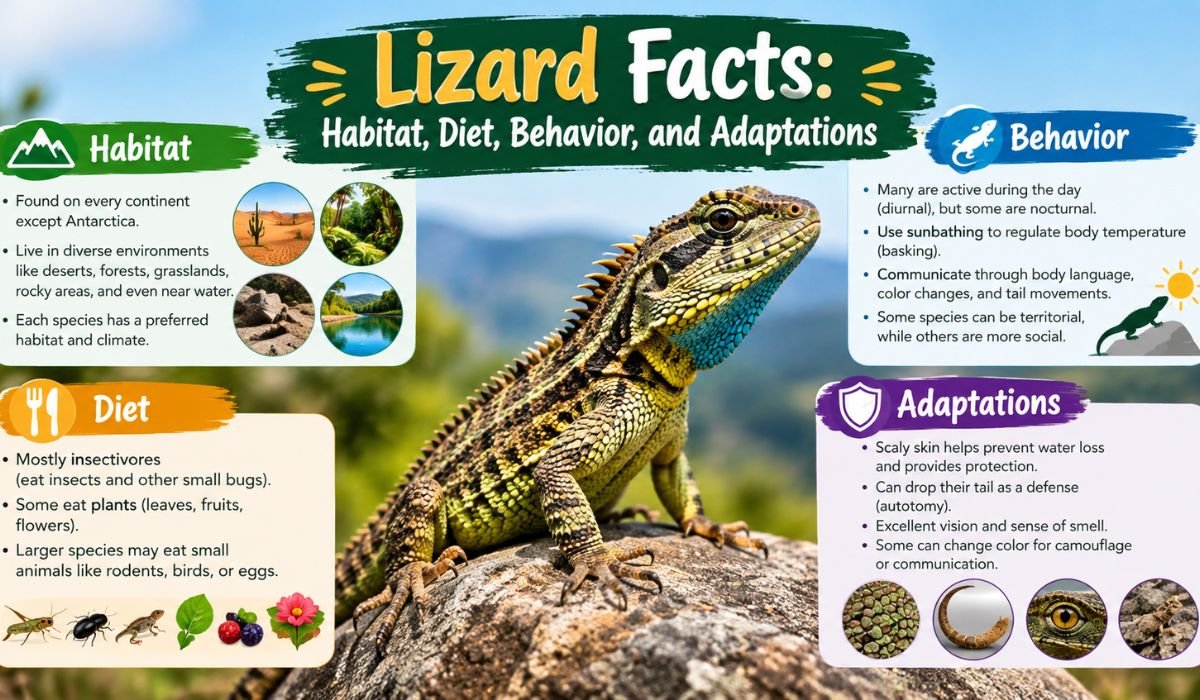
Lizards are fascinating reptiles found in many parts of the world. From tiny geckos hiding around homes to large monitor lizards living in forests and grasslands, these animals have adapted to a remarkable range of environments. Learning lizard facts reveals how these reptiles survive, find food, avoid predators, and reproduce.
There are thousands of known lizard species, and they vary greatly in size, color, body shape, and behavior. Some live in trees, while others spend much of their time on the ground, in deserts, or near water. Their ability to adapt to different habitats has helped lizards become one of the most diverse groups of reptiles.
What Are Lizards?
Lizards are reptiles belonging mainly to the order Squamata, which also includes snakes. Most lizards have four legs, although some species have reduced or absent limbs and resemble snakes.
One of the most interesting lizard facts is that lizards can have very different physical characteristics depending on their species. Many have scales covering their bodies, movable eyelids, external ear openings, and long tails.
Lizards are generally ectothermic, meaning they rely heavily on external sources of heat to regulate their body temperature. They may bask in sunlight when they need warmth and move into shade when they become too hot.
Where Do Lizards Live?
Lizards live on every continent except Antarctica. Their habitats include deserts, forests, grasslands, mountains, wetlands, rocky areas, and even urban environments.
Some species are highly specialized for particular habitats. Desert lizards may have adaptations that help them tolerate heat and limited water, while tropical species may be suited to humid forests.
Lizards in Deserts
Desert lizards often spend the hottest parts of the day in burrows, beneath rocks, or in shaded areas. They may emerge during cooler periods to hunt and bask.
Their body coloration can sometimes help them blend into sand, rocks, or dry vegetation.
Lizards in Forests
Forest-dwelling lizards can be found on the ground, among vegetation, or high in trees. Many arboreal species have specialized feet and toes that help them grip branches.
Geckos and anoles are examples of lizards that commonly use vegetation and trees as part of their habitat.
Read Related Post: Duck Facts: Habitat, Diet, Behavior, and Life Cycle
Lizards in Grasslands and Rocky Areas
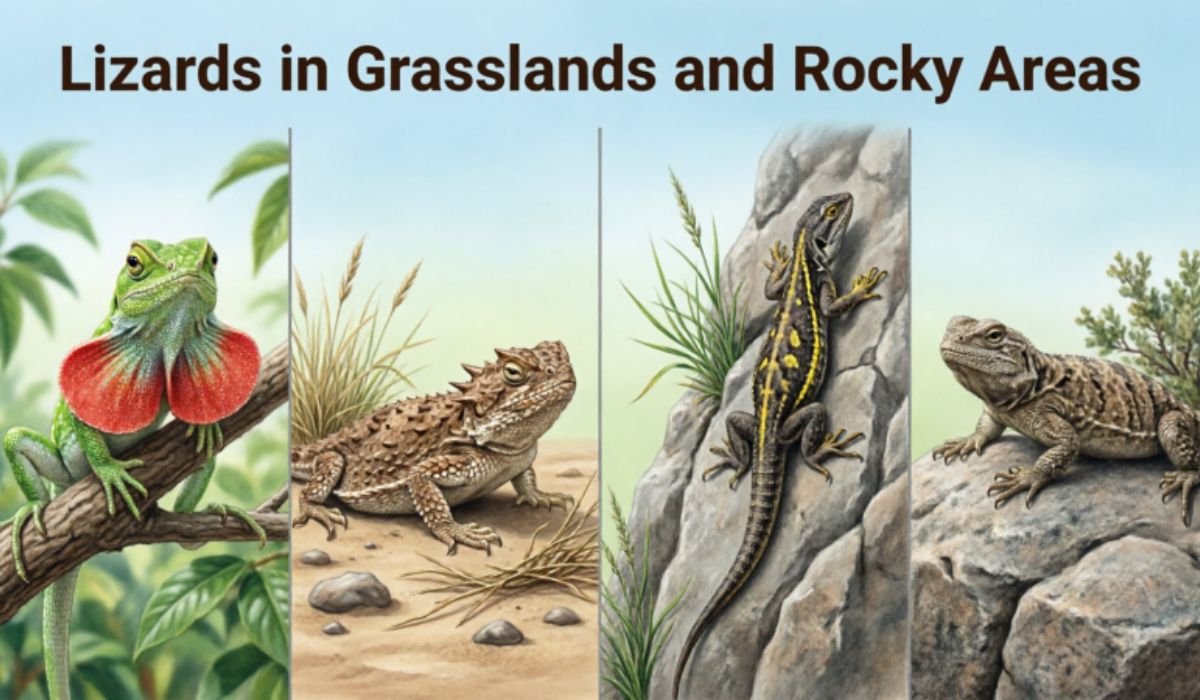
Grasslands provide insects and other food sources for many lizards. Rocky habitats also offer excellent hiding places and basking surfaces.
Some species use cracks between rocks as shelters from predators and extreme temperatures.
What Do Lizards Eat?
Lizard diets vary considerably between species. Many are insectivores, feeding on insects and other small invertebrates. Others eat plants, fruits, eggs, small vertebrates, or a combination of different foods.
Insect-eating lizards may consume crickets, beetles, grasshoppers, spiders, and other small animals. Larger species can sometimes capture prey such as rodents, birds, or other reptiles.
Herbivorous lizards may feed on leaves, flowers, fruits, and other plant material.
One important lizard fact is that diet is strongly influenced by the species and its environment. A small gecko and a large monitor lizard may have completely different feeding strategies.
How Do Lizards Hunt?
Many lizards rely on their vision to locate prey. Some remain still and wait for an opportunity to capture an insect, while others actively search through vegetation, rocks, soil, or leaf litter.
A lizard may quickly move toward prey and use its jaws to capture it. Some species also use their tongues to gather information about their surroundings.
Larger predatory lizards can use speed, strength, and powerful jaws to capture bigger prey.
Lizard Behavior
Lizard behavior differs greatly among species. Some are solitary and spend most of their lives alone except during reproduction. Others may interact regularly with members of their own species.
Basking is a common behavior because lizards need external heat to maintain suitable body temperatures. They may choose sunny rocks, tree branches, walls, or other warm surfaces.
Many lizards are also territorial. Males of some species may display their bodies, bob their heads, change colors, or use other signals to communicate with rivals.
How Lizards Communicate
Lizards communicate through visual displays, body movements, chemical signals, sounds, and physical interactions.
For example, some species use head movements or body postures to warn rivals or attract mates. Geckos are particularly notable because many species produce vocal sounds.
These communication methods help lizards establish territories, recognize potential mates, and respond to threats.
How Do Lizards Protect Themselves?
Lizards have developed many defenses against predators. Their strategies include camouflage, speed, hiding, biting, and tail-related defenses.
Some species can detach part of their tails when grabbed by a predator. This process is known as autotomy. The moving tail can distract the predator while the lizard escapes.
The lost tail may later regenerate, although the replacement is often different from the original tail in structure and appearance.
Camouflage
Camouflage is another important survival strategy. Many lizards have colors and patterns that help them blend into their surroundings.
A brown lizard may be difficult to notice among tree bark or dry leaves, while a green species may blend into vegetation.
Speed and Hiding
When threatened, many lizards quickly run toward vegetation, rocks, burrows, or other hiding places. Small gaps and crevices can provide valuable protection from predators.
Some species remain completely motionless when they believe they have not been detected.
Lizard Adaptations
The incredible diversity of lizards is partly the result of adaptations that allow different species to survive in different environments.
Some have sticky or specialized feet that allow them to climb smooth surfaces. Others have powerful claws for digging or climbing. Desert species may have behavioral and physical features that help them cope with high temperatures.
Special Feet
Geckos are famous for their ability to climb many surfaces. Their feet contain microscopic structures that create forces allowing them to attach to surfaces.
Other lizards have long claws or specialized toes suited to climbing, digging, running, or moving across sand.
Tail Adaptations
A lizard’s tail can serve several purposes. It may help with balance, movement, fat storage, or defense.
In some species, the tail is particularly important for escaping predators because it can detach when the animal is attacked.
Color Changes
Some lizards can change their coloration. Chameleons are especially famous for this ability, although color changes can also occur in other lizards.
Color may be associated with communication, temperature regulation, camouflage, or changes in emotional and social state, depending on the species.
How Do Lizards Reproduce?
Most lizards reproduce sexually, and many species lay eggs. However, reproductive strategies vary considerably.
Female lizards may deposit eggs in soil, beneath rocks, inside burrows, or in other protected locations. Some species produce only a few eggs at a time, while others lay larger clutches.
Some lizard species give birth to live young instead of laying eggs. This reproductive diversity allows different species to survive in different environmental conditions.
Young lizards generally resemble smaller versions of adults, unlike amphibians that often undergo dramatic transformations during development.
How Long Do Lizards Live?
Lizard lifespan varies widely depending on species, habitat, predators, food availability, and environmental conditions.
Some small lizards may live for only a few years, while certain larger species can survive for considerably longer under suitable conditions.
Captive lizards may sometimes live longer than wild individuals because they receive consistent food, shelter, and veterinary care.
Are Lizards Dangerous?
Most lizards pose little danger to people and generally try to avoid human contact. Many common species are small, shy, and more interested in finding food or escaping predators than interacting with humans.
However, some large lizards have strong jaws and can defend themselves if threatened. Certain species also have venomous or toxic characteristics.
The safest approach is to observe wild lizards from a respectful distance and avoid attempting to handle unfamiliar species.
Interesting Lizard Facts
Here are some fascinating lizard facts:
- Lizards are reptiles and are closely related to snakes.
- Lizards live on every continent except Antarctica.
- There are thousands of recognized lizard species.
- Many lizards rely on sunlight to warm their bodies.
- Some lizards can detach their tails to escape predators.
- Geckos have specialized feet that help them climb surfaces.
- Some lizards can change their body coloration.
- Lizard diets range from insects and other small animals to plants and fruit.
- Some lizards live in deserts, while others inhabit forests and mountains.
- Certain lizards can regenerate parts of their tails.
- Some lizards communicate using body movements and sounds.
- Not every lizard lays eggs; some species give birth to live young.
Frequently Asked Questions About Lizard Facts
What are the most interesting lizard facts?
Some of the most interesting lizard facts include their ability to live in diverse habitats, use camouflage, climb surfaces, and in some species detach and regenerate their tails.
Where do lizards live?
Lizards live in deserts, forests, grasslands, mountains, rocky environments, wetlands, and urban areas. Their distribution covers most continents around the world.
What do lizards eat?
Lizards eat different foods depending on their species. Many eat insects and spiders, while others consume plants, fruits, eggs, or small vertebrates.
Can lizards lose their tails?
Yes. Some lizard species can intentionally detach their tails when attacked by a predator. The detached tail may continue moving and distract the predator while the lizard escapes.
Are all lizards the same size?
No. Lizard species vary greatly in size. Some are very small, while large monitor lizards can grow to several feet in length.
Can lizards change color?
Some lizards can change color. Chameleons are the best-known example, but color changes also occur in other species for different biological and communication purposes.
Conclusion
Lizards are remarkably diverse reptiles with an impressive range of adaptations. From desert-dwelling species that tolerate extreme heat to tree-climbing geckos with specialized feet, different lizards have evolved unique ways to survive.
Understanding these lizard facts shows how adaptable reptiles can be. Their varied diets, behaviors, defensive strategies, reproductive methods, and physical adaptations make lizards an important and fascinating part of many ecosystems.

Hi, I’m Amelia, an SEO and content specialist with several years of experience researching and creating informative content for online audiences. At Animal Attack Facts, I focus on animal behavior, animal attacks on humans, and interesting facts about land animals, marine animals, birds, reptiles, and insects. My goal is to provide clear, useful, and engaging information that helps readers better understand wildlife and stay informed about animal encounters.
1 thought on “Lizard Facts: Habitat, Diet, Behavior, and Adaptations”