
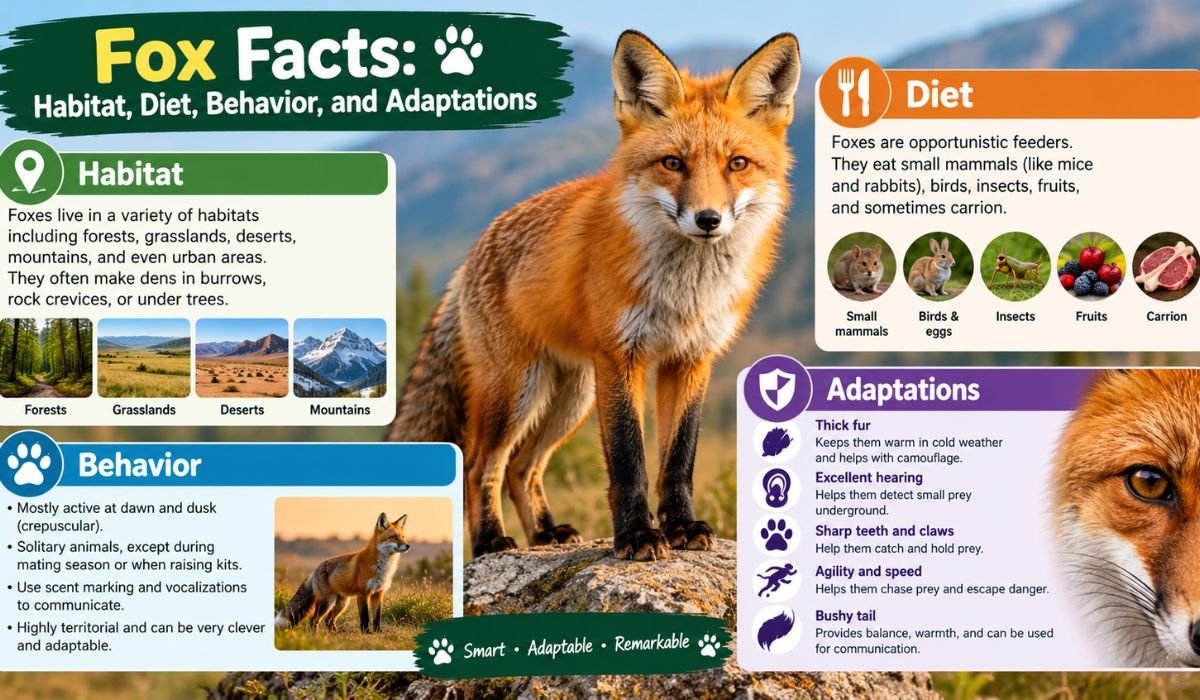
Foxes are among the most adaptable wild mammals in the world. Found across forests, grasslands, deserts, mountains, and even urban areas, these members of the dog family have developed impressive ways to survive in different environments. Their sharp senses, flexible diets, clever hunting techniques, and ability to adapt to changing conditions make them fascinating animals to study.
In this guide to fox facts, you will learn about fox habitats, diets, behavior, physical adaptations, reproduction, communication, and the different species found around the world. Whether you are interested in red foxes, Arctic foxes, or other species, these facts reveal why foxes are such successful survivors.
What Is a Fox?
A fox is a small to medium-sized mammal belonging to the Canidae family, which also includes wolves, dogs, coyotes, and jackals. There are around a dozen true fox species in the genus Vulpes, although several other canids are also commonly called foxes.
The red fox is the most widely distributed fox species and can be found across much of the Northern Hemisphere, as well as in parts of Australia where it was introduced. Other species have much smaller ranges and are adapted to particular environments.
One of the most interesting fox facts is that foxes are generally smaller than wolves and many other wild canids. Their relatively small size allows them to hunt smaller prey and survive in environments where larger predators may struggle.
Fox Habitat
Foxes live in a remarkable variety of habitats. Depending on the species, they may inhabit forests, grasslands, deserts, mountains, tundra, wetlands, agricultural areas, and urban environments.
Red foxes are especially adaptable and can live close to humans. They may establish territories around farms, parks, suburbs, and city edges when food and shelter are available.
Arctic foxes are specially adapted to the frozen environments of the Arctic. Their thick fur and compact bodies help them conserve heat during extremely cold conditions.
Desert-dwelling foxes, such as the fennec fox, have adaptations that help them cope with heat and limited water. Their large ears help release heat and also provide excellent hearing for detecting prey.
These varied habitats demonstrate one of the most important fox facts: different fox species have evolved specialized characteristics that allow them to survive in challenging environments.
What Do Foxes Eat?
Foxes are omnivores and opportunistic feeders. Their diets can vary considerably depending on their species, location, season, and availability of food.
Common fox foods include:
- Small mammals
- Birds
- Eggs
- Insects
- Frogs
- Lizards
- Fish
- Crustaceans
- Fruits
- Berries
- Seeds
- Other plant material
Small rodents are an important food source for many foxes. A fox may use its excellent hearing to locate prey beneath grass, leaves, or even snow before attempting to catch it.
Foxes do not always eat their entire meal immediately. When food is plentiful, they may hide extra food underground or beneath vegetation and return to it later.
Their flexible diet is another reason fox populations can survive in a wide range of environments.
Read Related Post: Lizard Facts: Habitat, Diet, Behavior, and Adaptations
Fox Behavior
Foxes are intelligent and adaptable animals with complex behaviors. Many species are most active around dusk, during the night, or during early morning, although activity patterns can vary.
Foxes usually spend much of their time searching for food, exploring their territory, resting, and avoiding predators.
Unlike wolves, which often live and hunt in organized packs, many fox species are relatively solitary. However, foxes can form social relationships, particularly during breeding and when raising young.
A fox may defend a territory against other foxes. Territories can vary greatly in size depending on habitat, food availability, population density, and species.
Their intelligence and behavioral flexibility are frequently highlighted in fox facts, particularly their ability to adjust their behavior when environmental conditions change.
How Do Foxes Communicate?
Foxes use a combination of sounds, body language, facial expressions, and scent marking to communicate.
They can produce many different vocalizations, including barks, yelps, screams, whines, and other calls. Some fox sounds can be surprisingly loud and unusual, especially during the breeding season.
Scent is also important. Foxes can use scent markings to communicate information about territory and possibly reproductive status.
Body posture and tail movements provide additional signals between individuals.
This combination of communication methods allows foxes to interact even when they are not physically close to one another.
Fox Adaptations for Survival
Foxes possess many physical and behavioral adaptations that help them survive.
Excellent Hearing
Foxes have highly sensitive hearing. They can detect small animals making noises beneath vegetation or snow. This ability is particularly useful when hunting rodents.
Strong Sense of Smell
Their sense of smell helps foxes locate food, identify scents left by other animals, and navigate their environment.
Bushy Tail
A fox’s bushy tail, sometimes called a brush, serves several purposes. It can help with balance, provide warmth when the fox rests, and play a role in communication.
Sharp Teeth and Claws
Foxes have teeth and claws suited to catching and eating a variety of prey. Their claws can also help them dig dens and uncover food.
Thick Fur
Many foxes grow thick coats that provide insulation. Arctic foxes have especially dense fur and seasonal changes in coat color and thickness that help them cope with extreme Arctic conditions.
These adaptations are among the most fascinating fox facts because they show how physical features and behavior work together to improve survival.
How Do Foxes Hunt?
Foxes use several hunting strategies depending on the prey they are pursuing.
When hunting small mammals, a fox may quietly approach an area where prey is hiding. It can use its hearing to locate the animal and then make a rapid leap to catch it.
Foxes may also stalk birds, search through vegetation for insects, or investigate areas where food scraps are available.
Their opportunistic hunting style allows them to take advantage of many different food sources instead of relying on just one type of prey.
Fox Reproduction and Babies
Fox breeding seasons vary depending on species and location. In many species, mating occurs during a particular period of the year, followed by the birth of a litter several weeks later.
Female foxes typically give birth in a den. A litter may contain several pups, although litter size varies.
Fox pups are born dependent on their parents for food and protection. They remain in or near the den while they develop and gradually become more independent.
Parents may bring food back to the den for their young. As the pups grow, they begin exploring their surroundings and learning important survival skills.
Young foxes eventually leave their parents and establish territories of their own.
Do Foxes Live in Dens?
Yes, many foxes use dens, particularly when raising young. A den provides protection from weather, predators, and other dangers.
Foxes may dig their own burrows, but they can also use abandoned underground shelters created by other animals.
A fox may have more than one den or shelter within its territory and may move between them depending on circumstances.
Dens are particularly important during the breeding season because young pups need a protected location while they are growing.
Types of Foxes
There are several fox species around the world, each with its own characteristics.
Red Fox
The red fox is the most widely distributed fox species. It has reddish fur, a white underside, pointed ears, and a long bushy tail. Red foxes are highly adaptable and can survive in both rural and urban environments.
Arctic Fox
The Arctic fox lives in northern regions and is exceptionally well adapted to cold conditions. Its compact body, thick fur, and furry feet help reduce heat loss.
Fennec Fox
The fennec fox is famous for its extremely large ears relative to its body. It lives primarily in the deserts of North Africa and is adapted to hot, dry environments.
Gray Fox
The gray fox is native to North and Central America. Unlike many other canids, it is capable of climbing trees, giving it an unusual advantage when escaping predators or searching for food.
Swift Fox
The swift fox is a small North American fox associated with grassland habitats. It is named for its speed and agility.
These species show how fox facts can vary greatly because different foxes have evolved in very different environments.
Are Foxes Dangerous?
Foxes generally avoid people and are not considered a major danger to humans. Like any wild animal, however, they should be observed from a safe distance.
A fox that appears unusually aggressive, sick, injured, or unafraid of people should not be approached. Wild animals can behave unpredictably when they feel threatened.
It is also important not to feed wild foxes. Providing food can cause animals to become dependent on humans and may encourage them to approach homes or people.
Foxes in Urban Areas
Some fox species, especially red foxes, have become successful urban wildlife. Cities can provide food, shelter, gardens, parks, and other suitable spaces.
Urban foxes may search for insects, rodents, fallen fruit, and food waste. Their ability to exploit different food sources helps them survive in environments heavily influenced by humans.
Urban fox populations also demonstrate their remarkable ability to adjust their activity patterns and behavior.
Frequently Asked Questions About Fox Facts
What do foxes eat?
Foxes are omnivores that eat a mixture of animal and plant foods. Their diet may include rodents, birds, insects, eggs, fish, fruits, and berries.
Where do foxes live?
Foxes can live in forests, grasslands, deserts, mountains, tundra, farmland, and urban environments. Their habitat depends on the species.
Are foxes nocturnal?
Many foxes are active at night or around dawn and dusk, but they are not strictly nocturnal. Their activity can change depending on food availability, human activity, and local conditions.
How long do foxes live?
Lifespan varies by species and environment. Wild foxes generally face many threats, including disease, predators, competition, accidents, and limited food.
Do foxes live alone?
Many foxes spend much of their time alone, but they can form family groups and social relationships. Parents cooperate in raising young in many species.
Why do foxes have bushy tails?
A fox’s bushy tail helps with balance, communication, and warmth. It can also provide insulation when the animal curls up to rest.
Can foxes climb trees?
Some fox species can climb trees. The gray fox is particularly well known for its climbing ability.
What makes foxes good survivors?
Their adaptability, excellent senses, flexible diets, intelligence, and physical adaptations help them survive in many different environments.
Conclusion
Foxes are highly adaptable members of the dog family with a remarkable range of survival strategies. From the cold Arctic tundra to hot deserts and busy urban areas, different fox species have developed specialized adaptations for their environments.
Their flexible diets, excellent hearing, sharp senses, bushy tails, thick fur, and clever hunting strategies all contribute to their success. Whether you are studying red foxes, Arctic foxes, fennec foxes, or other species, these fox facts show why foxes are among the most fascinating wild mammals.
Understanding fox facts also highlights the importance of respecting wildlife. Foxes play valuable roles in ecosystems by helping control populations of rodents, insects, and other small animals. Their ability to adapt makes them an important and fascinating part of the natural world.

Hi, I’m Amelia, an SEO and content specialist with several years of experience researching and creating informative content for online audiences. At Animal Attack Facts, I focus on animal behavior, animal attacks on humans, and interesting facts about land animals, marine animals, birds, reptiles, and insects. My goal is to provide clear, useful, and engaging information that helps readers better understand wildlife and stay informed about animal encounters.
1 thought on “Fox Facts: Habitat, Diet, Behavior, and Adaptations”