
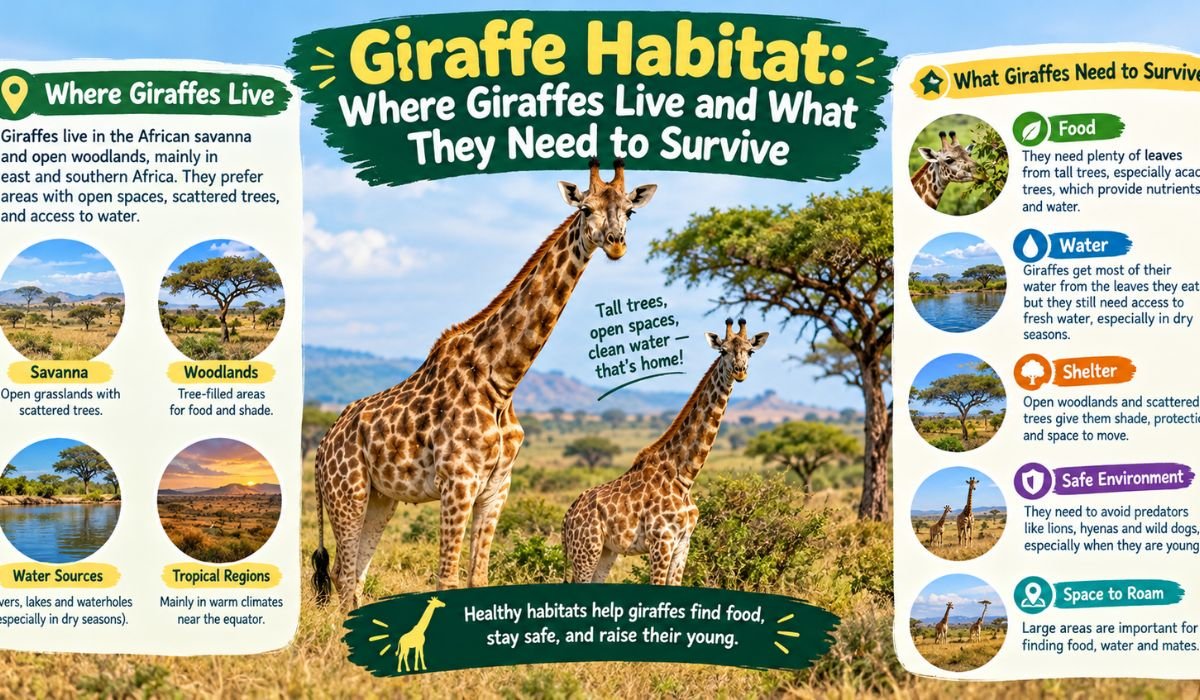
Giraffes are famous for their extraordinary height, long necks, and distinctive spotted coats. These remarkable animals are native to Africa, where they live in a variety of habitats that provide enough food, water, shelter and space to survive.
The giraffe habitat is mainly made up of savannas, grasslands, woodlands, and open forests. Although giraffes can survive in dry environments, they depend heavily on trees and shrubs for food.
Understanding where giraffes live helps explain how these animals have adapted to some of Africa’s warm and sometimes challenging environments.
Where Do Giraffes Live?
Giraffes live naturally in Africa, particularly in eastern and southern parts of the continent. Their distribution is not continuous, meaning different giraffe populations can be found in separate regions.
Countries where giraffes can be found include:
- Kenya
- Tanzania
- Uganda
- Ethiopia
- Namibia
- Botswana
- Zimbabwe
- Zambia
- South Africa
Different giraffe species and populations occupy different areas. Some live in relatively dry savannas, while others prefer woodland environments with plenty of vegetation.
What Is a Giraffe’s Natural Habitat?
The natural habitat of a giraffe usually includes a mixture of open grassland, scattered trees, shrubs, and woodland.
These habitats are ideal because giraffes are browsers rather than grazers. Instead of eating mostly grass like zebras or many other herbivores, giraffes use their long necks and tongues to feed on leaves growing high above the ground.
A suitable giraffe habitat generally provides:
- Plenty of trees and shrubs
- Access to fresh vegetation
- Water sources or seasonal water
- Open areas for movement
- Protection from extreme environmental conditions
Giraffe Habitat in the Savanna
The African savanna is one of the most important habitats for giraffes. Savannas contain large open areas covered by grasses, along with scattered trees and shrubs.
Trees are especially important because they provide much of a giraffe’s food. Acacia and other thorny trees are commonly associated with giraffe feeding.
The open nature of the savanna also gives giraffes room to move between feeding areas and makes it easier for them to spot potential predators from a distance.
Giraffes in Woodlands and Open Forests
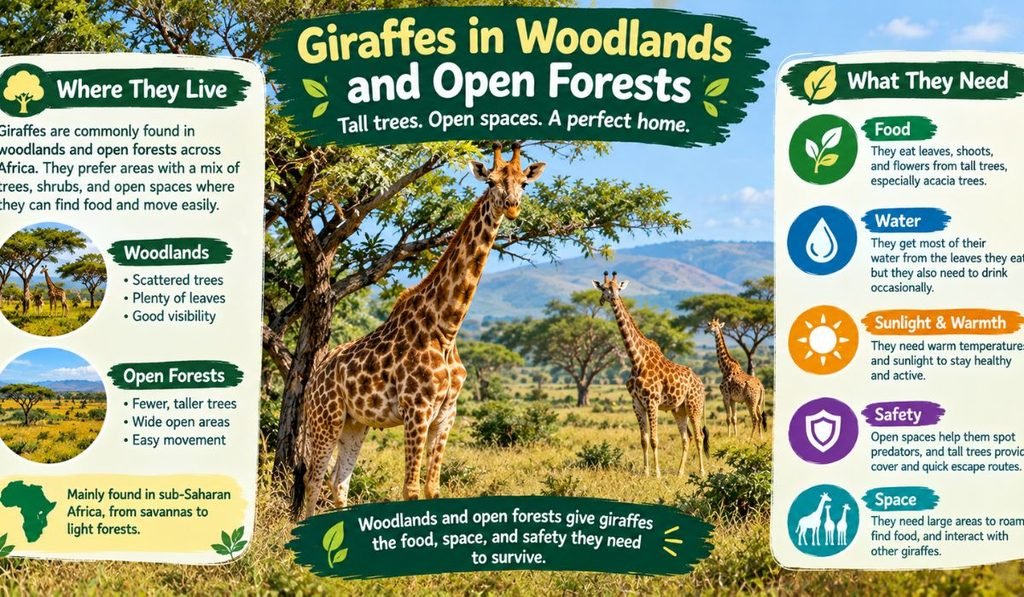
Giraffes also live in woodland habitats where trees are more abundant than in open grasslands.
Woodlands can provide an excellent food supply because giraffes can browse leaves from many different trees and shrubs. However, extremely dense forests are generally less suitable because giraffes are adapted to feeding in areas where vegetation is accessible.
Their long legs and necks allow them to reach vegetation that many other herbivores cannot.
Read Related Post: Crocodile Habitat: Where Crocodiles Live and How They Survive
How Giraffes Adapt to Their Habitat
Giraffes have several physical and behavioral adaptations that help them survive in their African habitats.
Their Long Necks Help Them Reach Food
A giraffe’s long neck allows it to reach leaves high in trees. This gives giraffes access to food sources that are difficult for many other herbivores to reach.
This feeding strategy also reduces direct competition with animals that mainly eat vegetation closer to the ground.
Their Long Tongues Help With Feeding
Giraffes have long, flexible tongues that help them pull leaves from branches. Their tongues and mouths are adapted to deal with thorny vegetation.
This is particularly useful when feeding on trees that have sharp thorns.
Their Height Provides a Wide View
Being tall has another major advantage. Giraffes can often see across open landscapes from a considerable height.
A wide field of view can help them notice approaching predators or other giraffes over long distances.
Their Bodies Handle Hot Conditions
Many giraffes live in warm African environments. Their body structure and behavior help them cope with high temperatures.
They may spend more time feeding during cooler parts of the day and rest during periods of intense heat.
What Do Giraffes Eat in Their Habitat?
Giraffes are herbivores and mainly eat leaves, shoots, flowers, and other plant material.
Some commonly eaten plants include:
- Acacia
- Commiphora
- Combretum
- Wild fruits and flowers when available
- Various shrubs and trees
Their diet can change depending on the season and the plants available in their habitat.
During dry periods, giraffes can benefit from their ability to reach leaves that remain available higher in trees.
Do Giraffes Need Water?
Yes, giraffes need water, but they can sometimes go for extended periods without directly drinking.
They obtain some moisture from the plants they eat. When water is available, however, giraffes will drink from rivers, waterholes, and other suitable sources.
Drinking can be physically challenging because giraffes must spread their front legs and lower their long necks toward the ground.
How Do Giraffes Survive During Dry Seasons?
Dry seasons can make survival more difficult because vegetation and water may become less available.
Giraffes cope with dry conditions in several ways. Their ability to browse leaves high in trees gives them access to food that may remain available even when grasses become dry.
They can also travel between feeding areas in search of suitable vegetation and water.
Their large size and specialized feeding habits make them well adapted to seasonal African environments.
Do Giraffes Live in Groups?
Giraffes are social animals and can be seen in groups, although the size and composition of these groups can change.
Groups may include females and young giraffes, while males may spend time alone or associate with other males.
Giraffes do not always remain in the same group. Individuals can join or leave groups depending on social and environmental conditions.
Where Do Giraffes Sleep?
Giraffes can rest while standing, but they may also lie down when they feel safe.
Because giraffes live in environments where predators such as lions may be present, remaining alert is important. Their height can help them monitor their surroundings while resting or feeding.
Young giraffes are more vulnerable to predators than healthy adults, making suitable and relatively safe resting areas particularly important.
What Threatens the Giraffe Habitat?
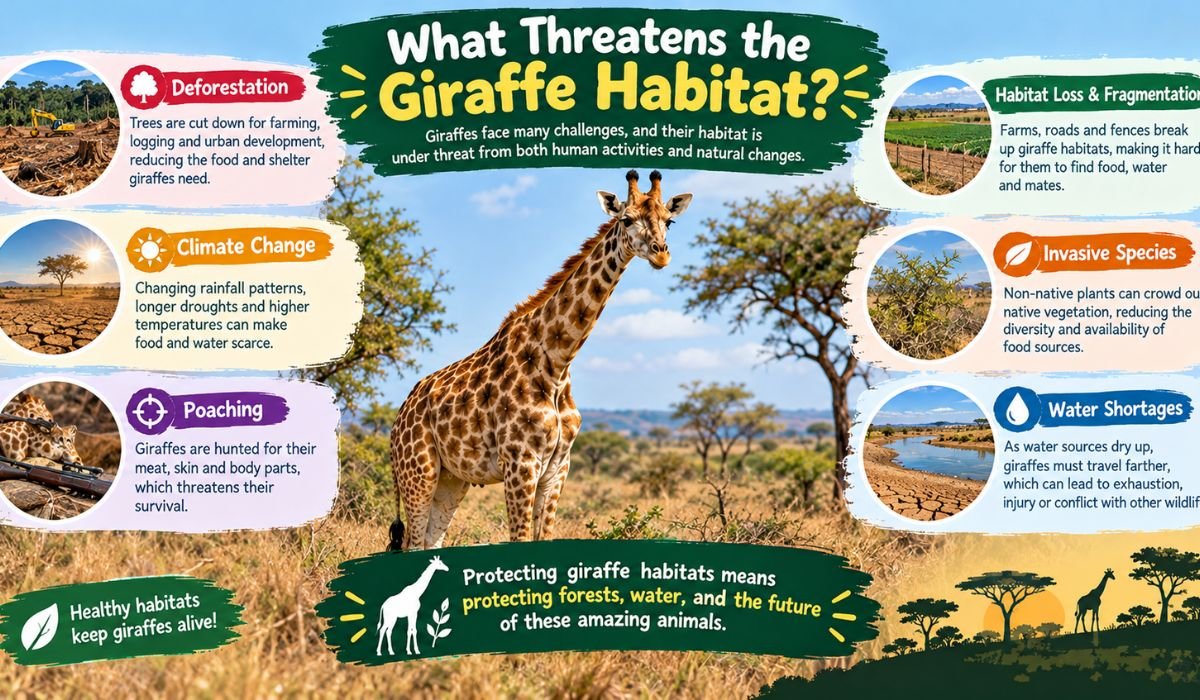
Giraffe habitats face several environmental pressures.
Habitat Loss
The conversion of natural land for agriculture, roads, settlements, and other human activities can reduce the amount of suitable habitat available to giraffes.
Habitat Fragmentation
When large natural areas are divided into smaller sections, giraffe populations may become separated. This can make it harder for animals to move between feeding and breeding areas.
Loss of Food Sources
Removing trees and shrubs can reduce the vegetation giraffes depend on for food.
Climate and Environmental Changes
Changes in rainfall patterns, drought, and other environmental conditions can affect vegetation and water availability.
How Can Giraffe Habitats Be Protected?
Protecting giraffes requires protecting the ecosystems where they live.
Important conservation efforts include:
- Protecting natural savannas and woodlands
- Maintaining wildlife corridors
- Preventing unnecessary habitat destruction
- Supporting protected areas
- Monitoring giraffe populations
- Working with local communities
- Protecting important food and water resources
Conserving giraffe habitat also benefits many other African species that share the same ecosystems.
FAQ’s
What is the main habitat of a giraffe?
The main giraffe habitat consists of African savannas, grasslands, woodlands, and open forests where trees and shrubs provide food.
Where do giraffes live naturally?
Giraffes live naturally in Africa, especially in parts of eastern and southern Africa.
Do giraffes live in forests?
Giraffes can live in open woodland and areas with many trees, but dense forests are generally less suitable because giraffes prefer habitats where they can easily browse vegetation.
What do giraffes need to survive?
Giraffes need food, water, suitable vegetation, space to move, and a habitat that provides opportunities for feeding and protection.
Can giraffes survive in dry habitats?
Yes. Giraffes are well adapted to relatively dry environments. Their ability to feed on leaves from trees can help them find food when ground vegetation becomes scarce.
Do giraffes live in deserts?
Giraffes are not typically desert animals. They are mainly associated with savannas, woodlands, grasslands, and other areas where enough trees and shrubs are available.
Why are trees important to giraffes?
Trees provide giraffes with much of their food. Their height and long necks allow them to reach leaves that many other herbivores cannot easily access.
Conclusion
The giraffe habitat is closely connected to the trees and vegetation these remarkable animals depend on. Giraffes are mainly found in African savannas, woodlands, grasslands, and open forests where they can browse leaves from trees and shrubs.
Their long necks, height, flexible tongues, and ability to cope with dry conditions make them highly adapted to their environment. However, habitat loss and fragmentation can threaten the ecosystems they depend on.
Protecting natural African habitats is therefore an important part of protecting giraffes and the many other species that share their environment.

Hi, I’m Amelia, an SEO and content specialist with several years of experience researching and creating informative content for online audiences. At Animal Attack Facts, I focus on animal behavior, animal attacks on humans, and interesting facts about land animals, marine animals, birds, reptiles, and insects. My goal is to provide clear, useful, and engaging information that helps readers better understand wildlife and stay informed about animal encounters.
1 thought on “Giraffe Habitat: Where Giraffes Live and What They Need to Survive”