
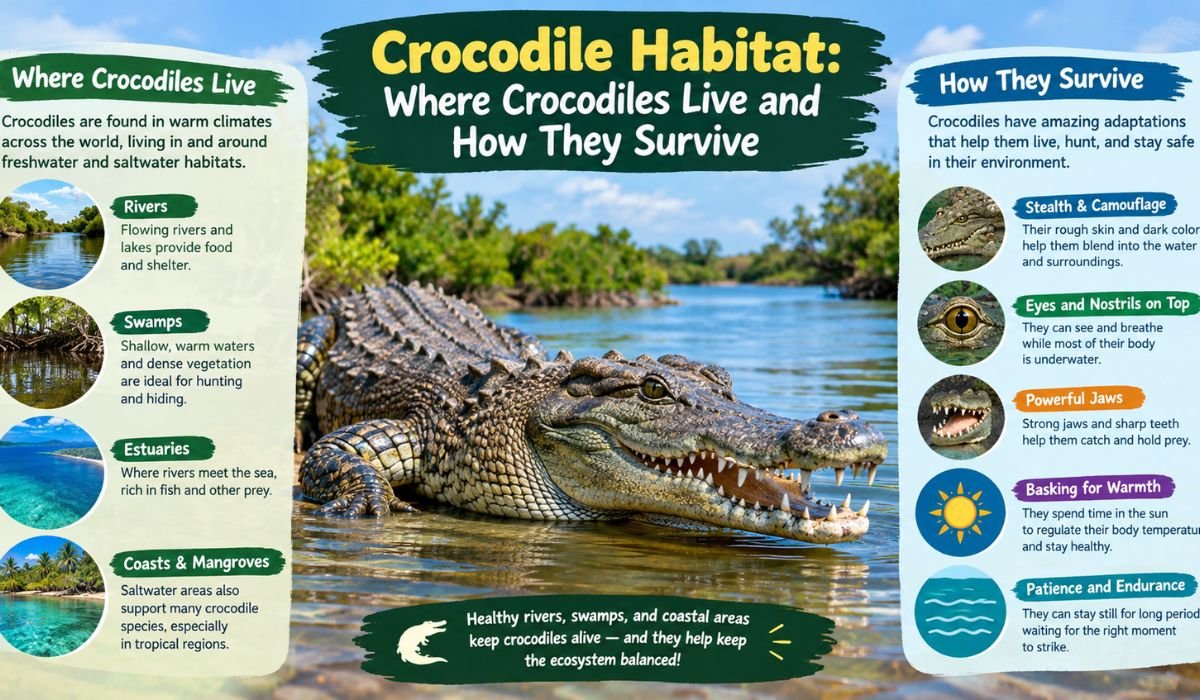
Crocodiles are large aquatic reptiles found in warm regions of Africa, Asia, Australia, and the Americas. Their survival depends heavily on access to water, suitable temperatures, abundant prey, and places where they can rest and nest. The crocodile habitat can include rivers, lakes, wetlands, swamps, mangroves, and coastal areas.
Different crocodile species live in different environments, but most prefer tropical or subtropical regions where temperatures remain warm for much of the year. Their bodies are specially adapted to life in and around water, allowing them to hunt efficiently while spending considerable time both swimming and resting on land.
What Is a Crocodile Habitat?
A crocodile habitat is the natural environment where crocodiles find the resources they need to live, hunt, reproduce, and raise their young. Water is one of the most important features because crocodiles use aquatic environments for hunting, cooling, traveling, and protection.
A suitable crocodile habitat usually provides several essential resources:
- Permanent or seasonal water
- Plenty of prey
- Warm temperatures
- Safe resting areas
- Suitable nesting locations
- Vegetation or banks that provide shelter
Although crocodiles spend much of their time in water, they are not completely aquatic animals. They regularly leave the water to bask in the sun, move between waterways, and lay eggs.
Where Do Crocodiles Live?
Crocodiles live across several continents, particularly in warm climates. Their distribution depends on the species.
Rivers and Streams
Rivers are among the most important environments for crocodiles. Rivers provide water, fish, birds, mammals, and other potential prey. Large rivers can also give crocodiles opportunities to move between different areas.
Riverbanks are especially important because crocodiles can leave the water to bask and rest. Vegetation along the banks may also provide cover.
Lakes and Ponds
Many crocodiles live in freshwater lakes, ponds, and similar bodies of water. These environments can provide relatively calm water and abundant food.
During dry periods, crocodiles may gather around remaining water sources. This can increase competition but also concentrates prey, making hunting easier.
Swamps and Wetlands
Wetlands are highly productive ecosystems and can provide crocodiles with excellent living conditions. Swamps often contain fish, amphibians, reptiles, birds, and mammals.
The combination of water, vegetation, and prey makes wetlands an important part of the crocodile habitat for several species.
Mangrove Forests
Some crocodiles are well adapted to coastal environments. Saltwater crocodiles, for example, can live in mangrove forests, tidal rivers, estuaries, and coastal wetlands.
Mangroves provide sheltered waterways and access to many types of prey. Their ability to tolerate saltwater allows these crocodiles to move between freshwater and marine environments.
Estuaries and Coastal Areas
Estuaries are places where rivers meet the sea. These areas can provide crocodiles with access to both freshwater and saltwater environments.
Saltwater crocodiles are particularly well known for using estuaries and coastal waterways. They can sometimes travel significant distances through marine environments when searching for suitable areas.
Read Related Post: Eagle Habitat: Where Eagles Live, Hunt, and Nest
How Does Climate Affect Crocodile Habitat?
Climate has a major influence on where crocodiles can survive. Most crocodile species prefer warm environments because they are ectothermic, meaning they rely heavily on external sources of heat to regulate their body temperature.
Warm air and sunlight allow crocodiles to raise their body temperature. They may bask on riverbanks, muddy shores, sandbars, or other exposed surfaces.
Cold conditions can reduce their activity and affect digestion and other biological processes. This is one reason crocodile populations are generally concentrated in tropical and subtropical regions.
How Crocodiles Survive in Their Habitat
Crocodiles have several physical and behavioral adaptations that help them survive in their environments.
Powerful Jaws and Teeth
Crocodiles have strong jaws and numerous teeth designed for capturing and holding prey. Their powerful bite allows them to handle a variety of animals.
Their teeth are continually replaced throughout their lives, helping maintain their ability to capture prey.
Strong Tails
The crocodile’s muscular tail is essential for swimming. It provides much of the force needed to propel the animal through water.
The tail also helps with maneuverability, allowing crocodiles to move quickly when hunting or escaping danger.
Eyes and Nostrils Above the Water
Crocodiles have eyes and nostrils positioned high on their heads. This allows them to remain mostly submerged while keeping their eyes and nostrils above the surface.
This adaptation helps crocodiles approach prey while remaining difficult to detect.
Thick Skin and Protective Scales
Crocodile skin is covered with tough scales that provide protection. Some areas also contain bony structures called osteoderms beneath the skin.
Their tough body covering helps protect them from injuries and environmental conditions.
Basking Behavior
Because crocodiles are ectothermic, basking is an important behavior. They may lie on riverbanks or other exposed surfaces to absorb heat from the sun.
When they become too warm, they can return to the water or move into shade.
What Do Crocodiles Eat in Their Habitat?
Crocodiles are opportunistic predators, meaning their diet can include many different animals depending on what is available.
Young crocodiles often eat smaller prey such as insects, crustaceans, frogs, and small fish. As they grow, they can take larger prey.
Depending on the species and environment, adult crocodiles may eat:
- Fish
- Birds
- Turtles
- Snakes
- Amphibians
- Mammals
- Other reptiles
The availability of prey is an important factor in determining whether a particular crocodile habitat can support a healthy population.
Where Do Crocodiles Nest?
Female crocodiles generally build nests on land near water. The exact nesting method varies between species.
Some species construct mound nests from vegetation, soil, and other materials, while others dig holes or depressions in suitable ground.
The location of a nest is extremely important. It needs to provide suitable conditions for eggs while reducing the risk of flooding, overheating, or disturbance.
After laying eggs, the female may remain nearby and defend the nesting area from potential threats.
How Do Baby Crocodiles Survive?
Young crocodiles face many dangers after hatching. Birds, fish, larger reptiles, mammals, and even other crocodiles can prey on them.
Staying near vegetation and shallow water can provide young crocodiles with places to hide. Their small size also allows them to move through areas that may be difficult for larger predators to enter.
As crocodiles grow, their size and strength provide increasing protection from many predators.
How Does Water Availability Affect Crocodiles?
Water availability can strongly influence crocodile behavior. During periods of drought, rivers, lakes, and wetlands may shrink, forcing crocodiles to concentrate around remaining water sources.
Some crocodiles can survive seasonal changes by remaining in deeper pools or moving to other waterways. Species that tolerate saltwater may also have more opportunities to travel between coastal and inland environments.
Access to reliable water is particularly important because crocodiles use it for hunting, movement, temperature regulation, and protection.
Do Crocodiles Migrate?
Some crocodiles can travel considerable distances when searching for food, mates, or suitable habitat. Saltwater crocodiles are particularly capable of long-distance movement through rivers, coastal waters, and marine environments.
However, crocodile movement should not always be considered migration in the same way as the seasonal migrations of some mammals or birds. Movement patterns vary considerably between species and individuals.
Threats to Crocodile Habitat
Crocodiles face several threats when their natural environments are altered or destroyed.
Habitat Loss
Wetland drainage, agricultural expansion, urban development, and infrastructure projects can reduce suitable crocodile habitat.
When waterways are modified, crocodiles may lose feeding areas, nesting locations, and safe places to rest.
Water Pollution
Pollution can affect aquatic ecosystems and reduce the availability of healthy prey. Chemicals, waste, and other pollutants may negatively affect both crocodiles and the animals they depend on.
Human-Wildlife Conflict
As human settlements expand near rivers and wetlands, encounters between people and crocodiles can become more common. Protecting both communities and crocodile populations requires careful management of shared environments.
Climate Change
Changes in temperature, rainfall, drought patterns, flooding, and sea levels may alter crocodile habitats. Because crocodiles depend on particular environmental conditions, major changes can affect where they can successfully live and reproduce.
How Can Crocodile Habitat Be Protected?
Protecting crocodile habitat means protecting the ecosystems on which these reptiles depend. Conservation efforts may include establishing protected wetlands, reducing pollution, maintaining natural waterways, and protecting nesting areas.
Responsible management can also help reduce conflicts between crocodiles and nearby communities. Education and habitat conservation are important parts of maintaining healthy crocodile populations.
When wetlands and rivers remain healthy, crocodiles benefit along with countless other species that share the same ecosystems.
Frequently Asked Questions About Crocodile Habitat
Where is the main crocodile habitat?
The main crocodile habitat consists of warm freshwater and coastal environments such as rivers, lakes, swamps, wetlands, mangroves, and estuaries. Different species have different habitat preferences.
Do crocodiles live in freshwater or saltwater?
Crocodiles can live in both freshwater and saltwater environments, depending on the species. Saltwater crocodiles are especially capable of living in coastal waters, estuaries, and marine environments.
What climate do crocodiles prefer?
Most crocodiles prefer warm tropical or subtropical climates. Warm conditions help them regulate their body temperature and remain active.
Do crocodiles live in the ocean?
Some crocodiles, especially saltwater crocodiles, can travel through coastal and marine waters. However, they generally rely heavily on rivers, estuaries, mangroves, and other coastal habitats as well.
What do crocodiles need to survive?
Crocodiles need suitable temperatures, access to water, sufficient food, safe resting areas, and appropriate nesting locations. Healthy ecosystems provide these essential resources.
Can crocodiles live in lakes?
Yes. Lakes can provide excellent habitat for crocodiles when they contain enough food, suitable water conditions, and areas for basking and nesting.
Conclusion
Crocodiles are highly adaptable reptiles that depend on warm aquatic environments for survival. Their habitats include rivers, lakes, wetlands, swamps, mangroves, estuaries, and some coastal waters. Each crocodile habitat provides important resources such as food, water, shelter, and nesting areas.
Their powerful jaws, strong tails, protective skin, swimming abilities, and basking behavior allow them to thrive in challenging environments. However, habitat destruction, pollution, climate change, and increasing human activity can threaten crocodile populations.
Protecting rivers, wetlands, mangroves, and other natural ecosystems is therefore essential for crocodiles and the many species that share their environments.

Hi, I’m Amelia, an SEO and content specialist with several years of experience researching and creating informative content for online audiences. At Animal Attack Facts, I focus on animal behavior, animal attacks on humans, and interesting facts about land animals, marine animals, birds, reptiles, and insects. My goal is to provide clear, useful, and engaging information that helps readers better understand wildlife and stay informed about animal encounters.
1 thought on “Crocodile Habitat: Where Crocodiles Live and How They Survive”