
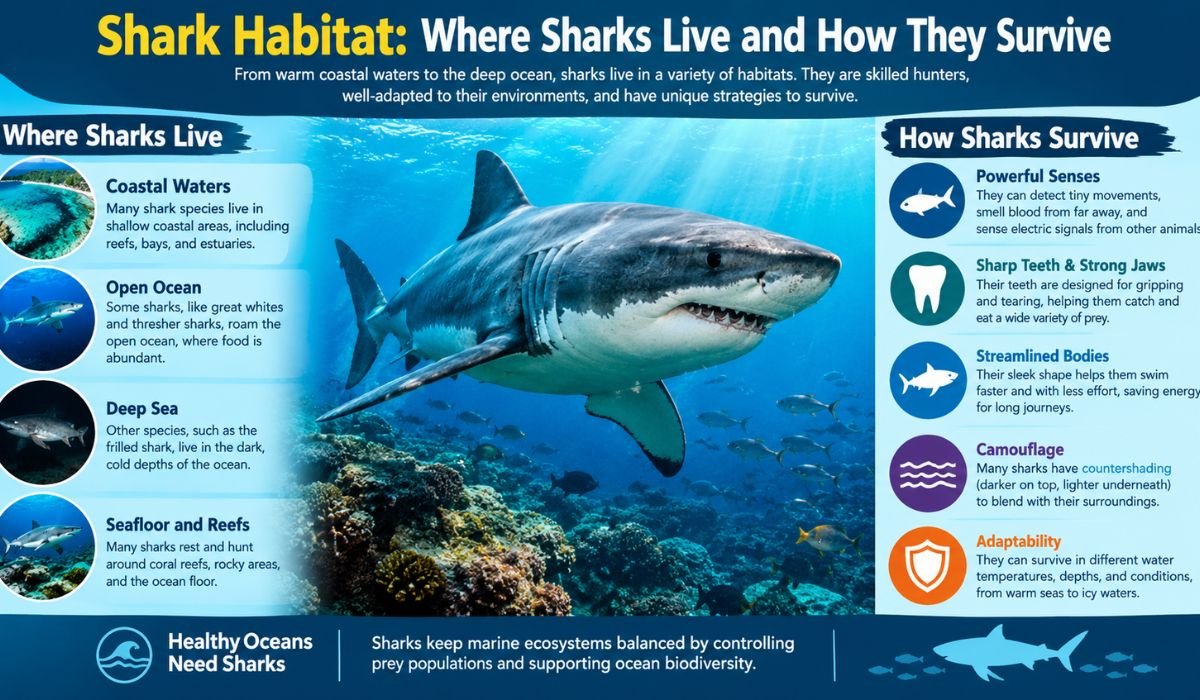
Sharks are fascinating marine animals that live in oceans around the world. They have adapted to a wide range of environments, from warm tropical waters and shallow coastal areas to cold polar seas and the deep ocean. Understanding shark habitat helps explain how these predators find food, avoid threats, reproduce, and survive in different marine ecosystems.
Although many people associate sharks with tropical beaches, different species occupy very different environments. Some sharks prefer shallow water near coral reefs, while others spend most of their lives in the open ocean or near the seafloor. Their habitats influence their diet, movement, body adaptations, and behavior.
In this guide, you will discover where sharks live, which environments they prefer, what they eat, and how they survive in the ocean.
What Is a Shark Habitat?
A shark habitat is the natural environment where a shark lives, finds food, and carries out essential activities such as resting, migrating, and reproducing. Most sharks inhabit saltwater environments, but a few species can also survive in freshwater or move between rivers and oceans.
The specific habitat of a shark depends on its species, body size, feeding habits, and environmental requirements. Water temperature, depth, oxygen availability, prey abundance, and ocean currents can all influence where a shark lives.
For example, whale sharks often visit warm waters where plankton is abundant, while Greenland sharks are adapted to extremely cold northern seas. Reef sharks typically remain close to coral reefs, where they can find prey and shelter.
A suitable habitat provides sharks with access to food, appropriate water conditions, and places where they can complete different stages of their life cycle.
Where Do Sharks Live?
Sharks live in nearly every major ocean, including the Atlantic, Pacific, Indian, Southern, and Arctic oceans. However, no single environment supports every shark species equally well.
1. Tropical Oceans
Tropical oceans are among the best-known environments for sharks. These waters are generally warm and often contain coral reefs, seagrass beds, and other habitats that support a wide variety of marine life.
Species such as blacktip reef sharks, nurse sharks, and whale sharks can be found in tropical regions. Their diets vary considerably: some feed on fish and crustaceans, while others filter plankton and small marine organisms from the water.
Warm waters can support productive marine ecosystems, making tropical regions important feeding and breeding areas for many shark species.
2. Temperate Waters
Temperate waters experience seasonal changes in temperature. They occur along the coasts of countries such as the United States, Australia, South Africa, Japan, and parts of Europe.
Great white sharks, blue sharks, and several other species inhabit temperate marine environments. Some travel long distances as water temperatures and prey availability change throughout the year.
These habitats provide access to fish, squid, seals, and other potential prey, depending on the shark species and location.
3. Cold Polar Waters
Some sharks are adapted to very cold environments. The Greenland shark, for example, inhabits the North Atlantic and Arctic regions, where water temperatures remain low for much of the year.
These sharks have specialized physiological adaptations that help them function in cold water. They also tend to grow slowly and can live for exceptionally long periods.
Cold-water shark habitats demonstrate that sharks are not limited to warm seas. Different species have evolved to survive under a broad range of ocean conditions.
4. The Deep Ocean
Many sharks live hundreds or even thousands of meters below the ocean surface. Deep-sea habitats are dark, cold, and subject to high water pressure.
Species such as gulper sharks and several catsharks inhabit deep-water environments. Their senses help them locate prey and function where sunlight cannot reach.
Food can be less abundant in the deep ocean than in productive coastal waters. As a result, some deep-sea sharks have slower metabolisms and specialized feeding strategies that help them use available resources.
Read Related Post: Alligator Habitat: Where Alligators Live and How They Survive
Types of Shark Habitats
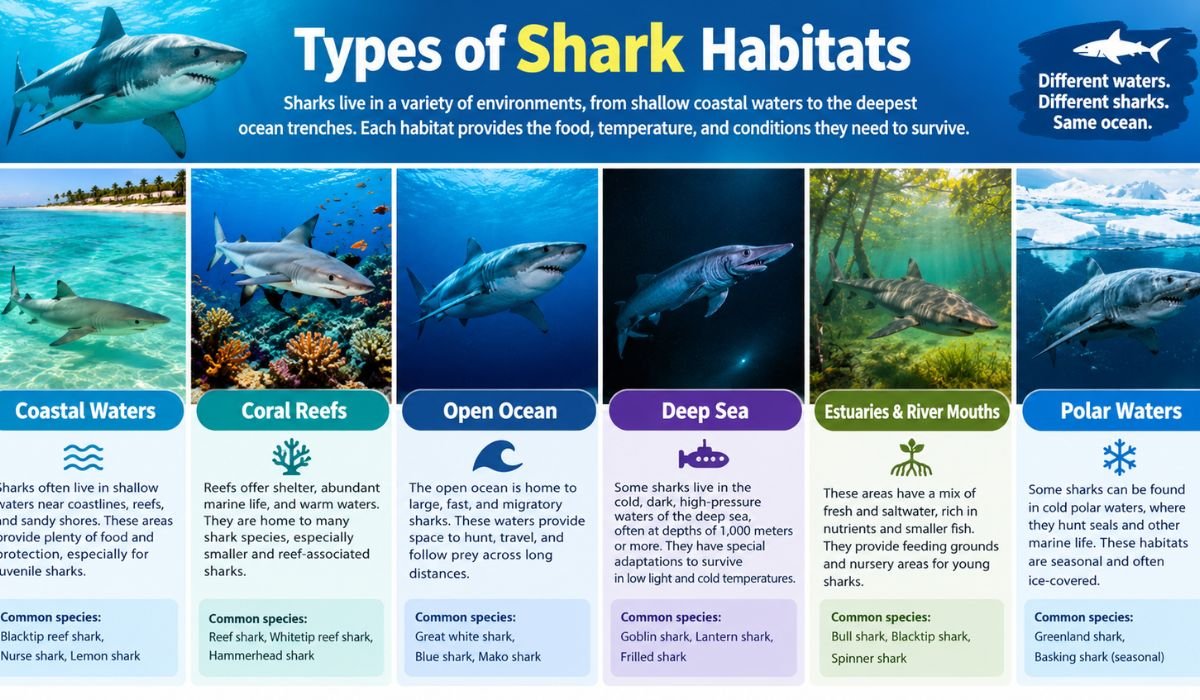
Sharks occupy several distinct marine environments. Each offers different opportunities for feeding, shelter, and reproduction.
1. Coral Reefs
Coral reefs provide shelter and abundant prey for reef-associated sharks. Blacktip reef sharks and whitetip reef sharks often patrol these areas in search of small fish, crabs, and other marine animals.
Crevices and reef structures provide shelter for many marine organisms. Healthy reefs also support diverse food webs that help sustain shark populations.
2. Open Ocean
The open ocean, also called the pelagic environment, extends far from shore. Blue sharks, oceanic whitetip sharks, and many great white sharks use open-water environments during parts of their lives.
These areas offer access to fish, squid, and other marine prey, although food availability varies considerably. Some oceanic sharks travel long distances while following prey or moving between seasonal feeding grounds.
3. Coastal Waters
Coastal environments include bays, lagoons, estuaries, and shallow waters near beaches. Nurse sharks and several juvenile shark species use these areas for feeding or shelter.
Some coastal locations function as nursery grounds, where young sharks can find food and avoid certain larger predators. These habitats can be especially important during the early stages of a shark’s life.
4. Deep-Sea Environments
Deep-water sharks live in environments with little or no sunlight. Some occupy continental slopes, while others live much deeper in the ocean.
Their sensory systems help them detect prey in darkness, and many species are adapted to relatively cold water and high pressure. Deep-sea sharks may feed on fish, squid, crustaceans, and other available organisms.
5. Estuaries and Freshwater
Most sharks depend on saltwater, but bull sharks can tolerate a wide range of salinities. They sometimes enter estuaries and freshwater rivers.
This ability allows bull sharks to use environments that many other shark species cannot tolerate. Estuaries can also provide access to prey and sheltered areas, although conditions vary between locations.
How Does Shark Habitat Affect Survival?
The environment a shark occupies influences nearly every aspect of its life. A species living near a reef faces different challenges from one living in the deep ocean.
Water Temperature
Sharks have different temperature preferences. Some species thrive in warm tropical seas, while others are adapted to cooler or cold waters. Temperature can affect their metabolism, activity, distribution, and access to prey.
Certain highly mobile sharks move between regions as ocean temperatures and food availability change. Others remain within relatively limited temperature ranges.
Food Availability
A productive shark habitat usually provides suitable prey. Sharks have diverse diets, depending on their species and size.
Some eat fish and squid, while others consume crustaceans, mollusks, or marine mammals. Whale sharks and basking sharks are filter feeders that consume plankton and other small organisms.
When prey becomes scarce, some sharks move to other feeding grounds. Others adjust their feeding patterns or spend more time searching for food.
Water Depth and Pressure
Depth affects the amount of sunlight, temperature, and pressure a shark experiences. Shallow-water species may rely on reefs, sandy bottoms, or seagrass beds, whereas deep-sea species must function in darkness and under substantial pressure.
Their anatomy, physiology, and behavior help them cope with these conditions.
Breeding and Nursery Areas
Some sharks return to particular locations to reproduce. Shallow bays, mangroves, estuaries, and coastal wetlands can provide important nursery habitats for certain species.
These areas may offer abundant small prey and some protection from larger predators. However, not all sharks use coastal nurseries; reproductive strategies vary widely among species.
How Do Sharks Adapt to Their Habitats?
Sharks possess several adaptations that help them survive in different marine environments.
- Streamlined bodies: Many sharks have body shapes that reduce resistance as they swim through water.
- Specialized senses: Their ability to detect movement, odors, and electrical signals helps them locate prey, even when visibility is poor.
- Different feeding structures: Teeth and jaws vary according to diet. Some sharks have pointed teeth for catching fish, while others have broad, flatter teeth for crushing hard-shelled prey.
- Buoyancy adaptations: Sharks rely on a large oil-rich liver, their fins, and swimming movements to help manage buoyancy.
- Temperature tolerance: Different species have physiological features suited to the water temperatures they regularly encounter.
- Reproductive strategies: Some sharks give birth to live young, while others lay eggs or retain eggs inside their bodies until the young develop.
These adaptations help explain why sharks can occupy such a wide range of environments instead of relying on one particular type of ocean.
How Human Activities Affect Shark Habitats
Human activities can damage or change marine environments, making it harder for sharks to find food, reproduce, and survive.
Some of the major threats include:
- Overfishing: Sharks may be caught intentionally or accidentally in fishing gear.
- Habitat destruction: Coastal development can damage mangroves, seagrass beds, and other important nursery environments.
- Pollution: Plastic waste, chemical contaminants, and other pollutants can affect marine ecosystems and the animals living in them.
- Climate change: Warming oceans and changes in ocean chemistry can alter the distribution of prey and the suitability of certain habitats.
- Coral reef degradation: Damaged reefs can reduce the availability of shelter and food for reef-associated sharks.
Protecting marine ecosystems helps maintain healthy shark populations. Measures such as sustainable fishing, marine protected areas, pollution reduction, and the conservation of coastal wetlands can contribute to long-term shark conservation.
Why Is Shark Habitat Important for Marine Ecosystems?
Sharks play important roles in marine food webs. Depending on the species, they may help regulate prey populations, influence the behavior of other animals, or contribute to the movement of energy through marine ecosystems.
Their ecological roles vary. Large predatory sharks can influence the distribution of prey, while filter-feeding sharks consume plankton and other small organisms.
A healthy shark habitat supports more than sharks alone. Coral reefs, seagrass beds, mangroves, and open-ocean environments support many other species, including fish, turtles, seabirds, and marine mammals.
Conserving these environments helps protect biodiversity and supports the stability of ocean ecosystems.
Frequently Asked Questions About Shark Habitat
1. What Is the Most Common Shark Habitat?
Sharks occupy a wide range of marine environments, including coastal waters, coral reefs, open oceans, and deep-sea regions. Their preferred habitat depends on the species.
2. Can Sharks Live in Freshwater?
Most sharks live in saltwater, but bull sharks can tolerate freshwater and have been recorded far inland in some river systems. Only a small number of shark species can regularly use freshwater environments.
3. Does Shark Habitat Include Shallow Water?
Yes. Many sharks use shallow coastal waters, lagoons, coral reefs, and estuaries. Some species also use shallow areas as nursery grounds for their young.
4. Do All Sharks Live in Warm Water?
No. Although many sharks inhabit tropical seas, other species live in temperate and polar waters. Greenland sharks, for example, are adapted to cold northern oceans.
5. How Deep Can Sharks Live?
Some sharks live near the ocean surface, while deep-sea species can inhabit depths of several thousand meters. The maximum depth varies by species, and not all sharks can tolerate extreme deep-sea conditions.
6. How Does Shark Habitat Affect Its Diet?
The surrounding environment influences which prey is available. Reef sharks often feed on fish and crustaceans, while oceanic sharks may hunt fish and squid. Whale sharks feed mainly on plankton and other small organisms.
7. Why Is Protecting Shark Habitat Important?
Protecting shark habitats preserves feeding grounds, breeding areas, and nursery environments. It also helps maintain marine biodiversity and the ecological relationships that keep ocean ecosystems functioning.
Conclusion
Sharks inhabit a remarkable variety of environments, from tropical coral reefs and shallow coastal waters to cold polar seas and the deepest parts of the ocean. Each species has adaptations that help it survive under particular environmental conditions.
Understanding shark habitat reveals how water temperature, depth, food availability, and breeding grounds influence where these animals live. It also highlights why marine conservation matters.
By reducing pollution, protecting coastal ecosystems, and supporting sustainable fishing practices, people can help preserve the environments sharks depend on. Protecting these habitats benefits sharks and the wider marine ecosystems in which they play important roles.

Hi, I’m Amelia, an SEO and content specialist with several years of experience researching and creating informative content for online audiences. At Animal Attack Facts, I focus on animal behavior, animal attacks on humans, and interesting facts about land animals, marine animals, birds, reptiles, and insects. My goal is to provide clear, useful, and engaging information that helps readers better understand wildlife and stay informed about animal encounters.
1 thought on “Shark Habitat: Where Sharks Live and How They Survive”