
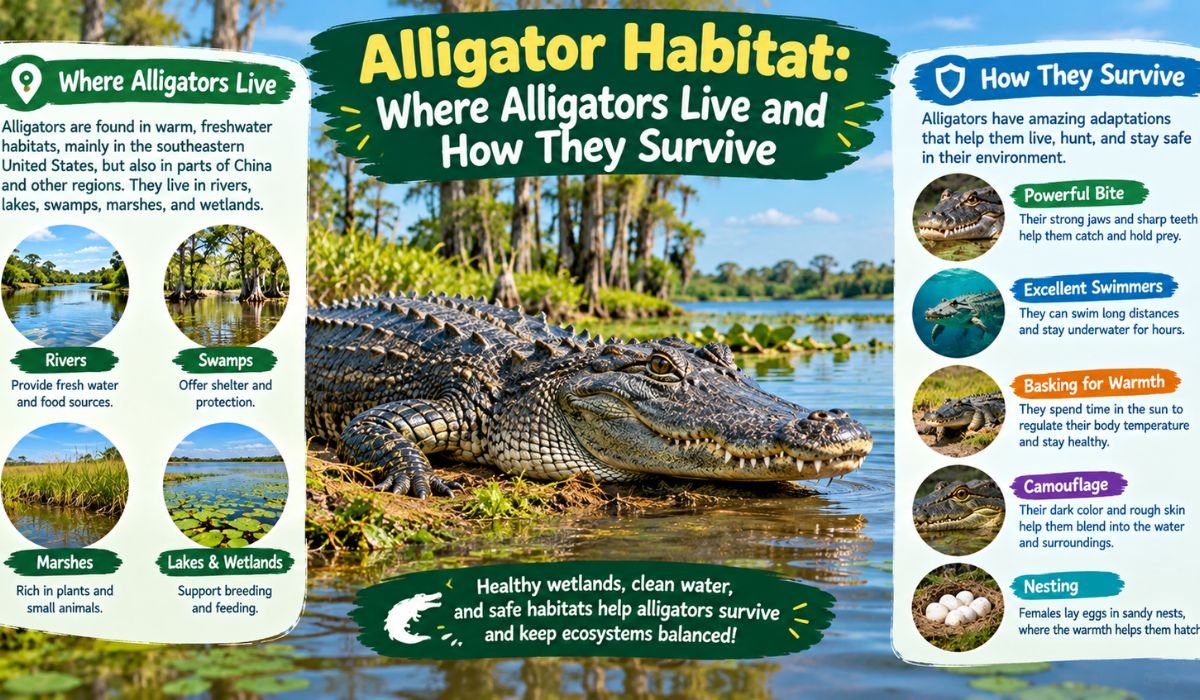
Alligators are large reptiles that thrive in freshwater environments, including swamps, marshes, rivers, lakes, and wetlands. Their bodies are specially adapted to life in and around water, allowing them to hunt, regulate their temperature and avoid threats. Understanding the alligator habitat helps explain why these powerful reptiles prefer certain environments and how they survive changing conditions.
Alligators are primarily found in the southeastern United States and parts of China, depending on the species. The American alligator lives mainly in the United States, while the Chinese alligator is native to eastern China. Although these species share several characteristics, their habitats differ because of their geographic locations and environmental conditions.
In this guide, we will explore where alligators live, the types of habitats they prefer, what they need to survive, and how they adapt to seasonal changes.
What Is an Alligator Habitat?
An alligator habitat is a natural environment that provides the water, food, shelter, and suitable temperatures these reptiles need to survive. Most alligators prefer freshwater ecosystems with slow-moving water, thick vegetation, and nearby areas where they can rest or nest.
Wetlands are particularly important because they offer abundant prey, protection from disturbances, and suitable locations for reproduction. Alligators can also create or maintain small water-filled depressions that benefit other wildlife during dry periods.
A suitable habitat generally provides:
- Freshwater: Rivers, lakes, ponds, marshes, and swamps supply essential aquatic environments.
- Food sources: Fish, frogs, turtles, birds, and small mammals provide nourishment.
- Shelter: Dense vegetation, muddy banks, and underwater areas offer protection.
- Nesting locations: Warm, vegetated ground allows females to build nests for their eggs.
- Basking areas: Mudbanks and sunny shorelines help alligators regulate their body temperature.
When these conditions are available, alligators can hunt, reproduce, and survive successfully.
Where Do Alligators Live?
The location of an alligator depends on its species. American alligators occupy a much larger geographic range than Chinese alligators.
American Alligator Habitat
The American alligator (Alligator mississippiensis) lives in the southeastern United States. Its range includes Florida, Louisiana, Georgia, Alabama, Mississippi, South Carolina, parts of North Carolina, and portions of Texas and other neighboring states.
Florida and Louisiana are especially well known for their alligator populations. Florida’s Everglades, freshwater marshes, and cypress swamps provide extensive habitat, while Louisiana’s wetlands support large numbers of alligators.
American alligators usually prefer freshwater, but they can tolerate mildly salty or brackish water for limited periods. Unlike crocodiles, they do not have specialized salt-excreting glands that allow them to live comfortably in highly saline environments for extended periods.
Their ability to occupy different freshwater ecosystems helps them survive across a broad range of climates and landscapes.
Chinese Alligator Habitat
The Chinese alligator (Alligator sinensis) is native to eastern China, particularly the lower Yangtze River region.
Historically, Chinese alligators inhabited wetlands, ponds, marshes, and slow-moving waterways. However, habitat loss and human development have severely reduced their natural range.
Today, the species is critically endangered, and conservation programs protect remaining populations through habitat management and captive breeding.
The Chinese alligator is smaller than the American alligator and is better adapted to the cooler seasonal conditions of its native region. Protecting suitable wetlands is essential for its long-term survival.
Types of Alligator Habitats
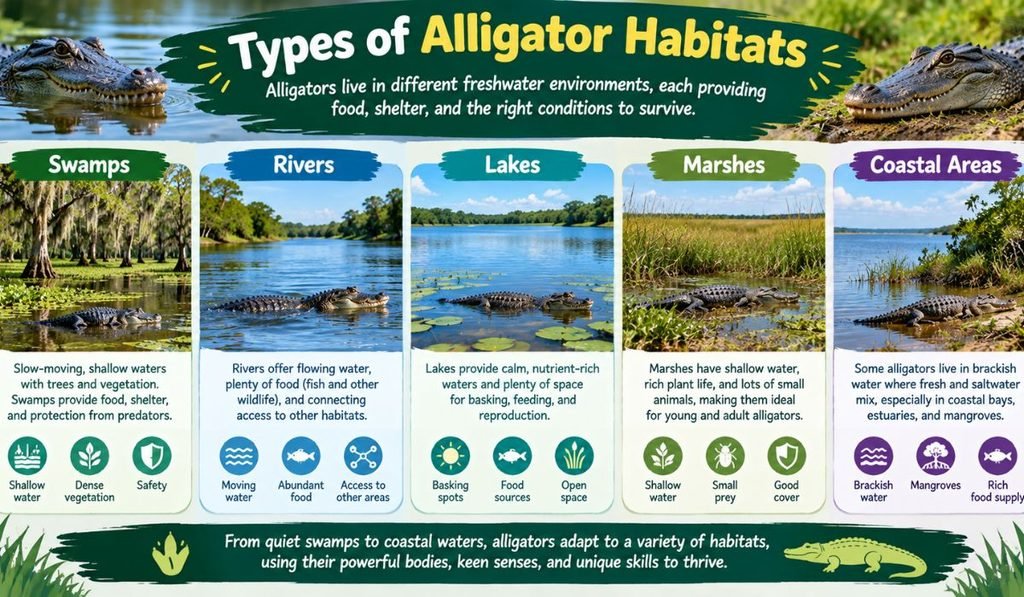
Alligators can live in several freshwater environments. Each habitat offers different advantages for feeding, shelter, and reproduction.
1. Swamps
Swamps are among the most recognizable alligator habitats. These wetlands often contain standing water, muddy ground, trees, and dense vegetation.
Cypress swamps in the southeastern United States provide hiding places and access to fish, amphibians, and other prey. Tree roots and submerged branches also create useful resting areas.
Swamps can remain wet throughout much of the year, although water levels change with rainfall and seasonal flooding.
2. Marshes
Marshes are wetlands dominated by grasses, reeds, and other water-loving plants rather than large trees.
They provide open water for swimming and hunting while offering vegetation where alligators can remain concealed. Marshes also support fish, frogs, insects, and birds that form part of an alligator’s diet.
Freshwater marshes in Florida and Louisiana are particularly important for American alligators.
3. Rivers and Streams
Alligators can inhabit rivers, creeks, and slow-moving streams, especially where the banks provide shelter and access to shallow water.
They may rest near riverbanks, swim through deeper channels, and hunt animals that enter the water. Areas with vegetation, fallen trees, and muddy shorelines are often useful.
Although alligators can tolerate moving water, they frequently use quieter sections where resting and hunting require less effort.
4. Lakes and Ponds
Lakes and ponds provide relatively stable water sources, food, and suitable resting places. Alligators may live in natural lakes, artificial ponds, and freshwater reservoirs when conditions are appropriate.
They often spend time near shallow shorelines, where fish and other prey are easier to catch. Deeper water can provide refuge during hot weather or periods of disturbance.
Some alligators also use small ponds and water-filled depressions within larger wetland systems.
5. Coastal Wetlands
Although freshwater is preferred, American alligators sometimes enter coastal wetlands and brackish estuaries.
These areas contain a mixture of fresh and salt water. Alligators may use them when freshwater is available nearby, but they generally avoid remaining in highly salty water for long periods.
Coastal marshes can provide feeding opportunities, although freshwater wetlands are typically more suitable for their long-term needs.
Read Related Post: What Do Owls Eat? Owl Diet and Feeding Habits
What Makes an Alligator Habitat Suitable?
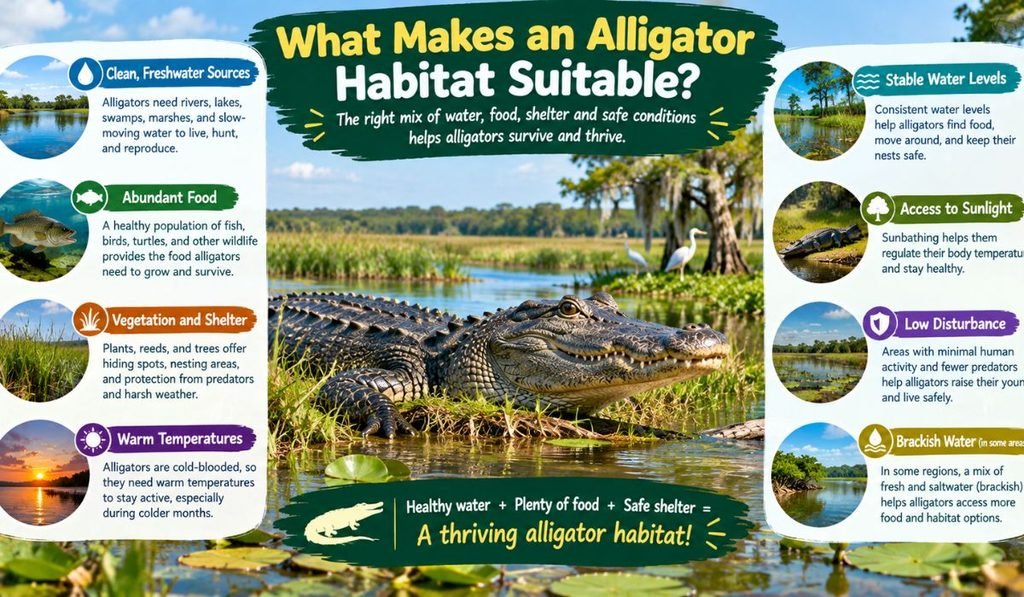
Not every body of water provides everything an alligator needs. Several environmental factors determine whether an area can support a healthy population.
Water Availability
Water is essential because alligators depend on aquatic environments for swimming, hunting, cooling and protection. Permanent water sources are especially valuable during dry seasons.
However, alligators can survive temporary changes in water availability by using deeper pools, burrows, or other moist refuges when conditions allow.
Temperature and Climate
Alligators are ectothermic reptiles, meaning their body temperature depends largely on external conditions.
Warm weather supports activity, digestion, and growth. During cooler periods, alligators reduce their activity and may remain in sheltered locations.
The American alligator is well adapted to the warm climate of the southeastern United States, while the Chinese alligator experiences colder winters in its native range.
Food Supply
A productive alligator habitat supports a variety of prey. Young alligators commonly eat insects, crustaceans, small fish, and other small animals. Adults can consume larger fish, turtles, birds, and mammals when opportunities arise.
Healthy wetlands often provide diverse food sources throughout the year, although availability changes with water levels and seasons.
Vegetation and Shelter
Aquatic plants, reeds, trees, and shoreline vegetation offer cover for alligators and their prey.
Vegetation can also provide nesting material and shelter for young alligators. Female American alligators typically construct nests from vegetation and other natural materials, helping maintain warm conditions for developing eggs.
How Do Alligators Survive in Their Habitat?
The alligator habitat supports survival, but alligators also possess physical and behavioral adaptations that help them make the most of their surroundings.
1. Their Bodies Are Built for Swimming
Alligators have muscular tails that provide most of the force needed for swimming. Their streamlined bodies and webbed hind feet help them move efficiently through water.
Their eyes and nostrils sit high on the head, allowing them to observe their surroundings and breathe while keeping most of their bodies submerged.
These features make aquatic habitats particularly suitable for hunting and avoiding disturbances.
2. They Regulate Their Body Temperature
Alligators move between water and land to manage their body temperature.
On cool mornings, they may bask in sunlight to warm up. When temperatures become too high, they can retreat into water or shaded areas.
This behavior helps them remain active under changing weather conditions without producing their own body heat in the way mammals do.
3. They Use Ambush Hunting
Alligators often remain still near the water’s edge, waiting for prey to come within reach.
Their camouflage helps them blend into muddy water and surrounding vegetation. When an opportunity appears, they can move quickly over short distances.
This hunting strategy allows them to conserve energy while living in environments where prey availability changes throughout the year.
4. They Create or Use Water Refuges
American alligators sometimes excavate depressions in wetlands, commonly called alligator holes. These areas can retain water when surrounding ground becomes dry.
Alligator holes provide refuge for the alligators themselves and can supply water for fish, amphibians, turtles, and other wildlife.
Their influence on wetland structure makes alligators an important part of some freshwater ecosystems.
5. They Adjust to Seasonal Changes
During hot, dry periods, alligators may concentrate around remaining pools. In cooler weather, they often become less active and spend more time sheltered.
When water levels rise, they may move through flooded vegetation or into connected waterways.
These flexible behaviors help them cope with changing conditions, although extreme drought, habitat destruction, and prolonged unfavorable temperatures can still threaten their survival.
How Does the Alligator Habitat Change Throughout the Year?
Seasonal changes influence water availability, feeding activity, reproduction, and movement.
- Spring: Rising temperatures increase activity. Alligators begin courtship and mating, and feeding may become more frequent.
- Summer: Warm conditions support active feeding and nesting. Females guard their nests and may protect hatchlings after they emerge.
- Autumn: As temperatures decline, alligators often reduce activity. Feeding and movement patterns respond to local conditions.
- Winter: In colder areas, alligators become less active and may remain in sheltered water or burrows. They can still surface to breathe when conditions permit.
The timing of these behaviors varies according to geography, local weather, and the particular species.
Threats to Alligator Habitats
Even though American alligators have recovered substantially from past overhunting, habitat threats remain important. Chinese alligators face especially serious conservation challenges.
Wetland Loss
Drainage, urban development, agriculture, and construction can destroy or divide wetlands. When water systems disappear, alligators lose places to feed, reproduce, and shelter.
Water Pollution
Chemical runoff, pesticides, waste, and other pollutants can damage wetland ecosystems and affect the animals that alligators eat.
Protecting water quality helps preserve the broader food web that supports these reptiles.
Climate and Water-Level Changes
Droughts can reduce available water, while flooding can alter nesting areas and move alligators into new locations. Long-term climate changes may also affect the distribution and quality of suitable wetlands.
Human Disturbance
Road construction, shoreline development, and frequent disturbance can reduce habitat quality. Encounters with people also become more likely when development expands into wetlands occupied by alligators.
Wetland conservation, responsible land management, and public awareness are important ways to reduce these pressures.
Frequently Asked Questions About Alligator Habitat
1. Where does the alligator habitat occur naturally?
The alligator habitat occurs naturally in freshwater wetlands, swamps, marshes, rivers, lakes, and ponds. American alligators live in the southeastern United States, while Chinese alligators are native to eastern China.
2. Do alligators live in freshwater or saltwater?
Alligators primarily live in freshwater. American alligators can tolerate brackish water for limited periods, but they are not as well adapted to highly salty environments as true crocodiles.
3. Can alligators survive outside water?
Yes. Alligators can spend considerable time on land, where they bask, nest, move between waterways, and sometimes dig or use burrows. However, access to suitable water is essential for their normal survival.
4. What climate is best for alligators?
American alligators generally thrive in warm, humid environments with abundant freshwater. Chinese alligators tolerate colder seasonal conditions. Both species need suitable shelter, food, and places to reproduce.
5. Do alligators live in swamps all year?
Many alligators remain in the same general wetland area throughout the year, but they may move between water sources as temperatures and water levels change. Their activity typically decreases during colder periods.
6. How does habitat loss affect alligators?
Habitat loss reduces access to food, water, nesting sites, and shelter. It can also separate populations and increase encounters with people. Wetland protection is particularly important for endangered Chinese alligators.
7. Can alligators live in artificial ponds?
Yes. Alligators may occupy artificial ponds, reservoirs, and drainage areas when these provide suitable water and food. Their presence can create safety concerns, so people should never approach, feed, or attempt to handle a wild alligator.
Conclusion
The alligator habitat plays a central role in the survival of these remarkable reptiles. Freshwater swamps, marshes, rivers, lakes, and ponds provide the food, shelter, and breeding areas they need to thrive. Their powerful tails, temperature-regulating behaviors, camouflage, and adaptable feeding strategies help them survive changing environmental conditions.
However, habitat loss, pollution, and changing water levels can threaten the ecosystems on which alligators depend. Protecting wetlands benefits not only alligators but also countless other plants and animals that share these environments. By understanding where alligators live and what they need, we can better appreciate their ecological importance and support the conservation of their natural habitats.

Hi, I’m Amelia, an SEO and content specialist with several years of experience researching and creating informative content for online audiences. At Animal Attack Facts, I focus on animal behavior, animal attacks on humans, and interesting facts about land animals, marine animals, birds, reptiles, and insects. My goal is to provide clear, useful, and engaging information that helps readers better understand wildlife and stay informed about animal encounters.
1 thought on “Alligator Habitat: Where Alligators Live and How They Survive”