
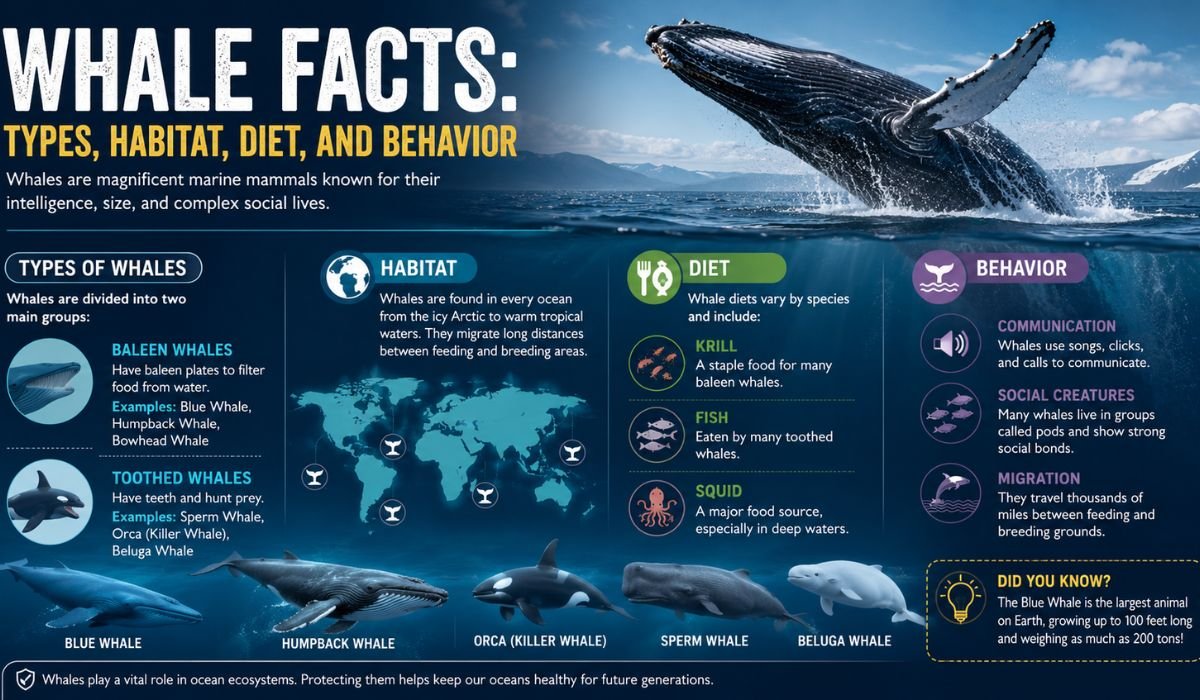
Whales are among the largest and most fascinating animals on Earth. These marine mammals live in oceans around the world and have adapted to a wide range of environments. From the enormous blue whale to the intelligent orca, different whale species have unique body features, diets, behaviors, and habitats.
In this guide, you’ll discover interesting whale facts, including the different types of whales, where they live, what they eat, how they communicate, and how they behave.
What Are Whales?
Whales are marine mammals belonging to the order Cetacea. Unlike fish, whales breathe air using lungs, give birth to live young, and feed their babies milk. They must regularly come to the water’s surface to breathe.
Whales are divided into two main groups: baleen whales and toothed whales. Baleen whales use baleen plates to filter food from seawater, while toothed whales have teeth and generally hunt fish, squid, and other marine animals.
Types of Whales
There are many whale species, each with different physical characteristics and behaviors. Some of the best-known types include:
Blue Whale
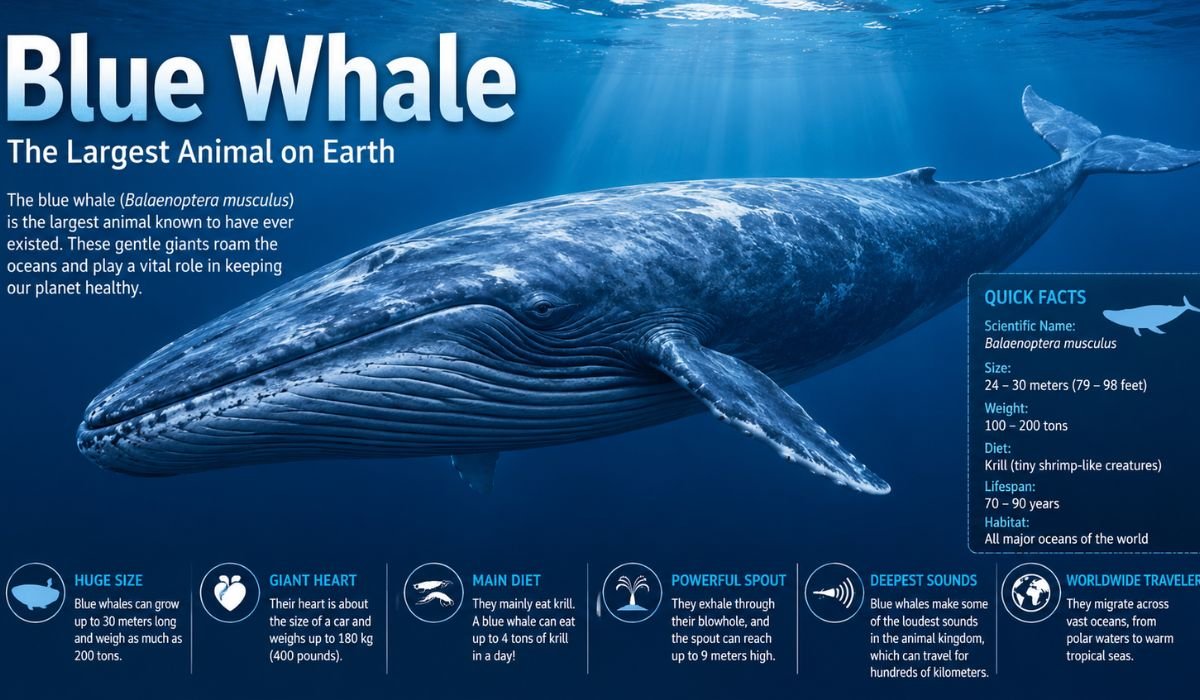
The blue whale is the largest known animal ever to have lived on Earth. It can grow to enormous lengths and feeds mainly on tiny shrimp-like animals called krill.
Humpback Whale
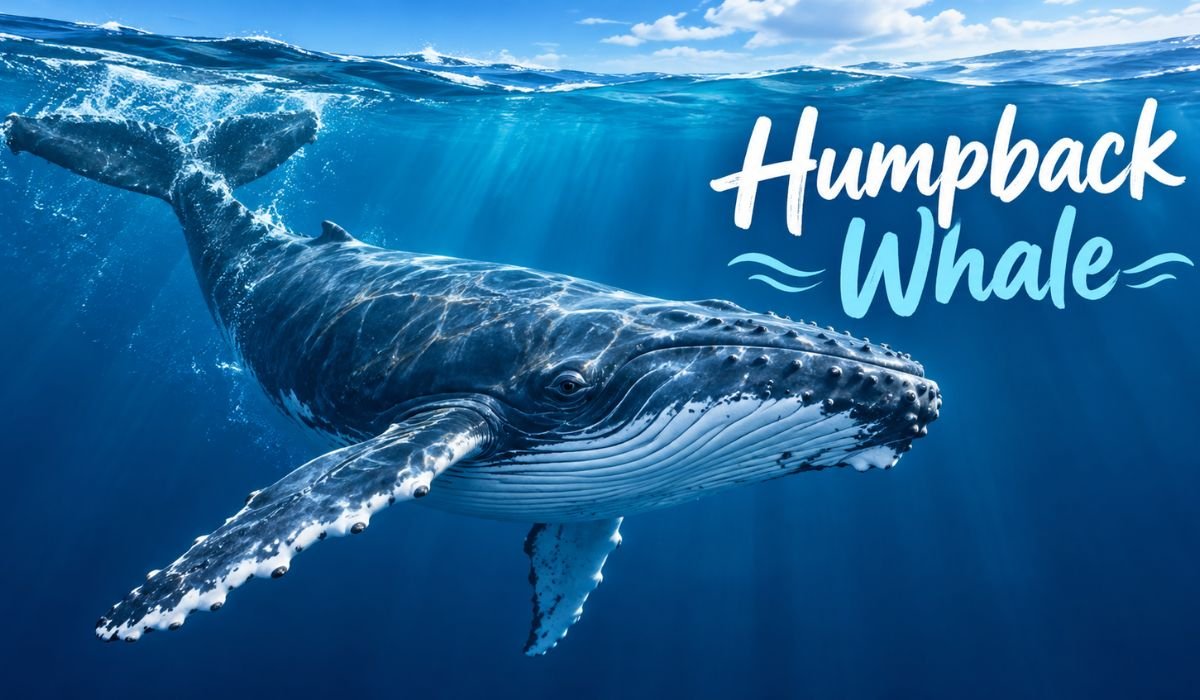
Humpback whales are famous for their long pectoral fins, spectacular jumps, and complex songs. They migrate between feeding areas in colder waters and breeding areas in warmer regions.
Sperm Whale
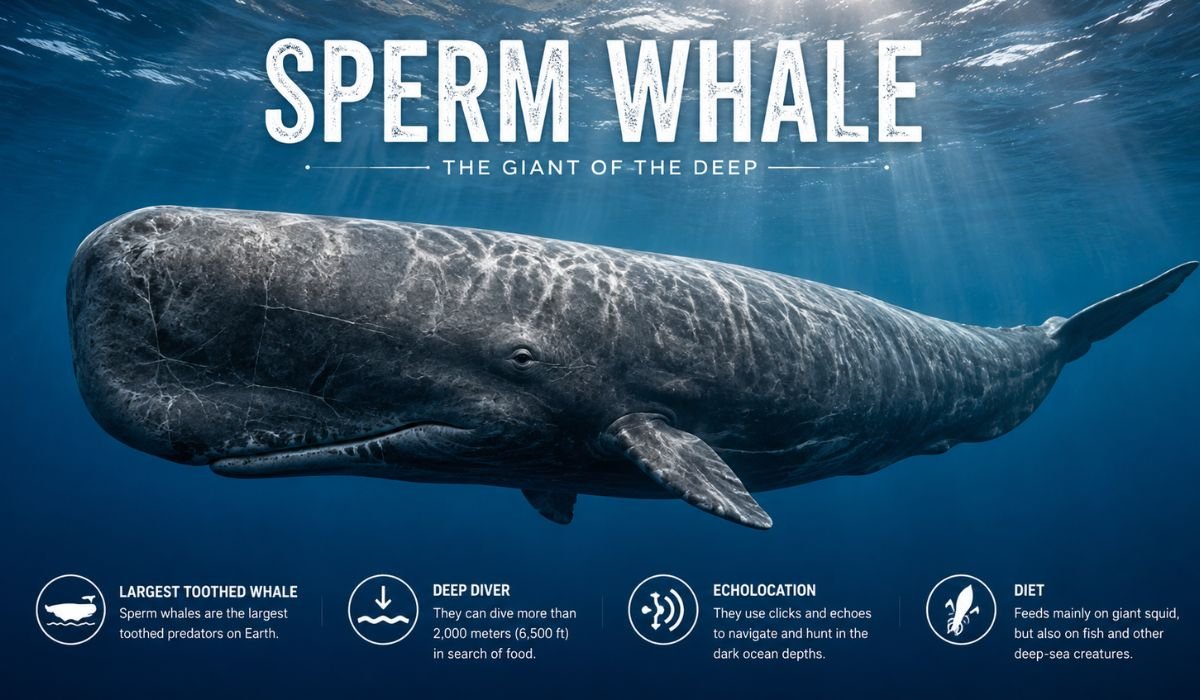
Sperm whales are the largest toothed whales. They are excellent deep divers and are known for hunting squid at great depths.
Orca
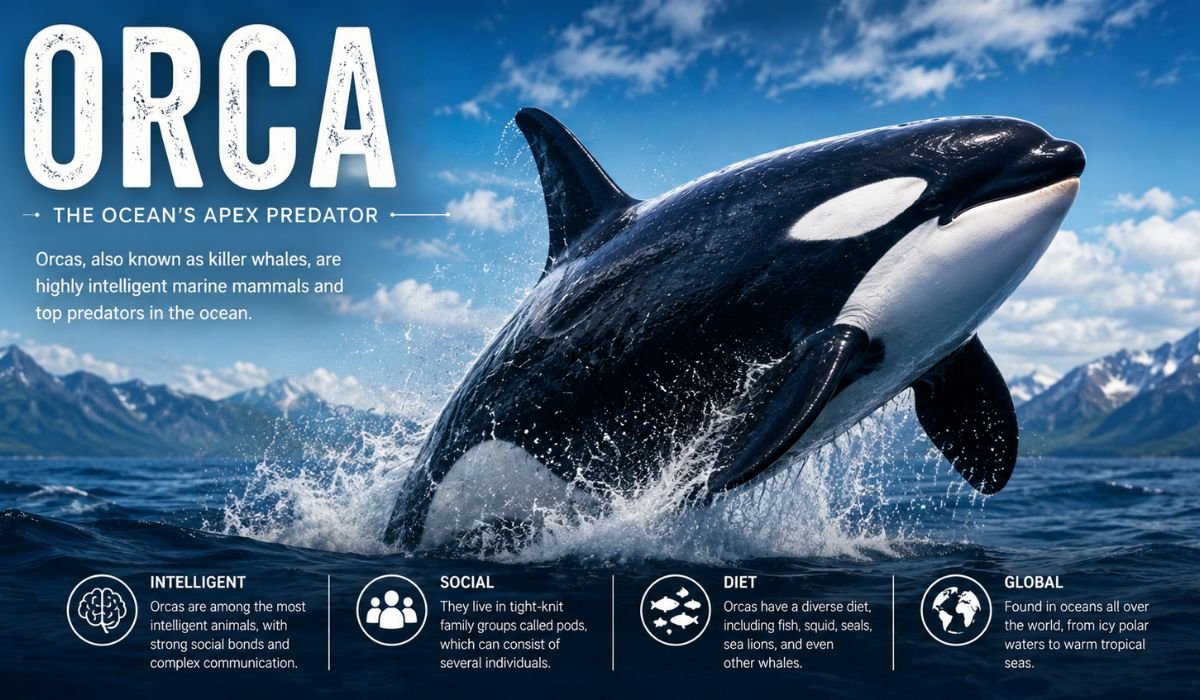
The orca, also called the killer whale, is actually the largest member of the dolphin family. Orcas are highly social and often live in family groups called pods.
Gray Whale
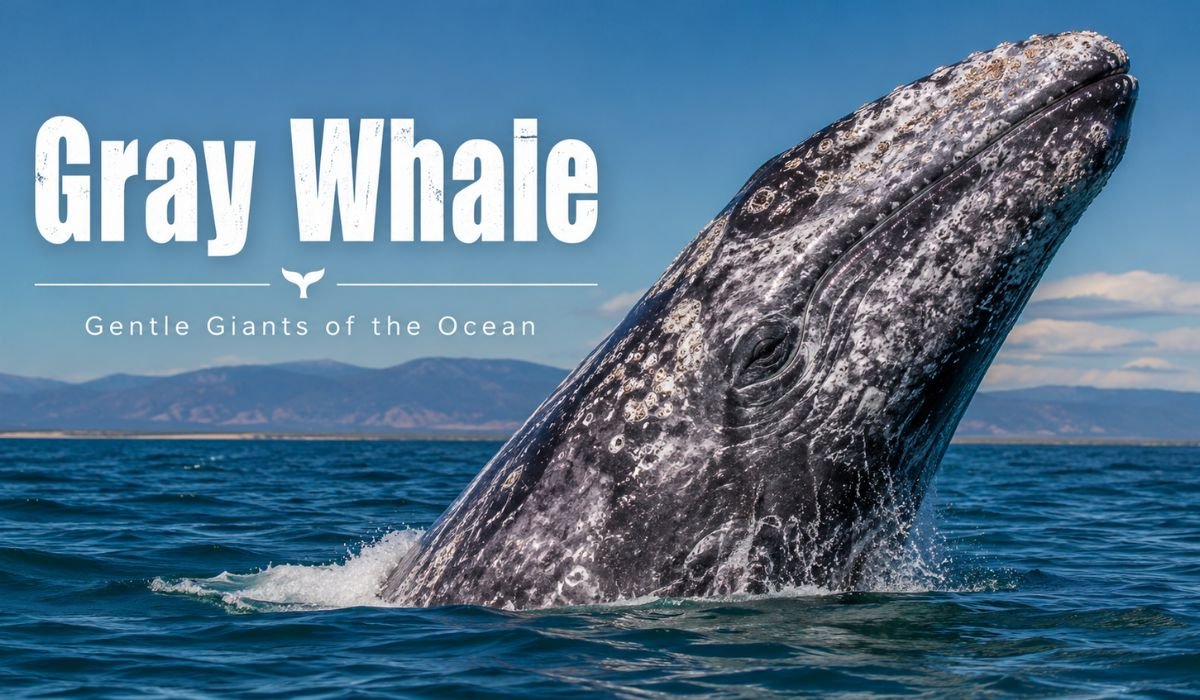
Gray whales are known for their long migrations. They travel between feeding grounds and breeding areas, making some of the longest migrations of any mammals.
Where Do Whales Live?
Whales live in oceans and seas across the world. Some species prefer cold polar waters, while others spend much of their time in tropical or temperate regions.
Many whales migrate throughout the year. They may travel to colder waters to find abundant food and then move toward warmer waters to reproduce and raise their young.
Their habitats can include open oceans, coastal waters, deep-sea environments, and areas around continental shelves.
Read Related Post: Lion Facts: Habitat, Diet, Behavior, and More
What Do Whales Eat?
A whale’s diet depends on its species.
Baleen whales often eat small organisms such as:
- Krill
- Small fish
- Plankton
- Small crustaceans
Toothed whales generally eat larger prey, including:
- Fish
- Squid
- Octopuses
- Seabirds
- Other marine animals
Blue whales, despite their incredible size, mainly eat tiny krill. This is one of the most interesting whale facts because it shows that enormous body size does not necessarily require large prey.
How Do Whales Breathe?
Whales breathe air through openings called blowholes located on the top of their heads. When a whale surfaces, it exhales air before taking another breath.
The visible spray often called a whale’s “blow” is produced when warm, moist air from the lungs meets the cooler air above the ocean.
Different species have different blowhole arrangements. Baleen whales generally have two blowholes, while toothed whales typically have one.
How Do Whales Communicate?
Whales use sounds to communicate with one another. These sounds can help them stay in contact, locate other whales, and possibly coordinate activities.
Humpback whales are particularly famous for their complex vocalizations. Some toothed whales also use clicks and other sounds for communication and echolocation.
Whale Behavior
Whales display a variety of interesting behaviors. Depending on the species, they may travel alone, in pairs, or in large social groups.
Common whale behaviors include:
- Breaching out of the water
- Slapping their tails or fins
- Traveling long distances
- Hunting cooperatively
- Caring for their young
- Communicating through sounds
Some whale species are highly social and maintain strong family relationships.
How Long Do Whales Live?
Whale lifespans vary considerably between species. Some whales can live for several decades, while certain species are believed to reach much older ages.
Factors such as species, food availability, environmental conditions, disease, and human activity can affect a whale’s survival and lifespan.
How Do Whales Have Babies?
Whales reproduce sexually and give birth to live calves. Female whales usually carry their developing young for many months before giving birth.
After birth, the calf stays close to its mother and drinks her milk. Young whales must grow quickly and learn important survival behaviors before becoming independent.
Are Whales Dangerous?
Whales are generally not aggressive toward humans. However, they are extremely large and powerful wild animals, so people should always observe them from a safe distance.
Most whale species are more interested in feeding, traveling, communicating, or caring for their young than interacting with humans.
Interesting Whale Facts
Here are some fascinating facts about whales:
- Whales are mammals, not fish.
- The blue whale is the largest known animal on Earth.
- Whales breathe air using lungs.
- Orcas are members of the dolphin family.
- Humpback whales are known for complex songs.
- Some whales travel thousands of miles during migration.
- Baleen whales do not have traditional teeth.
- Sperm whales are powerful deep divers.
- Whale calves drink their mother’s milk.
- Different whale species have very different diets and behaviors.
Why Are Whales Important?
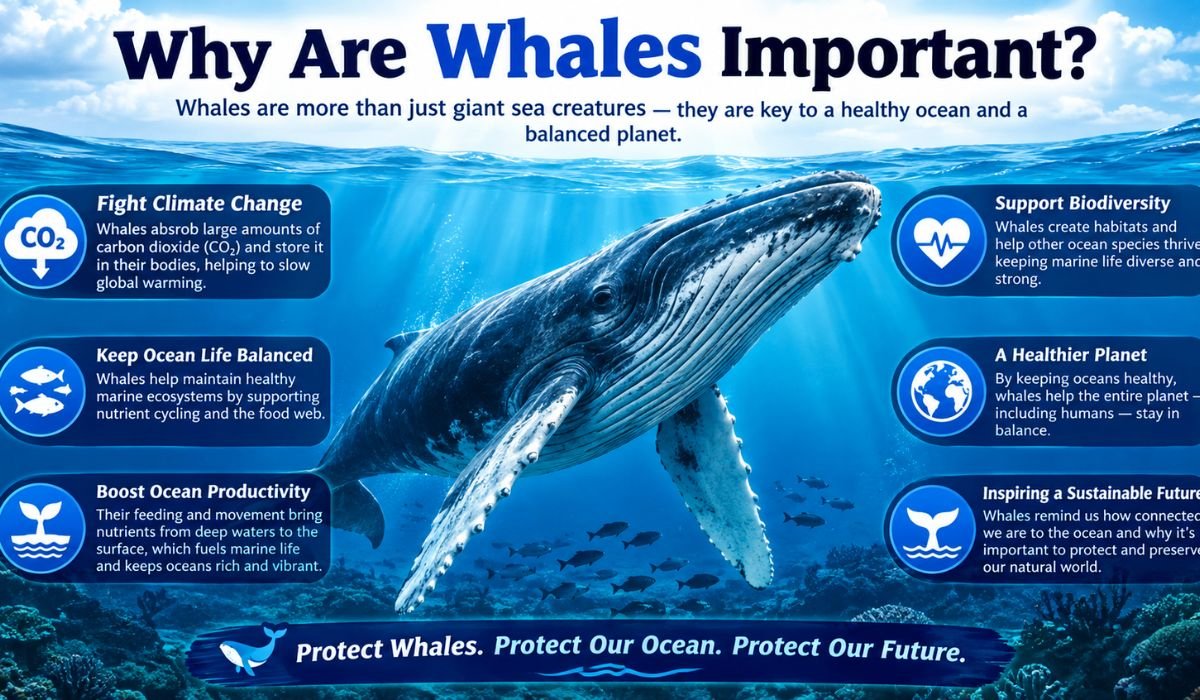
Whales play an important role in marine ecosystems. Their feeding, movement, and waste can contribute to the cycling of nutrients through ocean environments.
Protecting whales also helps protect the broader marine ecosystems in which they live. Threats such as entanglement in fishing equipment, ship strikes, pollution, habitat changes, and climate-related changes can affect whale populations.
Final Thoughts
Whales are remarkable marine mammals with incredible adaptations. From the gigantic blue whale to the highly social orca, each species has its own unique characteristics.
Learning these whale facts helps us understand how these animals live, migrate, communicate, feed, and interact with their ocean environments. Protecting their habitats is essential for keeping whale populations and marine ecosystems healthy for the future.

Hi, I’m Amelia, an SEO and content specialist with several years of experience researching and creating informative content for online audiences. At Animal Attack Facts, I focus on animal behavior, animal attacks on humans, and interesting facts about land animals, marine animals, birds, reptiles, and insects. My goal is to provide clear, useful, and engaging information that helps readers better understand wildlife and stay informed about animal encounters.
1 thought on “Whale Facts: Types, Habitat, Diet, and Behavior”