
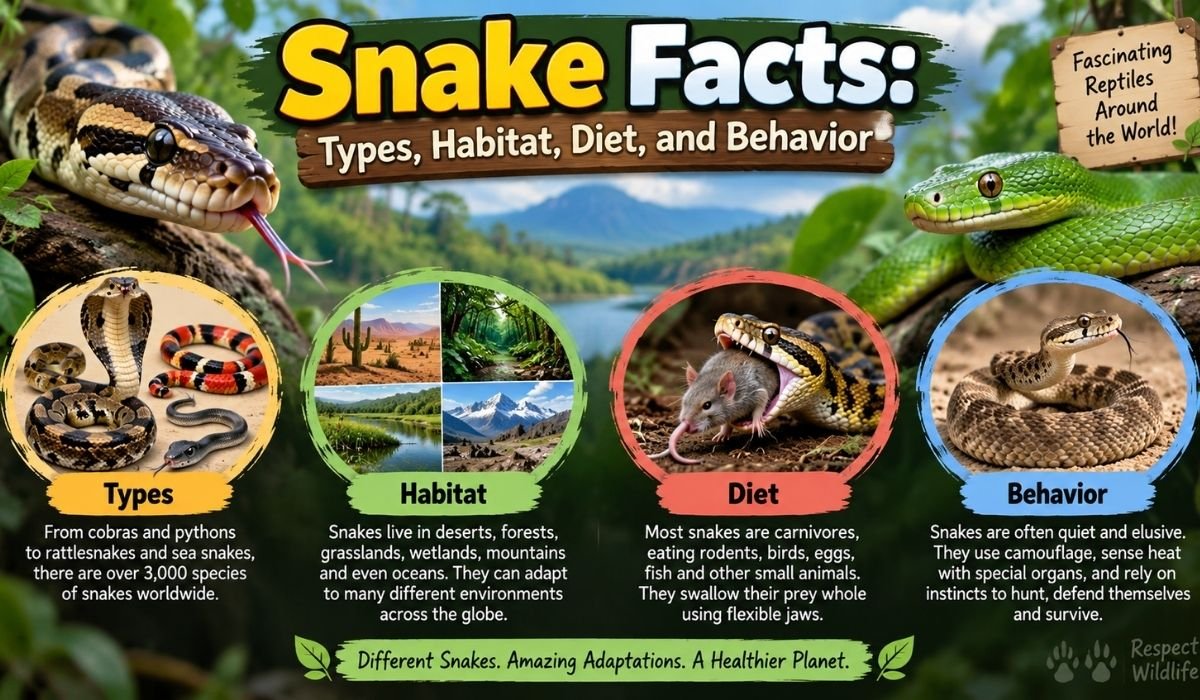
Snakes are among the most fascinating reptiles on Earth. They live in deserts, forests, grasslands, wetlands, mountains, and even oceans. With more than 3,000 known species, snakes vary greatly in size, color, behavior, diet, and habitat. Some are harmless and avoid people, while others have powerful venom or use constriction to capture prey. Learning snake facts can help us understand these unique animals and their important role in nature.
Unlike mammals and birds, snakes have long, flexible bodies covered with scales. They do not have legs, external ears, or movable eyelids, yet they have developed remarkable adaptations that allow them to survive in many environments. From tiny blind snakes to enormous pythons, every species has its own interesting characteristics.
What Are Snakes?
Snakes are reptiles belonging to the suborder Serpentes. They are closely related to lizards and are found on almost every continent except Antarctica. Their bodies are specially adapted for movement without legs, allowing them to travel across sand, soil, rocks, water, and vegetation.
One of the most interesting snake facts is that snakes do not move in just one way. Depending on the species and environment, they can use several forms of movement, including sidewinding, concertina movement, and lateral undulation.
Snakes are cold-blooded, meaning they depend largely on external sources of heat to regulate their body temperature. They may bask in sunlight to warm themselves and move into shade or cooler areas when they become too hot.
Read Related Post: Giraffe Facts: Habitat, Diet, Behavior, and More
Types of Snakes
There are thousands of snake species around the world, ranging from small, nonvenomous species to large predators. They can generally be discussed according to their physical characteristics, hunting methods, and habitats.
Venomous Snakes
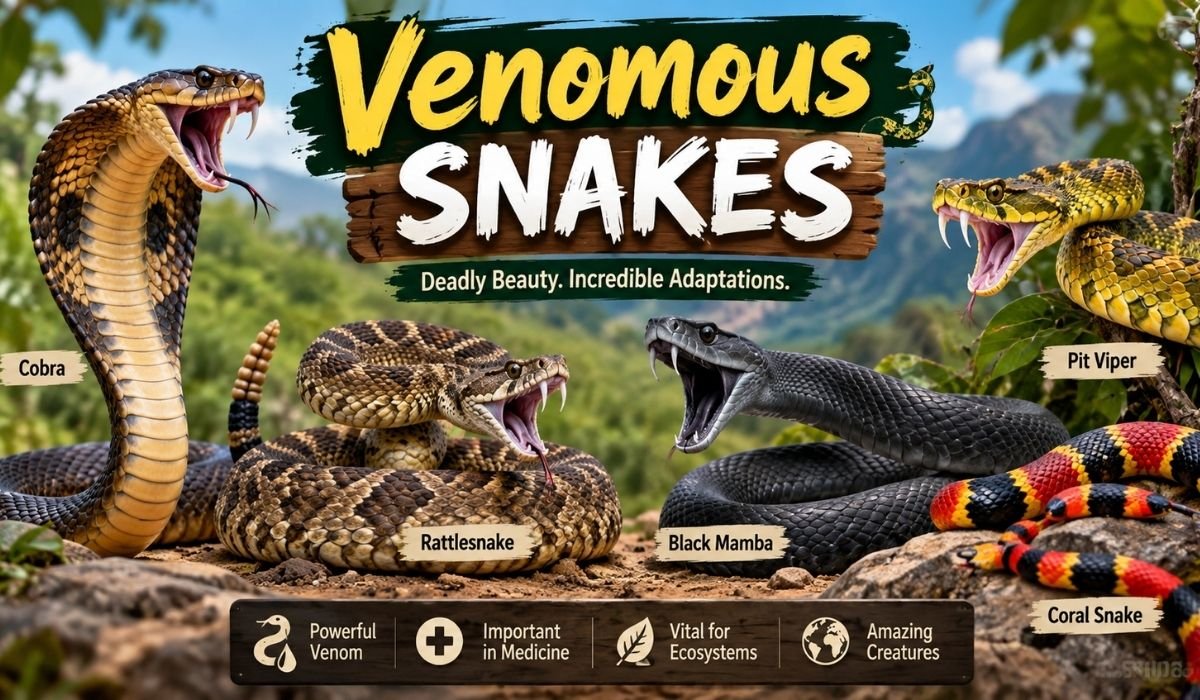
Venomous snakes produce venom that can help them subdue prey or defend themselves. Important venomous groups include cobras, mambas, vipers, and many sea snakes.
Examples include:
- King cobra
- Black mamba
- Rattlesnakes
- Copperheads
- Puff adders
- Coral snakes
Not every venomous snake poses the same level of danger. Venom composition, delivery method, behavior, and size vary significantly between species.
Nonvenomous Snakes
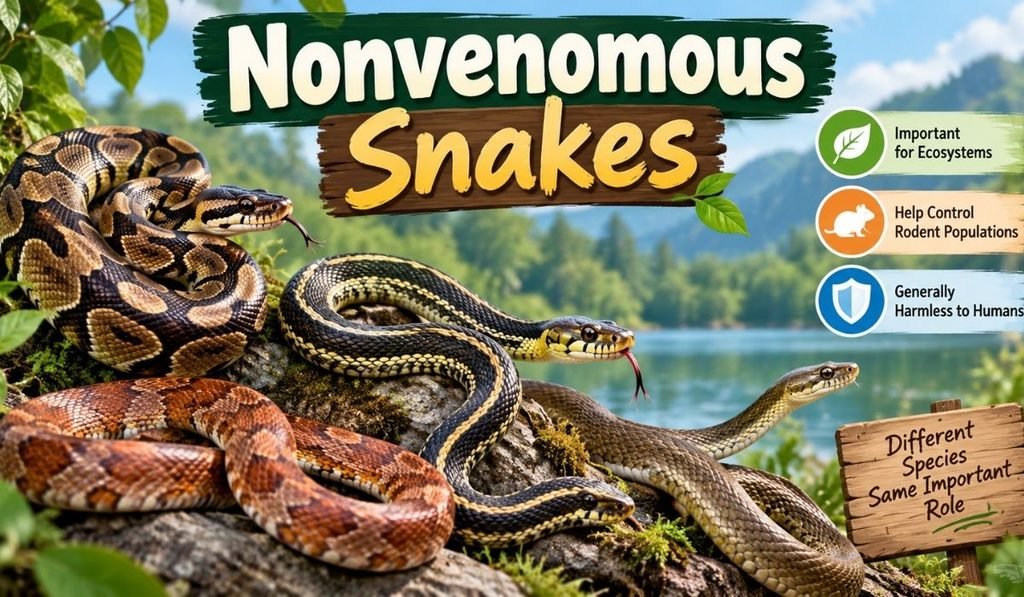
Many snakes are nonvenomous and capture prey using other methods. Some swallow small prey whole, while larger species may use constriction.
Examples include:
- Ball pythons
- Burmese pythons
- Boa constrictors
- Garter snakes
- Rat snakes
- Green tree pythons
An important point among snake facts is that most snakes are not interested in attacking humans. They generally prefer to escape when they feel threatened.
Snake Habitat
Snakes have adapted to an impressive variety of environments. Their habitats can influence their body shape, coloration, hunting techniques, and daily activity.
Forests and Woodlands

Many snakes live in tropical and temperate forests. Tree-dwelling species may have strong muscles and specialized body shapes that help them climb branches.
Forest snakes can hunt birds, eggs, frogs, lizards, rodents, and other small animals. Some are active during the day, while others are nocturnal.
Deserts and Dry Regions
Desert snakes have adaptations that help them survive extreme temperatures and limited water. Some species spend much of the hottest part of the day underground or beneath rocks.
Sidewinding snakes are particularly well adapted to loose sand. This movement allows them to cross hot surfaces while minimizing contact between their bodies and the ground.
Grasslands and Farmland
Grasslands provide habitats for many snakes because they contain rodents, insects, frogs, and other prey. Some species also benefit from shelter provided by rocks, vegetation, and underground burrows.
Snakes can play an important ecological role in these environments by helping regulate populations of rodents and other animals.
Wetlands and Water
Some snakes are highly adapted to aquatic environments. Water snakes can swim efficiently, while sea snakes spend much of their lives in marine environments.
These snakes may feed on fish, eels, frogs, and other aquatic animals.
What Do Snakes Eat?
Diet is another fascinating part of snake facts. Snakes are carnivores, meaning they primarily eat other animals. However, their diets differ considerably depending on their species, size, habitat, and hunting method.
Small snakes may eat insects, worms, frogs, small lizards, and young rodents. Larger snakes can consume birds, rabbits, fish, and other reptiles.
Some large constrictors are capable of eating surprisingly large prey relative to their body size. Snakes have flexible jaws and stretchy ligaments that allow them to swallow food much larger than their heads might suggest.
How Snakes Hunt
Snakes use several strategies to capture prey. Some actively search for food, while others wait quietly for prey to approach.
Venomous snakes may inject venom through specialized fangs. Constrictors wrap their bodies around prey and use muscular pressure to restrain it.
Snakes also have excellent chemical-sensing abilities. They use their forked tongues to collect particles from the environment and transfer them to a specialized sensory organ called the Jacobson’s organ.
Snake Behavior
Snake behavior varies significantly between species. Some snakes are active hunters, while others spend long periods hiding and waiting for prey.
Many snakes are solitary animals. They usually do not form large social groups, although certain species may gather together during particular periods, such as winter or breeding seasons.
One of the useful snake facts is that snakes communicate largely through body language and chemical signals rather than sounds. Defensive behaviors can include hissing, coiling, flattening the body, vibrating the tail, or attempting to escape.
Defensive Behavior
Most snakes prefer avoiding confrontation. When threatened, a snake may first try to move away or hide. If escape is impossible, it may display defensive behavior to make itself appear more intimidating.
A snake’s response depends on the species, situation, temperature, and proximity of the perceived threat. Giving a wild snake plenty of space is the safest approach.
How Do Snakes Move Without Legs?
Snake movement is one of their most remarkable adaptations. Their bodies contain many vertebrae and ribs, giving them flexibility and strength.
The most common movement method is lateral undulation, where the snake pushes against objects or uneven surfaces to move forward.
Sidewinding is especially useful on loose sand. Some snakes also use concertina movement when climbing or moving through narrow spaces.
These different movement methods demonstrate how snakes have evolved to survive in extremely different habitats.
How Do Snakes Reproduce?
Snake reproduction varies among species. Many snakes lay eggs, while others give birth to live young or retain eggs inside their bodies until the young are ready to emerge.
During breeding periods, males may compete with each other for access to females. Depending on the species, young snakes may receive little or no parental care after birth.
Baby snakes are usually independent soon after they emerge and must find food and shelter on their own.
Do Snakes Shed Their Skin?
Yes, snakes regularly shed their skin in a process called ecdysis. Because their skin does not grow continuously with their bodies, shedding allows them to replace the old outer layer.
Before shedding, a snake may become less active and its eyes can appear cloudy. After the process is complete, the snake has a fresh layer of skin.
The frequency of shedding depends on factors such as age, growth rate, species, nutrition, and environmental conditions.
How Long Do Snakes Live?
Lifespan varies greatly among species. Smaller snakes may live for several years, while some larger species can live for decades under suitable conditions.
In the wild, survival can be affected by predators, habitat loss, disease, food availability, weather, and human activity.
Captive snakes of some species can live longer because they receive consistent food, shelter, and veterinary care.
Why Are Snakes Important to the Ecosystem?
Snakes play an important role in maintaining healthy ecosystems. Many species control populations of rodents and other small animals, while snakes themselves provide food for birds of prey, mammals, and other predators.
This ecological role is one of the most important snake facts to understand because snakes are often misunderstood. Removing snakes from an ecosystem can affect predator-prey relationships and potentially allow certain prey populations to increase.
Snakes also contribute to biodiversity. Their presence can indicate that an ecosystem contains suitable food sources and shelter.
Interesting Snake Facts
Here are some additional snake facts that show how unusual these reptiles are:
- Snakes are found on almost every continent except Antarctica.
- Some snakes spend much of their lives in trees.
- Sea snakes are highly adapted to marine environments.
- Snakes use their tongues to collect chemical information.
- Some species can detect heat from warm-bodied prey.
- Snakes periodically shed their outer skin.
- Many snakes can go for extended periods between meals.
- Snakes have flexible jaws that help them swallow large prey.
- Some snakes use venom, while others rely on constriction or other hunting methods.
- Snakes are important predators in many ecosystems.
FAQ’s
Are all snakes dangerous?
No. Most snakes are not dangerous to humans. Some species are venomous, but many are harmless and generally avoid people. A snake’s behavior also depends on the species and circumstances.
What do snakes eat?
Snakes are carnivores and commonly eat rodents, birds, frogs, fish, lizards, insects, eggs, and other small animals. Larger species can consume larger prey.
Where do snakes live?
Snakes live in forests, deserts, grasslands, wetlands, mountains, rivers, and oceans. Their habitat depends on the species and its adaptations.
How do snakes move without legs?
Snakes use their strong muscles, ribs, and flexible vertebral columns to move. Different species use different techniques, including lateral undulation and sidewinding.
Do snakes have ears?
Snakes do not have external ears like humans, but they can detect vibrations and sounds through structures connected to their skulls and inner ears.
Why do snakes shed their skin?
Snakes shed their skin because the outer layer does not expand as they grow. Shedding allows them to replace the old skin with a new layer.
Conclusion
Snakes are highly adaptable reptiles with a remarkable range of body shapes, hunting methods, habitats, and behaviors. From desert sidewinders to aquatic sea snakes, different species have evolved specialized features that help them survive in challenging environments. Understanding snake facts also shows why these animals are valuable parts of natural ecosystems.
Although some snakes have venom and should be treated with caution, most species prefer to avoid humans. Their role as predators helps maintain ecological balance by controlling populations of rodents and other animals. The more we learn about snakes, the easier it becomes to appreciate their unique adaptations and importance in nature.

Hi, I’m Amelia, an SEO and content specialist with several years of experience researching and creating informative content for online audiences. At Animal Attack Facts, I focus on animal behavior, animal attacks on humans, and interesting facts about land animals, marine animals, birds, reptiles, and insects. My goal is to provide clear, useful, and engaging information that helps readers better understand wildlife and stay informed about animal encounters.
1 thought on “Snake Facts: Types, Habitat, Diet, and Behavior”