
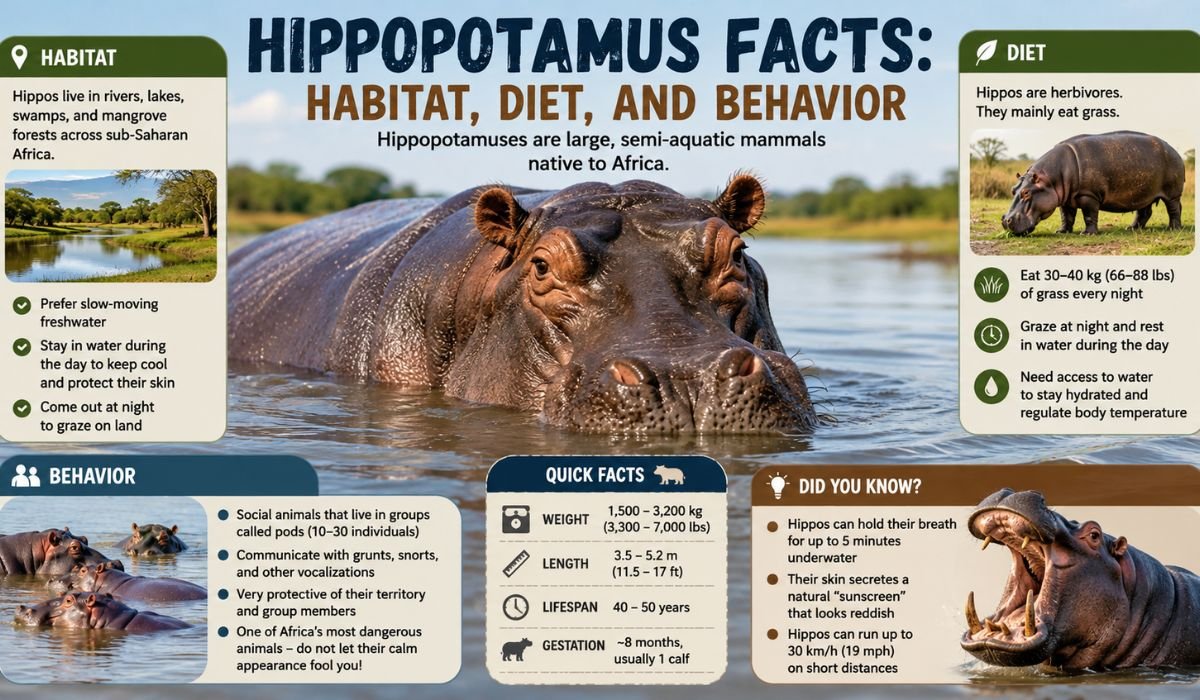
Hippopotamuses are among the largest land mammals on Earth and are famous for their massive bodies, powerful jaws, and semi-aquatic lifestyle. Despite spending much of their time in water, hippos are not strong swimmers in the traditional sense. They often move by walking or pushing themselves along the bottom of rivers and lakes. These fascinating animals play an important role in African ecosystems and have several surprising adaptations that help them survive.
In this guide to hippopotamus facts, you will learn about their habitat, diet, behavior, physical features, social life, reproduction, and other interesting characteristics.
Hippopotamus Facts About Their Physical Features
One of the most noticeable hippopotamus facts is their enormous size. Adult common hippos can weigh around 1,300 to 3,200 kilograms, although some individuals can be even heavier. They have barrel-shaped bodies, short legs, large heads, and powerful jaws.
Their skin is thick and mostly hairless. It can appear gray, brownish, or pinkish depending on lighting and the animal’s environment. Hippos also have small eyes, ears, and nostrils positioned high on their heads. This allows them to keep most of their bodies underwater while still seeing, hearing, and breathing.
Powerful Teeth and Jaws
Hippos have extremely strong jaws and large canine teeth. Their long lower canine teeth can continue growing throughout their lives and are used mainly during fights and displays between individuals.
Despite their intimidating teeth, hippos are primarily herbivores. Their jaws are better suited to grabbing and cutting vegetation than hunting other animals.
Hippopotamus Habitat and Geographic Range
The natural habitat of the hippopotamus is found mainly in sub-Saharan Africa. Hippos live near rivers, lakes, wetlands, and other areas where they can stay close to water.
One of the most important hippopotamus facts is that access to water is essential to their survival. Their skin can dry out and become damaged when exposed to the hot African sun for long periods.
Common hippos are found in several African countries, although their populations are unevenly distributed. They tend to prefer areas with permanent water and nearby grasslands that provide plenty of food.
Why Do Hippos Spend So Much Time in Water?
Water helps hippos regulate their body temperature and protect their sensitive skin. During the hottest parts of the day, they often remain submerged or partially submerged.
Hippos usually become more active outside the water later in the day and at night, when temperatures are cooler.
Hippopotamus Diet and Feeding Habits
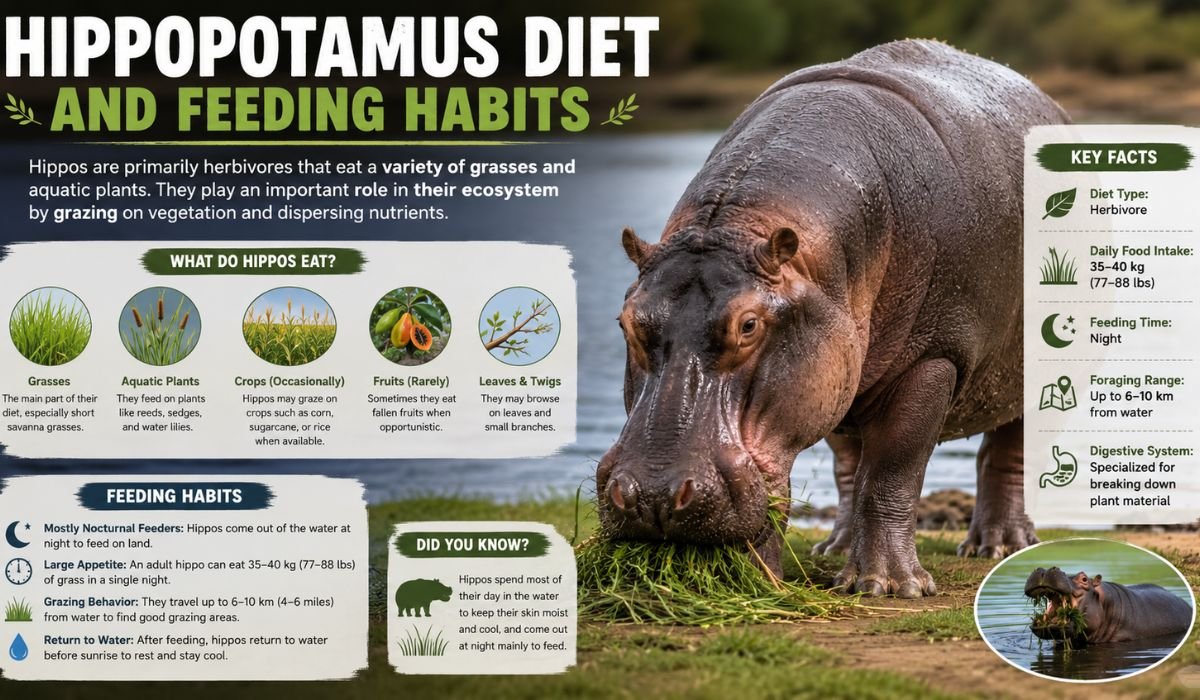
Their diet is another interesting part of hippopotamus facts. Hippos are herbivores that mainly eat grass and other types of vegetation.
An adult hippo can consume a large amount of grass in a night. They usually leave the water after sunset and travel onto land to feed. Their short legs may look awkward, but hippos can travel considerable distances while searching for food.
Read Related Post: Chameleon Facts: Habitat, Diet, Color Change, and Behavior
What Do Hippos Eat?
The main foods in a hippo’s diet include:
- Grass
- Aquatic plants
- Leaves
- Other soft vegetation
Although they spend much of their time in water, they generally obtain most of their food on land. Their broad mouths allow them to gather large amounts of grass efficiently.
Hippopotamus Behavior and Social Life
Understanding hippopotamus facts also means looking at their social behavior. Hippos are highly social animals and often live in groups called herds, pods, or bloats.
A group may contain several individuals, including adult females, young hippos, and one or more adult males. Group size can vary depending on environmental conditions and available resources.
Territorial Male Hippos
Adult male hippos can be highly territorial, particularly around water. Males may defend areas where females gather and use displays to warn rivals.
Conflicts between males can become dangerous because of their enormous size and powerful teeth. A male may open its mouth widely, make loud sounds, or use other threatening behaviors to establish dominance.
Communication
Hippos communicate using a variety of sounds and physical behaviors. They can make grunts, squeals, honks, and other vocalizations.
Some of their sounds can be produced both above and below the water. Communication helps individuals maintain contact with members of their group and respond to potential threats.
Hippopotamus Facts About Their Relationship With Water
One of the most surprising hippopotamus facts is that hippos do not breathe underwater. Like other mammals, they must come to the surface to breathe.
They can remain underwater for several minutes before surfacing. Their nostrils can close while submerged, helping prevent water from entering their airways.
Hippos can also rest in shallow water while keeping their nostrils above the surface. This allows them to conserve energy while staying cool.
Can Hippos Swim?
Hippos are not particularly strong swimmers compared with animals that are specialized for swimming. Instead, they often walk, push, or bounce along the bottom of rivers and pools.
Their dense bodies make floating difficult, but they are well adapted to moving through water.
Hippopotamus Reproduction and Young
Reproduction is another important area of hippopotamus facts. Female hippos usually give birth to a single calf after a long pregnancy lasting roughly eight months.
Birth often takes place in water, and mothers are highly protective of their young.
Newborn calves are able to swim and can nurse both on land and underwater. They remain close to their mothers for protection during their early development.
Mother and Calf Bond
A mother hippo spends considerable time protecting her calf. Young hippos may stay close to their mothers when resting, feeding, and moving through the water.
The calf gradually becomes more independent as it grows, but the mother provides important protection during its early life.
Hippopotamus Adaptations for Survival
Several physical and behavioral adaptations help hippos survive in hot African environments.
Their eyes, ears, and nostrils are positioned high on their heads, allowing them to remain mostly submerged while monitoring their surroundings.
Another interesting adaptation is their skin. Hippos produce a reddish, oily secretion that helps protect their skin from drying and may provide some protection against sunlight and microorganisms.
This secretion is sometimes described as “blood sweat,” but it is not actually blood or sweat.
Strong Bodies and Fast Movement
Although hippos look slow and bulky, they can move surprisingly quickly on land for short distances. Their powerful legs allow them to run when threatened.
Their combination of size, strength, speed, and powerful jaws makes adult hippos formidable animals.
Hippopotamus Facts About Their Ecological Role
Hippos have an important role in their ecosystems. Their movement between water and land helps transport nutrients through different parts of the environment.
When hippos feed on vegetation and return to the water, they contribute organic material to aquatic ecosystems. Their activities can influence nutrient cycling and the structure of habitats.
They also create pathways through vegetation as they move between feeding areas and water sources.
Are Hippopotamuses Dangerous?
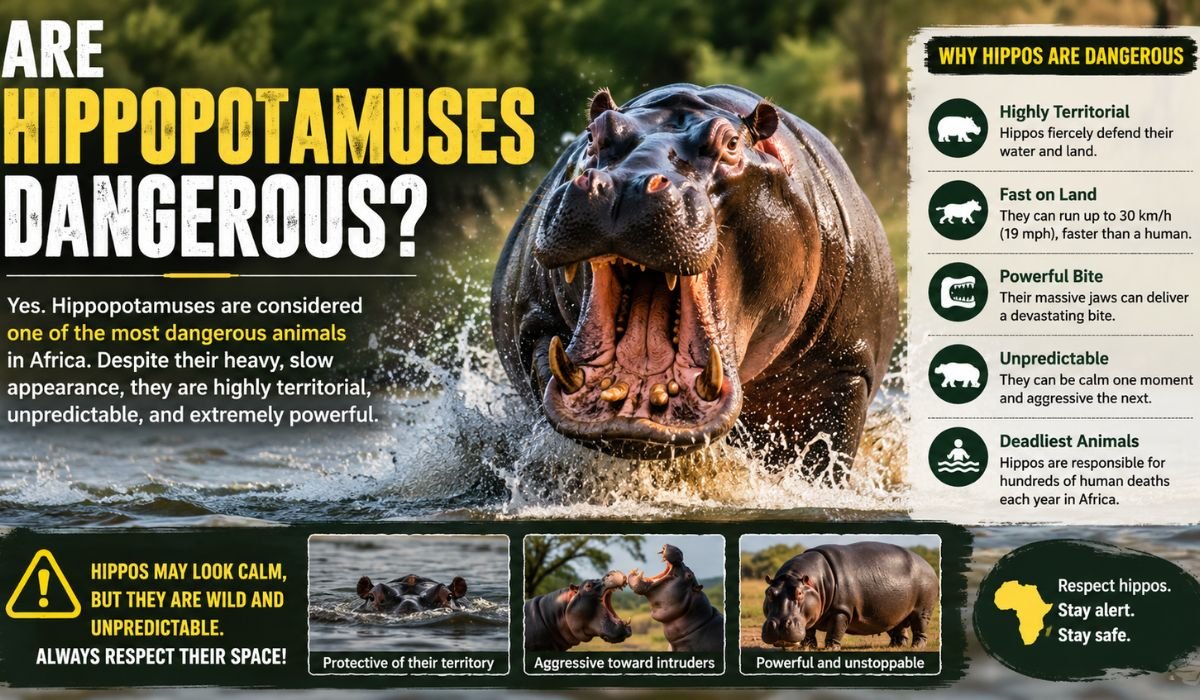
Hippos can be dangerous when people get too close, particularly if a hippo feels threatened or if someone enters its territory.
They are especially defensive around water and young calves. Their large size, powerful jaws, and territorial behavior mean that they should always be observed from a safe distance.
This does not mean hippos are naturally aggressive toward everything around them. Their behavior is strongly influenced by their environment, social relationships, and perceived threats.
Hippopotamus Conservation
Habitat loss, human-wildlife conflict, and illegal hunting have affected wild hippo populations in parts of Africa. Protecting rivers, wetlands, grasslands, and other natural habitats is important for their long-term survival.
Conservation programs can help protect hippos by preserving their habitats and reducing conflicts between people and wildlife.
Maintaining healthy waterways is particularly important because hippos depend heavily on permanent water sources.
FAQ’s
Are hippos herbivores?
Yes. One of the basic hippopotamus facts is that hippos are herbivores. They mainly eat grass and other vegetation, with much of their feeding taking place on land at night.
Where do hippos live?
Hippos naturally live in sub-Saharan Africa, particularly around rivers, lakes, wetlands, and grasslands. They require reliable access to water.
Can hippos breathe underwater?
No. Hippos are mammals and must breathe air. They can stay underwater for several minutes before returning to the surface.
How long can hippos stay underwater?
A hippo can generally remain underwater for several minutes before needing to breathe. Their ability to close their nostrils helps them stay submerged comfortably.
What do hippos eat?
Hippos primarily eat grass and other vegetation. They usually leave the water at night to feed on grasslands.
Do hippos live in groups?
Yes. Hippos commonly live in social groups. Groups can include females, calves, and adult males, although their social structure can vary.
Are hippos good swimmers?
Hippos can move very well through water, but they are not traditional swimmers. They often walk or push themselves along the bottom of rivers and pools.
How big can a hippopotamus get?
Adult common hippos can weigh well over 1,000 kilograms, with some large individuals reaching several thousand kilograms.
Conclusion
These hippopotamus facts show why hippos are among Africa’s most fascinating mammals. Their enormous bodies, powerful jaws, specialized skin, social behavior, and dependence on water make them uniquely adapted to their environment.
From feeding on grass at night to spending hot days in rivers and lakes, hippos have developed remarkable ways to survive. Although they may appear calm while resting in the water, their territorial nature and physical strength mean they deserve plenty of respect.
Learning more about hippopotamus facts also highlights the importance of protecting African wetlands, rivers, and grasslands. Conserving these habitats helps ensure that future generations can continue to see these remarkable animals living in the wild.

Hi, I’m Amelia, an SEO and content specialist with several years of experience researching and creating informative content for online audiences. At Animal Attack Facts, I focus on animal behavior, animal attacks on humans, and interesting facts about land animals, marine animals, birds, reptiles, and insects. My goal is to provide clear, useful, and engaging information that helps readers better understand wildlife and stay informed about animal encounters.
1 thought on “Hippopotamus Facts: Habitat, Diet, and Behavior”