
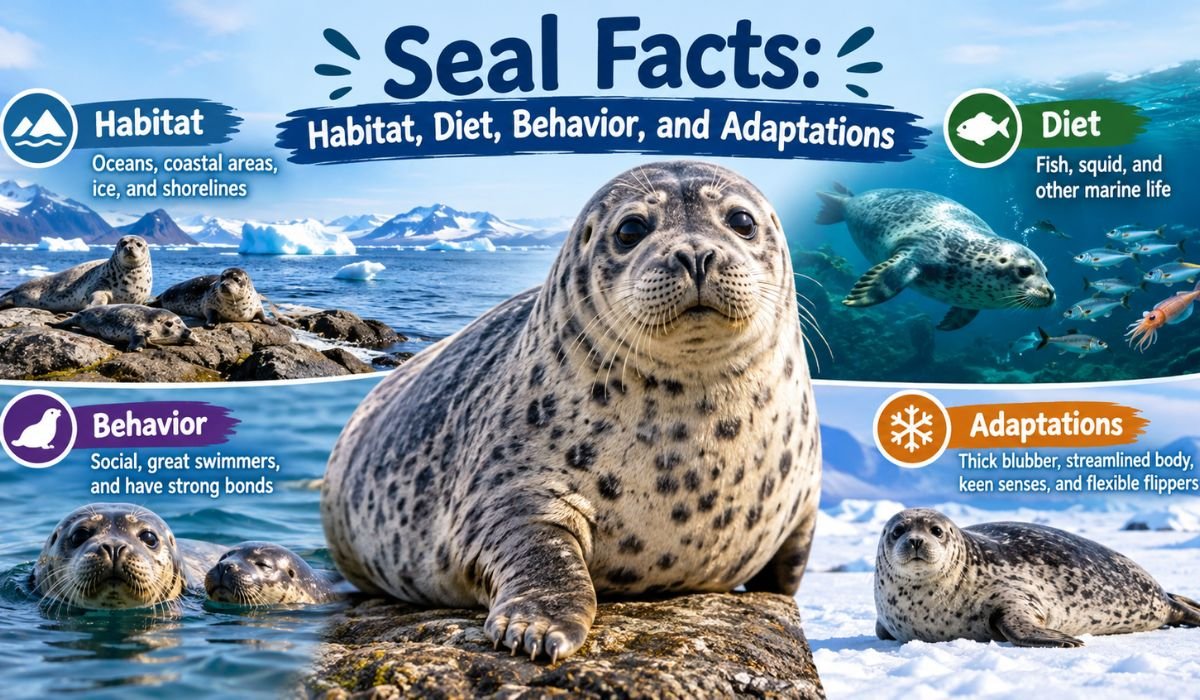
Seals are fascinating marine mammals known for their streamlined bodies, flipper-like limbs, thick layers of blubber, and ability to thrive in cold ocean environments. These animals spend much of their lives in the water but regularly come onto beaches, ice, or rocky shores to rest, reproduce, and care for their young. Learning seal facts can help explain how these mammals survive in some of the harshest habitats on Earth.
Seals belong to the group of pinnipeds, which also includes sea lions and walruses. There are many seal species, and they vary considerably in size, appearance, habitat, and behavior. Some live mainly in polar regions, while others are found in temperate and even relatively warm coastal waters.
From their excellent swimming abilities to their remarkable adaptations for diving, seals have evolved features that make them highly successful marine predators. In this article, we’ll explore important seal facts, including their habitat, diet, behavior, physical adaptations, reproduction, and relationship with their environment.
What Are Seals?
Seals are aquatic mammals belonging to the order Pinnipedia. Unlike fish, they breathe air with lungs, give birth to live young, and nurse their babies with milk.
One of the most interesting seal facts is that seals are adapted for both land and water. Their bodies are shaped to move efficiently through the ocean, while their flippers allow them to move around on beaches, ice, and rocky surfaces.
True seals, sometimes called earless seals, differ from sea lions and fur seals. True seals do not have visible external ear flaps. They also generally use their hind flippers differently when moving on land.
How Many Seal Species Are There?
There are around 18 recognized species of true seals, although classification can vary as scientists study their relationships and populations.
Examples include:
- Harbor seal
- Gray seal
- Leopard seal
- Weddell seal
- Ringed seal
- Harp seal
- Elephant seal
- Monk seals
Each species has specialized adaptations that help it survive in its particular environment.
Seal Habitat
Seals can be found in oceans and coastal areas around much of the world. Their habitats range from icy polar waters to temperate coastlines.
Many species are strongly associated with cold regions. For example, several species live around Antarctica or the Arctic, where sea ice provides important areas for resting and raising young.
Other species, such as harbor seals, can be found along temperate coastlines. This variety is one of the most useful seal facts because it shows that seals are not restricted to one type of environment.
Where Do Seals Live?
Seals commonly inhabit:
- Arctic and Antarctic waters
- Coastal oceans
- Rocky shores
- Sandy beaches
- Sea ice
- Islands
- Estuaries
- Offshore waters
Some species spend most of their lives at sea and return to land only for specific activities such as resting, breeding, or molting.
What Do Seals Eat?
Seals are generally carnivorous and eat a wide variety of marine animals. Their diet depends heavily on their species, location, and available prey.
Common foods include fish, squid, octopuses, crustaceans, and other marine organisms.
For example, leopard seals are powerful predators that can eat fish, penguins, and other prey. Elephant seals mainly consume fish and squid and are capable of making extremely deep dives to find food.
These seal facts show how important seals are within marine food webs. They can occupy different positions in the ecosystem depending on their species and feeding habits.
Read Related Post: Hippopotamus Facts: Habitat, Diet, and Behavior
How Do Seals Find Food?
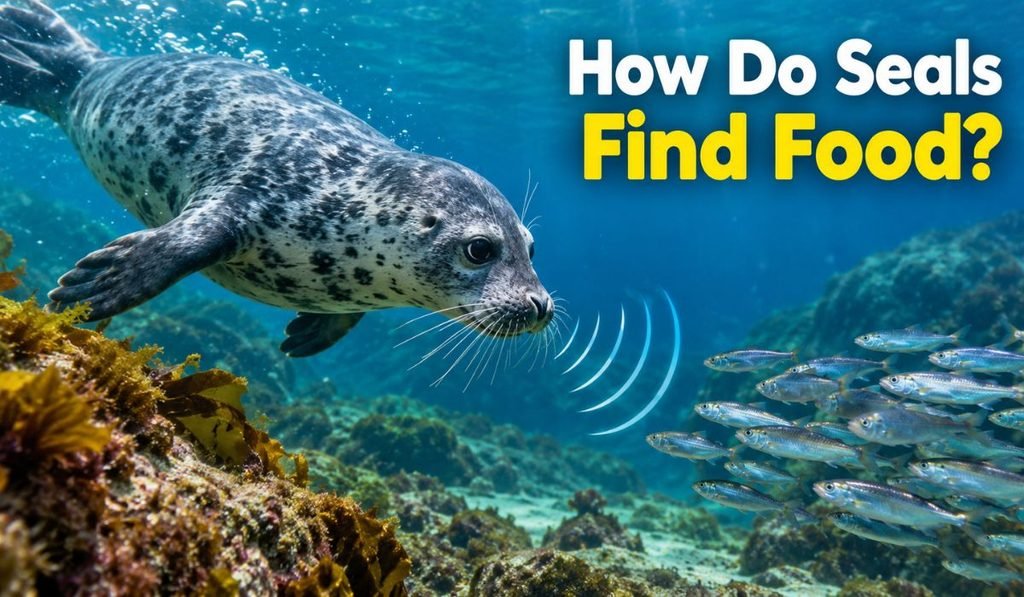
Seals have excellent underwater senses that help them locate prey. Their sensitive whiskers are particularly important.
A seal’s whiskers can detect vibrations and movements in the water. This ability may help seals track prey even when visibility is poor.
Some seals also have large eyes that are well adapted to underwater environments, allowing them to hunt in low-light conditions.
Seal Physical Adaptations
Seals have several remarkable physical adaptations that allow them to survive in marine environments.
Thick Blubber
One of the most important adaptations is a layer of body fat called blubber. Blubber helps insulate seals from cold water and also provides stored energy.
This adaptation is especially important for species living in polar environments.
Streamlined Body
Seals have smooth, streamlined bodies that reduce resistance as they swim. Their powerful muscles and flippers allow them to move efficiently through the water.
Flippers
Seals have front and rear flippers that are specialized for aquatic movement. Their exact shape and swimming technique vary among species.
Unlike sea lions, true seals cannot rotate their hind flippers underneath their bodies for efficient walking. Instead, they tend to move on land using a wriggling or undulating motion.
Whiskers
Another fascinating example of seal facts involves their whiskers. Seal whiskers are highly sensitive and can detect changes in water movement.
This sensory ability can be particularly useful when seals hunt in dark or murky water.
Seal Behavior
Seals display a wide range of behaviors, from social resting to underwater hunting and long-distance movement.
Some species gather in large groups on beaches or ice, while others may spend considerable time alone.
Seals communicate using sounds, body movements, and other signals. Vocalizations are particularly important during breeding seasons and mother-pup interactions.
Are Seals Social Animals?
The answer varies by species.
Some seals are highly social and gather in large colonies, especially during breeding periods. Others are more solitary.
Elephant seals, for example, form enormous breeding colonies. Harbor seals may gather together on beaches and rocks but often have a less structured social system.
These differences demonstrate the diversity found among seal species.
Seal Reproduction and Life Cycle
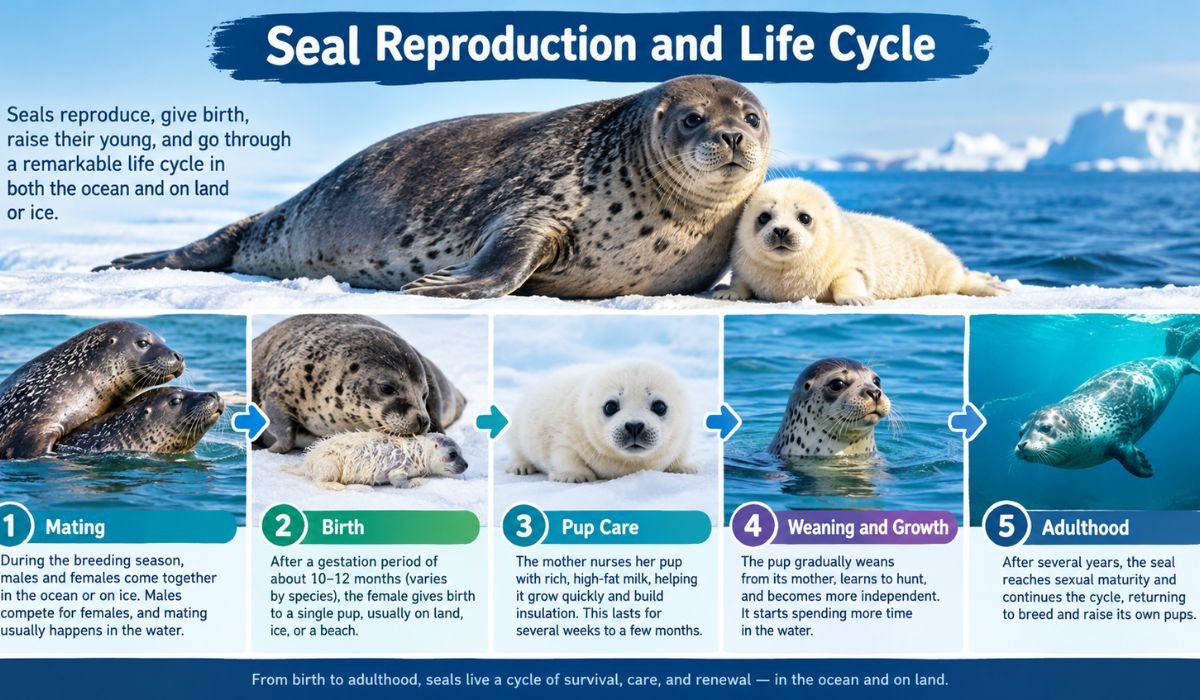
Seals give birth to live young and nurse their pups with milk. Reproductive behavior varies between species.
In many species, females give birth to a single pup at a time. Seal pups often grow quickly because their mother’s milk can be extremely rich in fat.
Young seals must eventually learn how to swim and hunt independently.
Seal Pups
Newborn seals can look very different from adults. Some species have thick, light-colored fur when they are young, which may provide camouflage or insulation.
Mothers recognize their pups through a combination of scent, sound, and other cues. This is particularly important in crowded breeding colonies.
How Long Do Seals Live?
Lifespan varies by species, sex, environmental conditions, and other factors.
Some seals can live for several decades under favorable conditions. Elephant seals, for instance, can live for many years, although males and females may have different average lifespans.
Natural predators, disease, food availability, human activities, and environmental changes can all influence survival.
How Deep Can Seals Dive?
Seals are excellent divers. Their bodies contain several adaptations that allow them to remain underwater for extended periods.
Before diving, seals can increase the amount of oxygen available to their bodies. They have relatively high concentrations of oxygen-storing proteins in their blood and muscles.
Some species can dive hundreds of meters below the surface. Elephant seals are particularly impressive divers and can remain underwater for long periods while searching for prey.
These seal facts highlight how different seals are from many land mammals.
Seal Adaptations for Cold Water
Cold water creates major challenges for marine mammals, but seals have evolved several strategies to deal with it.
Their blubber provides insulation, while their compact body shape can help reduce heat loss. Blood circulation in their flippers can also be regulated to help manage body temperature.
Some polar species also use sea ice as a resting and breeding platform.
These adaptations allow seals to remain active in environments where temperatures can be extremely low.
Predators and Threats to Seals
Seals have natural predators, although the species they face depends on their location.
Predators may include:
- Orcas
- Large sharks
- Polar bears
- Leopard seals
- Other large marine predators
Young seals are generally more vulnerable than healthy adults.
Humans can also affect seal populations through habitat disturbance, pollution, fishing interactions, climate change, and other environmental pressures. Conservation efforts can help protect vulnerable populations and their habitats.
Why Are Seals Important to Marine Ecosystems?
Seals play important roles in marine ecosystems because they are predators and also serve as prey for other animals.
By feeding on fish, squid, and other marine organisms, seals participate in regulating marine food webs. At the same time, predators such as orcas depend on some seal species as a food source.
Studying seal facts therefore provides insight into the wider health and balance of marine ecosystems.
Interesting Seal Facts
Here are some additional seal facts worth remembering:
- Seals are marine mammals, not fish.
- They breathe air using lungs.
- Seals have sensitive whiskers that can detect water movement.
- Many seals use blubber for insulation and energy storage.
- Some species can dive hundreds of meters deep.
- Seals can sleep both on land and in the water.
- Some seal species live in extremely cold polar environments.
- Seal pups depend on their mothers for milk during early life.
- Different seal species have very different diets and behaviors.
- Seals belong to the pinniped group along with sea lions and walruses.
FAQ’s
Are seals mammals?
Yes. Seals are mammals because they breathe air, give birth to live young, and feed their babies milk.
What do seals eat?
Seals commonly eat fish, squid, octopuses, and crustaceans. Their exact diet depends on the species and its habitat.
Where do seals live?
Seals live in oceans and coastal environments around the world. Some species specialize in Arctic or Antarctic habitats, while others live in temperate coastal waters.
Can seals live on land?
Seals can spend time on land, beaches, rocks, and sea ice. However, they are highly adapted to life in the water and obtain most of their food from marine environments.
How deep can seals dive?
Some seal species can dive hundreds of meters. Elephant seals are among the deepest-diving pinnipeds and can make exceptionally deep and long dives.
Are seals dangerous?
Wild seals are generally not aggressive toward people, but they are still powerful wild animals. People should observe them from a safe distance and avoid touching or feeding them.
Conclusion
Seals are highly adapted marine mammals with specialized bodies, powerful swimming abilities, sensitive whiskers, and impressive diving skills. From icy polar waters to temperate coastlines, different species have developed unique ways to survive in their environments.
The most interesting seal facts show how effectively these animals combine adaptations for swimming, diving, hunting, reproduction, and temperature regulation. Their role in marine food webs also makes them important indicators of ocean ecosystem health.
Understanding seal facts can help us appreciate these remarkable animals and the marine environments they depend on. Protecting healthy oceans, coastal habitats, and sea-ice ecosystems is essential for helping seal populations thrive for future generations.

Hi, I’m Amelia, an SEO and content specialist with several years of experience researching and creating informative content for online audiences. At Animal Attack Facts, I focus on animal behavior, animal attacks on humans, and interesting facts about land animals, marine animals, birds, reptiles, and insects. My goal is to provide clear, useful, and engaging information that helps readers better understand wildlife and stay informed about animal encounters.
1 thought on “Seal Facts: Habitat, Diet, Behavior, and Adaptations”