
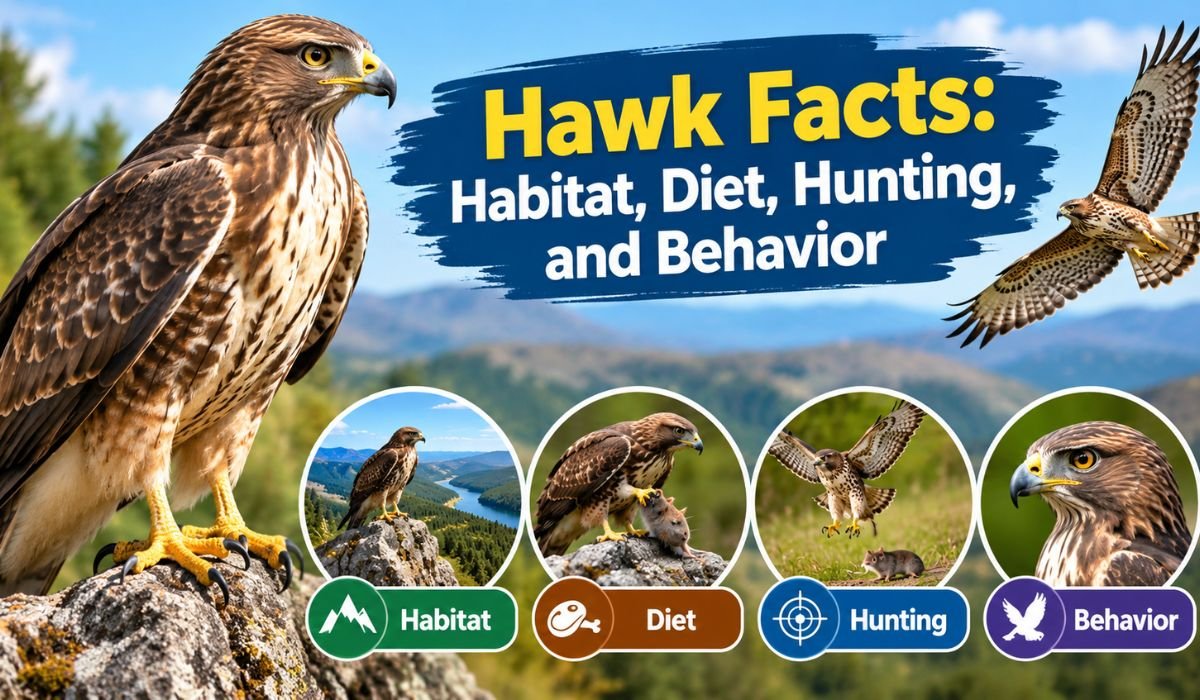
Hawks are powerful birds of prey known for their sharp eyesight, hooked beaks, strong talons, and impressive hunting abilities. Found across many parts of the world, hawks live in forests, grasslands, deserts, wetlands, mountains, and even areas close to cities.
These adaptable raptors play an important role in ecosystems by controlling populations of rodents, birds, reptiles, and other small animals. Learning hawk facts reveals how these skilled predators survive in different environments and use specialized adaptations to find food and avoid danger.
Hawk Facts and Physical Characteristics
One of the most interesting hawk facts is that the word “hawk” can refer to many different birds belonging to the family Accipitridae. Hawks vary considerably in size, appearance, and behavior.
Most hawks have broad wings, relatively short or rounded tails, and strong legs ending in sharp talons. Their hooked beaks are designed for tearing food into manageable pieces.
Hawks also have excellent vision. Their eyes are adapted for spotting movement from considerable distances, which gives them a major advantage when hunting.
Size and Appearance
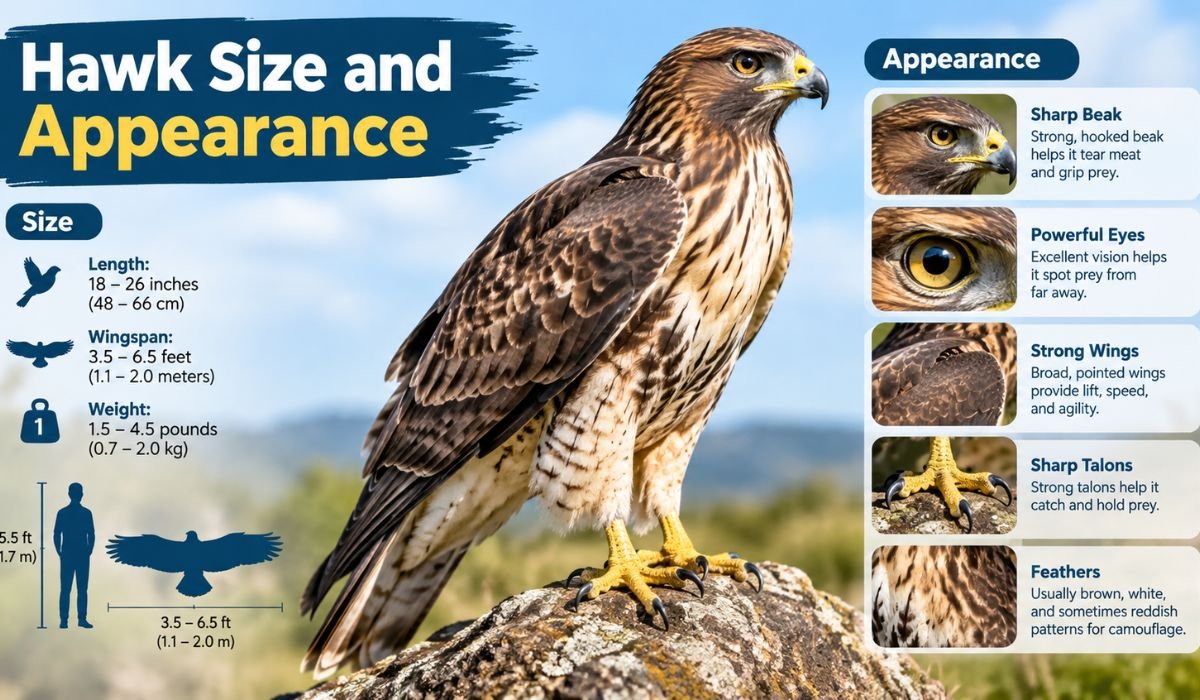
Hawk species range from relatively small birds to much larger raptors. Their feathers may be brown, gray, black, reddish, or combinations of several colors.
Many species have patterns on their wings, tails, or chests that help them blend into their surroundings. Young hawks can also look noticeably different from adults.
Where Do Hawks Live?
Hawks are highly adaptable birds and can survive in a wide variety of habitats. Another important part of hawk facts is their impressive geographic distribution.
Different species can be found throughout North America, South America, Europe, Asia, Africa, and Australia. Some prefer dense forests, while others thrive in open landscapes.
Forests and Woodlands
Many hawks live in forests and woodland areas where trees provide nesting locations and cover. Forest-dwelling species often hunt by flying between trees or waiting quietly on branches for prey to appear.
Read Related Post: Seal Facts: Habitat, Diet, Behavior, and Adaptations
Grasslands and Open Areas
Open habitats are especially useful for hawks that hunt rodents and other ground-dwelling animals. Grasslands, agricultural areas, and open fields provide good visibility for spotting potential prey.
Urban and Suburban Areas
Some hawks have adapted remarkably well to human environments. Parks, neighborhoods, golf courses, and city edges can provide food and nesting opportunities.
Their ability to use modified habitats demonstrates how adaptable these birds can be.
What Do Hawks Eat?
Their diet depends on the species and habitat, but hawks are generally carnivorous predators. Common prey includes mice, rats, rabbits, squirrels, small birds, snakes, lizards, frogs, and insects.
These dietary habits are among the most useful hawk facts for understanding their ecological importance.
Rodents
Rodents are an important food source for many hawks. A hawk may search fields and grasslands for mice and other small mammals.
By eating rodents, hawks can help regulate their populations naturally.
Birds and Reptiles
Some hawks specialize more heavily in catching birds, while others frequently prey on reptiles such as snakes and lizards.
Their sharp talons allow them to grab and hold prey securely.
How Do Hawks Hunt?
Hawks are highly skilled hunters. Their hunting techniques vary between species, but many use a combination of excellent eyesight, stealth, speed, and patience.
A hawk may perch on a high branch, pole, or other elevated location and carefully scan the ground below.
Once it spots prey, it can quickly launch into action.
Hunting From Perches
Perch hunting is one of the most common techniques. The hawk waits quietly while observing the surrounding area.
When a potential meal appears, the bird flies toward it, often using a rapid and controlled attack.
Hunting From the Air
Some hawks spend considerable time flying while searching for prey. They may circle over open areas or use air currents to remain airborne while conserving energy.
This combination of flight and vision makes hawks effective aerial predators.
Hawk Talons and Beaks
A major part of hawk facts involves their specialized hunting equipment. Hawks have powerful feet with curved talons designed to capture and restrain prey.
Their beaks are strongly hooked and can tear flesh efficiently.
These adaptations allow hawks to process prey that would be difficult for many other birds to capture.
Powerful Feet
A hawk’s feet are among its most important hunting tools. Strong muscles allow the bird to grip prey firmly.
Different species have somewhat different foot and talon structures depending on their preferred prey.
Sharp, Hooked Beaks
The hooked beak helps hawks tear food apart. Instead of chewing, hawks use their beaks to pull pieces from prey before swallowing them.
Hawk Behavior
Hawks display a wide range of behaviors depending on their species, age, habitat, and breeding season. Many are solitary outside the breeding period.
They spend much of their time hunting, resting, flying, defending territories, and caring for young.
Territorial Behavior
Many hawks defend territories against other hawks and potential competitors. A territory can provide access to food, nesting sites, and safe resting locations.
Some species use calls, displays, and aerial movements to communicate ownership of an area.
Communication
Hawks communicate using vocal calls and body language. Adults may call to one another during breeding or territorial interactions.
Parents and young can also use calls to communicate around the nest.
How Do Hawks Build Nests?
Hawks usually build their nests in elevated locations such as trees, cliffs, or tall structures, depending on the species.
Nests are often constructed from sticks and lined with softer materials. Some species reuse nests from previous breeding seasons, adding new material over time.
The height of a nest can provide protection from many ground-based predators.
Raising Young Hawks
Female hawks generally lay a small number of eggs. Both parents may contribute to raising the young, although responsibilities vary among species.
Young hawks remain dependent on their parents while they develop feathers, flight skills, and hunting abilities.
Eventually, the young birds leave the nest and begin learning to survive independently.
Do Hawks Migrate?
Not every hawk migrates. Migration patterns depend heavily on species, geography, food availability, and seasonal conditions.
Some hawks remain in the same general area throughout the year, while others travel long distances between breeding and wintering grounds.
Migratory hawks may take advantage of rising warm air, called thermals, to gain altitude without using as much energy.
This ability is another fascinating example of how these birds are adapted for efficient flight.
The Role of Hawks in Ecosystems
One of the most important hawk facts is that these birds help maintain ecological balance.
Because many hawks eat rodents and other small animals, they can influence prey populations. They are also part of food webs and provide connections between different levels of an ecosystem.
A healthy hawk population can therefore be an indicator of a functioning natural environment.
Natural Population Control
Hawks help control populations of mice, rats, rabbits, and other prey animals. This natural predation can prevent certain species from becoming overly abundant.
Their role is particularly valuable in agricultural and grassland environments.
Are Hawks Dangerous?
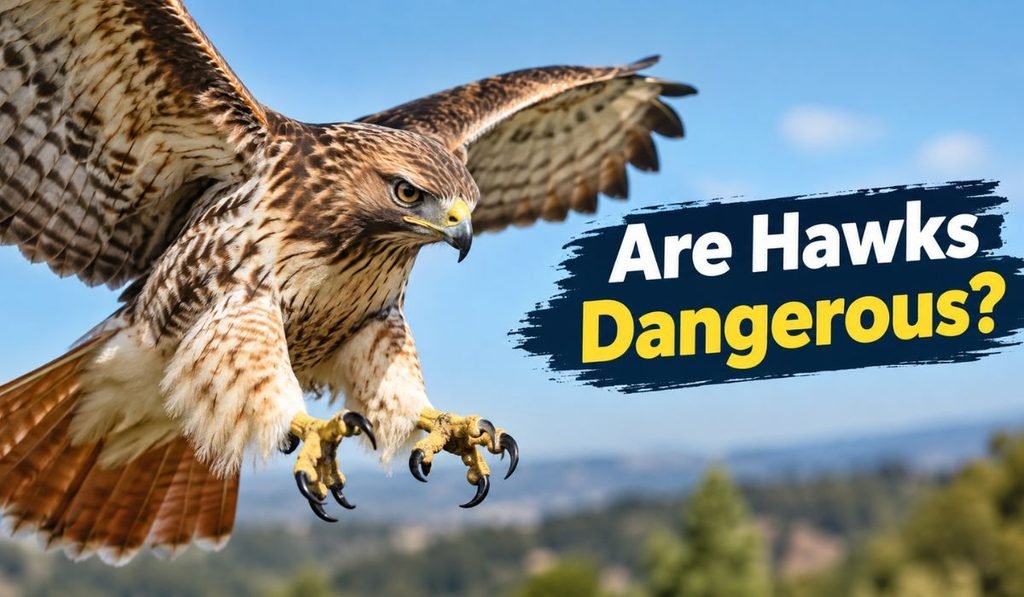
Hawks are wild predators, but they generally avoid people. They are much more interested in finding food and protecting their territory than interacting with humans.
Like other wild animals, they should be observed from a respectful distance.
During nesting season, some hawks can become more defensive around their nests. Giving nesting birds plenty of space is the safest approach.
Interesting Hawk Facts
Here are some additional hawk facts that highlight how remarkable these birds are:
- Hawks have exceptionally strong eyesight for locating prey.
- Many hawks can glide using rising air currents.
- Their hooked beaks help them tear food apart.
- Sharp talons are essential for capturing prey.
- Hawks occupy habitats ranging from forests to deserts.
- Some species have adapted successfully to urban environments.
- Not all hawks migrate.
- Young hawks must develop hunting and flying skills before becoming independent.
- Hawks are important predators in many food webs.
- Different hawk species have specialized diets and hunting strategies.
FAQ’s
What do hawks eat?
Hawks commonly eat mice, rats, rabbits, squirrels, birds, snakes, lizards, frogs, and insects. Their exact diet depends on their species and habitat.
Where do hawks live?
Hawks can live in forests, grasslands, deserts, mountains, wetlands, agricultural areas, and urban environments. Their distribution varies by species.
How do hawks hunt?
Hawks often hunt by watching from elevated perches or scanning landscapes while flying. Once they locate prey, they use their speed and powerful talons to capture it.
How far can hawks see?
Hawks have highly developed vision that allows them to detect prey from considerable distances. Their excellent eyesight is one of their most important hunting adaptations.
Do hawks migrate?
Some hawks migrate seasonally, while others remain in the same region throughout the year. Migration behavior varies between species and populations.
How long do hawks live?
Lifespan varies significantly among species. Survival depends on factors such as food availability, habitat quality, disease, predators, and human-related threats.
Conclusion
Hawks are remarkable birds of prey with specialized adaptations that make them effective hunters and important members of ecosystems. From their powerful talons and hooked beaks to their exceptional eyesight and efficient flight, every part of their anatomy supports survival. These hawk facts also show how adaptable these birds can be, allowing different species to thrive in forests, grasslands, mountains, deserts, and human-modified environments.
Understanding hawk facts helps us appreciate their role in controlling prey populations and maintaining healthy food webs. Whether soaring over open fields or quietly watching from a tree branch, hawks remain some of nature’s most impressive aerial predators.

Hi, I’m Amelia, an SEO and content specialist with several years of experience researching and creating informative content for online audiences. At Animal Attack Facts, I focus on animal behavior, animal attacks on humans, and interesting facts about land animals, marine animals, birds, reptiles, and insects. My goal is to provide clear, useful, and engaging information that helps readers better understand wildlife and stay informed about animal encounters.
1 thought on “Hawk Facts: Habitat, Diet, Hunting, and Behavior”