
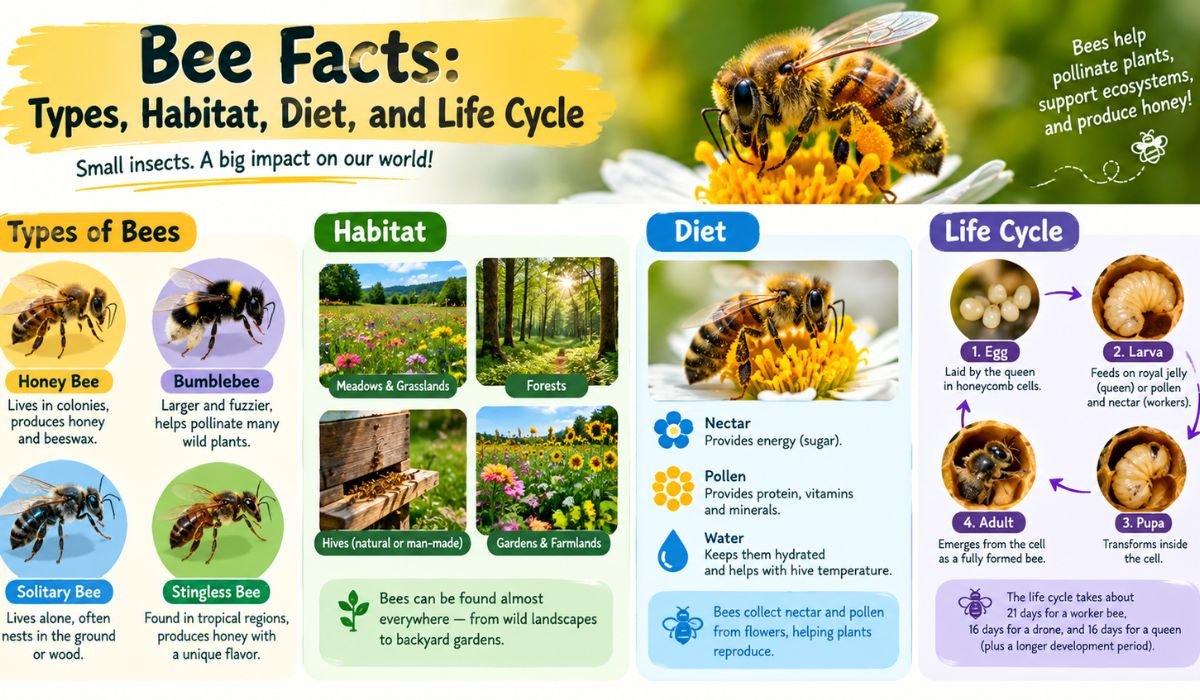
Bees are among the most important insects on Earth. They are best known for producing honey, but their role goes far beyond that. Bees pollinate flowers, crops, trees, and many other plants, helping ecosystems and agriculture thrive.
There are thousands of bee species, ranging from familiar honey bees to solitary bees that rarely live in colonies. Learning bee facts can reveal how these small insects communicate, find food, build nests, and complete their fascinating life cycles.
Bee Facts and Basic Characteristics
Bees belong to the insect order Hymenoptera, which also includes ants and wasps. Most bees have six legs, two pairs of wings, antennae, and bodies covered with tiny hairs that can collect pollen.
One of the most interesting bee facts is that not all bees live in large colonies. Honey bees are social insects that live together in organized colonies, while many other species are solitary.
Bees vary greatly in size, color, behavior, and nesting habits. Some are tiny, while others are considerably larger. Their colors can include black, brown, yellow, metallic green, and other shades.
Types of Bees
There are thousands of known bee species around the world. They can generally be grouped according to their lifestyles and biological characteristics.
Honey Bees
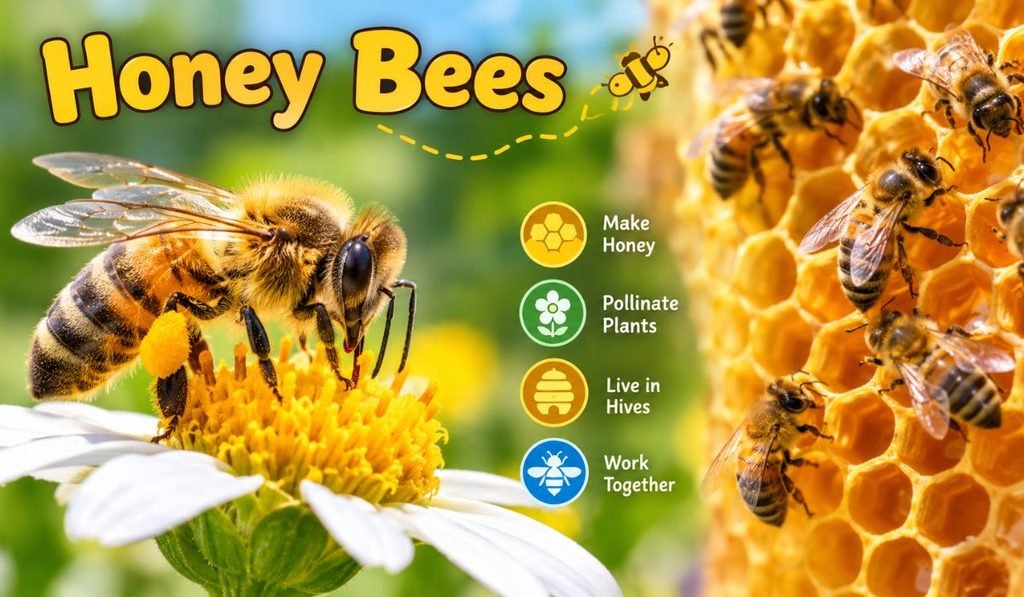
Honey bees are social bees that live in colonies. They collect nectar and pollen from flowers and use these resources to feed the colony. Honey bees also produce honey and beeswax.
A colony usually contains a queen, worker bees, and drones. Each group has a different role that helps the colony function.
Bumblebees
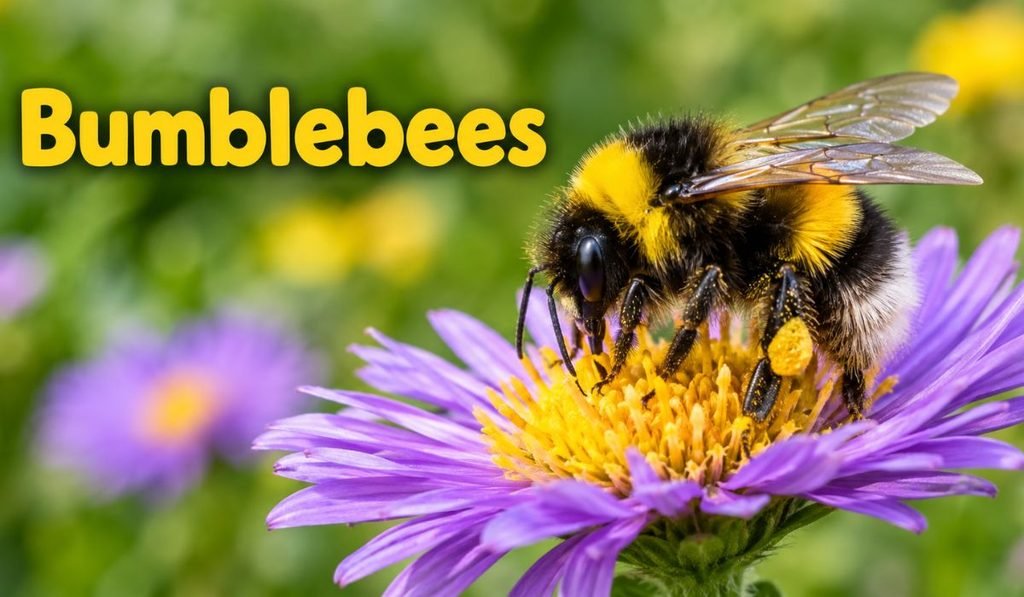
Bumblebees are larger and often covered with dense hairs. They are important pollinators and can continue foraging in cooler weather than many other insects.
Another interesting part of bee facts is that bumblebees can perform a special type of pollination called buzz pollination. They vibrate their flight muscles to help release pollen from certain flowers.
Solitary Bees
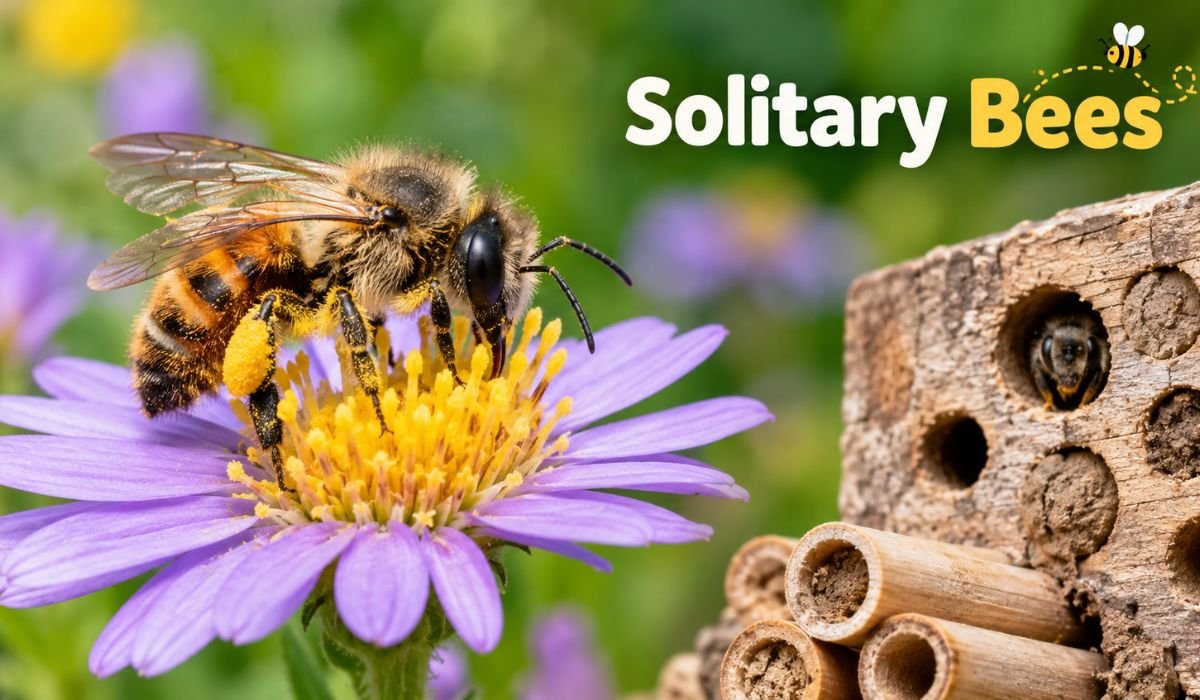
Many bee species are solitary. Instead of living in large colonies, individual females usually build and maintain their own nests.
Examples include mason bees, leafcutter bees, and mining bees. These bees can be excellent pollinators despite their solitary lifestyles.
Read Related Post: Hummingbird Facts: Size, Diet, Flight, and Habitat
Where Do Bees Live?
Bees can be found on almost every continent except Antarctica. Their habitats include forests, grasslands, gardens, deserts, farms, wetlands, and urban areas.
Honey bees typically live in colonies inside cavities, managed hives, or other suitable protected locations. Wild colonies may establish nests in hollow trees or similar spaces.
Solitary bees use a wide range of nesting sites. Some dig tunnels in soil, while others use hollow stems, small cavities, or natural openings.
These habitat differences are important bee facts because they show how adaptable different bee species can be.
What Do Bees Eat?
Most adult bees feed mainly on nectar and pollen. Nectar provides carbohydrates and energy, while pollen supplies proteins, fats, vitamins, and minerals.
Worker honey bees collect nectar from flowers and bring it back to the colony. They also gather pollen to help feed developing young.
Bees do not all depend on the same flowers. Different species may have different preferences based on the flowers available in their habitat.
Some bees specialize in collecting pollen from particular types of plants, while others visit many different flowers. This variety is another important part of bee facts and helps explain their importance in ecosystems.
How Bees Help Plants
Pollination is one of the most important services bees provide. When a bee visits a flower, pollen can stick to its body. When the bee visits another flower, some pollen may be transferred.
This process allows many flowering plants to reproduce.
Bees pollinate numerous wild plants as well as agricultural crops. Their activity supports biodiversity and contributes to food production.
Among the most useful bee facts is that bees are not simply honey-producing insects. Their pollination activities have a much broader ecological importance.
Bee Communication and Behavior
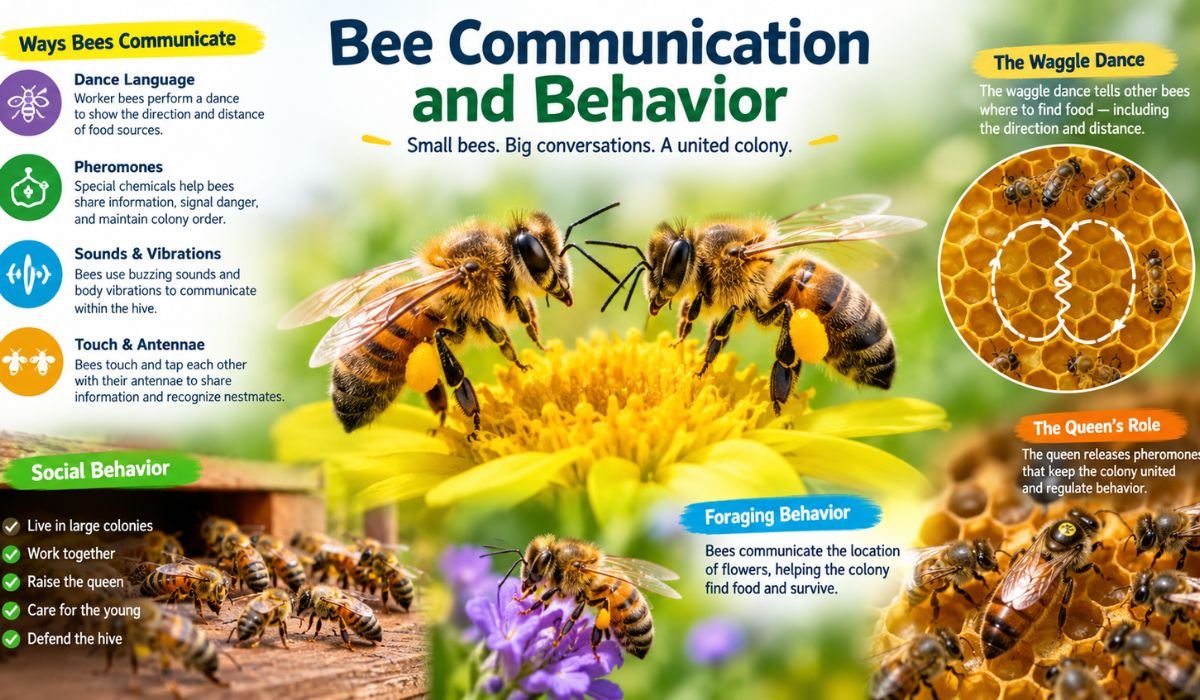
Social bees have sophisticated ways of communicating. Honey bees can use movement, scent, touch, and other signals to exchange information.
One famous behavior is the honey bee waggle dance. A worker can use this behavior to communicate information about the location of food sources to other members of the colony.
Bees can also recognize environmental cues and remember locations associated with food.
Their ability to navigate and communicate makes bee facts particularly interesting to scientists studying animal behavior and insect intelligence.
Bee Colony Roles
A honey bee colony contains different types of individuals.
Queen Bee
The queen is the primary reproductive female in a honey bee colony. Her main biological role is laying eggs.
Worker Bees
Worker bees are females that perform many tasks. Depending on their age and the needs of the colony, they may clean cells, feed larvae, produce wax, guard the nest, or collect nectar and pollen.
Drone Bees
Drones are male honey bees. Their primary reproductive role is to mate with queens.
The division of responsibilities within a colony is one of the most fascinating bee facts and demonstrates how social insects can organize complex communities.
The Bee Life Cycle
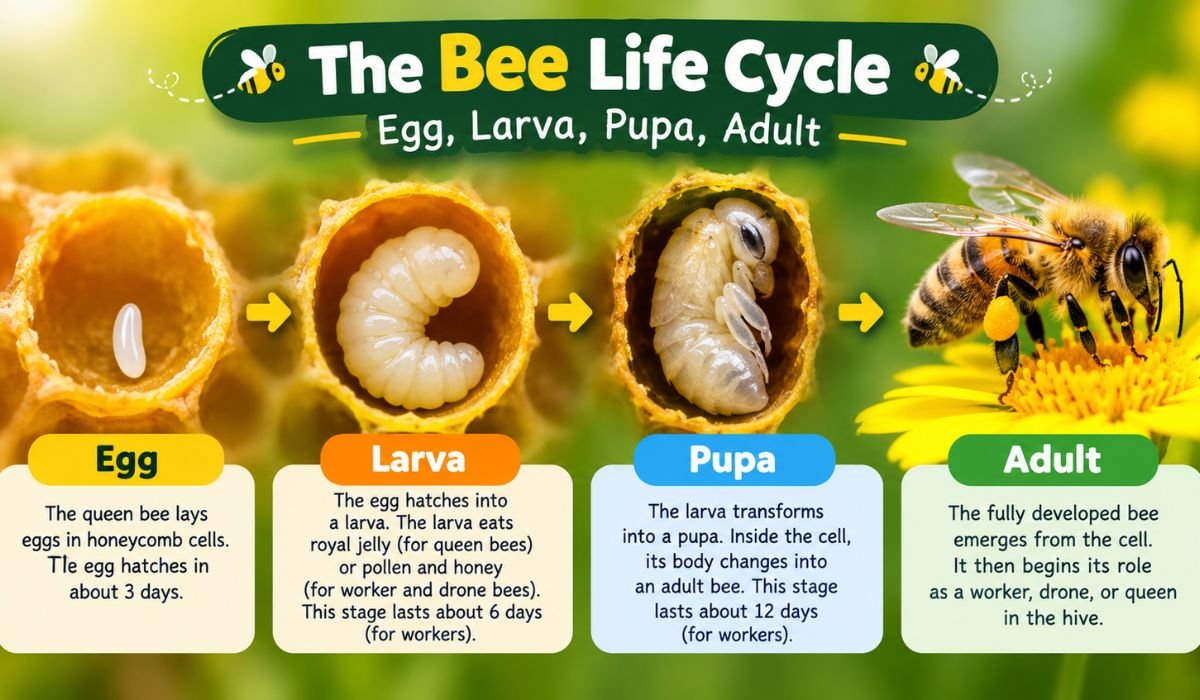
Bees undergo complete metamorphosis. Their development has four major stages: egg, larva, pupa, and adult.
1. Egg
The life cycle begins when a female bee lays an egg. In honey bee colonies, the queen lays eggs inside specially prepared cells.
2. Larva
The egg hatches into a larva. The young larva is fed and cared for by worker bees in social species.
3. Pupa
After the larval stage, the bee enters the pupal stage. During this period, its body develops into the adult form.
4. Adult
The fully developed adult bee emerges from the pupal stage. Depending on its species and role, it may eventually forage, reproduce, or perform other activities.
This four-stage transformation is one of the essential bee facts for understanding how these insects develop.
How Long Do Bees Live?
Bee lifespan varies considerably depending on the species and the individual’s role.
Honey bee workers may live for weeks during periods of intense activity, while workers produced during colder periods can survive considerably longer. Queens can live for years under suitable conditions.
The lifespan of solitary bees is also different from that of social honey bees. In many solitary species, adults may live for a relatively short period while their offspring develop inside protected nests.
These differences are useful bee facts because there is no single lifespan that applies to every bee.
Do All Bees Make Honey?
No. Honey production is primarily associated with honey bees. Many other bee species do not produce and store honey in the same way.
Bumblebees, mason bees, leafcutter bees, and many other species collect food for themselves and their young but do not create large honey stores for human harvesting.
This is one of the most commonly misunderstood bee facts. A bee does not necessarily make honey simply because it is a bee.
Bees and Their Natural Enemies
Bees face threats from various predators and parasites. Birds, spiders, mammals, insects, and other animals may feed on bees or their developing young.
Bee colonies can also be affected by parasites and diseases. Environmental pressures such as habitat loss, pesticide exposure, and reduced availability of flowering plants can create additional challenges.
Protecting diverse habitats with suitable flowering plants can help provide bees with food and nesting opportunities.
Interesting Bee Facts
Here are some quick bee facts worth remembering:
- Bees belong to the insect order Hymenoptera.
- There are thousands of bee species worldwide.
- Not all bees live in colonies.
- Honey bees produce honey and beeswax.
- Bees are important pollinators.
- Bumblebees can perform buzz pollination.
- Many bee species build nests underground.
- Honey bee colonies have queens, workers, and drones.
- Bees undergo complete metamorphosis.
- Nectar provides bees with an important source of energy.
- Pollen supplies nutrients needed for growth and development.
- Bees can use visual, chemical, and behavioral signals to communicate.
- Different bee species can vary greatly in size and appearance.
- Many solitary bees care for their own offspring rather than living in large colonies.
FAQ’s
What are the most interesting bee facts?
Some of the most interesting bee facts include their important role in pollination, their ability to communicate through behaviors such as the waggle dance, and the fact that many bee species are solitary rather than colony-living.
How many types of bees are there?
There are thousands of recognized bee species. They include honey bees, bumblebees, mason bees, leafcutter bees, mining bees, and many other groups.
What do bees eat?
Bees primarily consume nectar and pollen. Nectar provides energy, while pollen supplies nutrients such as proteins and fats that are important for growth and development.
Where do bees live?
Bees live in many habitats, including forests, grasslands, gardens, farms, deserts, and urban environments. Different species use different nesting locations.
What is the life cycle of a bee?
The bee life cycle has four main stages: egg, larva, pupa, and adult. This process is known as complete metamorphosis.
Do all bees live in colonies?
No. Many bee facts show that bee social behavior varies widely. Honey bees and bumblebees are social, while many other species are solitary.
Why are bees important?
Bees are important because they pollinate flowering plants. Their pollination supports wild ecosystems and contributes to the production of many agricultural crops.
Conclusion
Bees are small insects with an enormous ecological role. From honey bees living in highly organized colonies to solitary bees building individual nests, different species have evolved a remarkable range of behaviors and adaptations. Their life cycle, feeding habits, communication, and pollination activities make them fascinating animals to study.
Understanding bee facts also helps us appreciate why healthy bee populations matter. By protecting flowering plants and suitable habitats, people can help provide bees with the food and nesting resources they need to survive.

Hi, I’m Amelia, an SEO and content specialist with several years of experience researching and creating informative content for online audiences. At Animal Attack Facts, I focus on animal behavior, animal attacks on humans, and interesting facts about land animals, marine animals, birds, reptiles, and insects. My goal is to provide clear, useful, and engaging information that helps readers better understand wildlife and stay informed about animal encounters.
1 thought on “Bee Facts: Types, Habitat, Diet, and Life Cycle”