
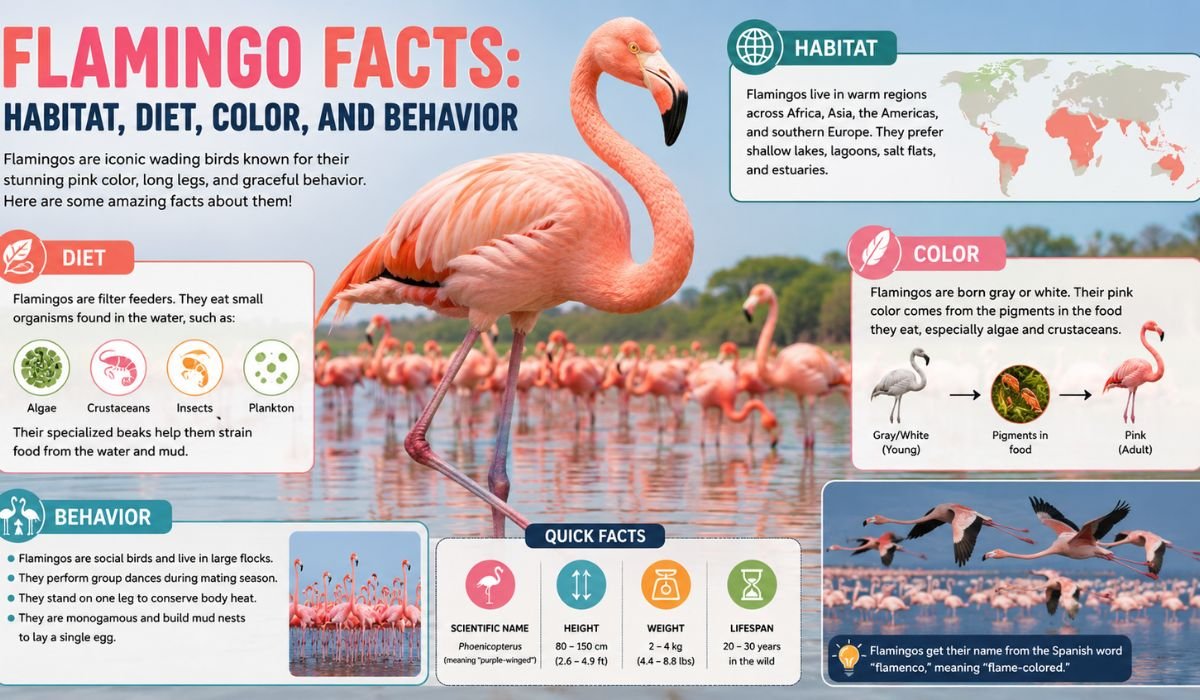
Flamingos are among the most recognizable birds in the world, famous for their bright pink feathers, long legs, curved bills, and graceful movements. These unusual-looking birds live in groups and are commonly found around shallow lakes, lagoons, wetlands, and coastal areas. Their unique appearance is not their only interesting feature. From their specialized feeding habits to their remarkable social behavior, there are many fascinating flamingo facts to discover.
Although flamingos are often associated with tropical environments, different species can live in a variety of habitats. Their bodies are specially adapted for life around shallow water, where they search for tiny organisms and plant material. Their distinctive pink color also has an interesting connection to their diet.
Flamingo Facts About Habitat
Flamingos are found in parts of Africa, southern Europe, Asia, the Caribbean, and South America, depending on the species. They usually prefer habitats with shallow water and muddy or salty conditions.
Where Do Flamingos Live?
Flamingos can live around:
- Shallow lakes
- Saltwater lagoons
- Coastal wetlands
- Estuaries
- Mudflats
- Alkaline lakes
- Mangrove areas
Some flamingo species are especially well adapted to highly saline or alkaline lakes where relatively few other birds can survive.
Their long legs allow them to walk through shallow water while keeping most of their body above the surface. This gives them access to feeding areas that may be difficult for many other birds to reach.
Flamingo Facts About Their Diet
Flamingos are primarily filter feeders. Instead of catching large prey, they use their specially shaped bills to filter tiny food particles from water and mud.
What Do Flamingos Eat?
Their diet can include:
- Algae
- Small crustaceans
- Tiny aquatic organisms
- Insects and insect larvae
- Small mollusks
- Seeds
- Other microscopic organisms
One of the most interesting flamingo facts is that their unusual bills are perfectly designed for their feeding style. Flamingos place their bills into shallow water and use specialized structures inside the bill to separate food from water.
Depending on the species and habitat, flamingos may feed by walking through shallow water while moving their bills from side to side. Their feeding behavior helps them collect tiny organisms that would otherwise be difficult to eat.
Read Related Post: Jellyfish Facts: Habitat, Diet, Life Cycle, and Behavior
Why Are Flamingos Pink?
The bright pink color of flamingos comes largely from pigments called carotenoids found in their food.
How Does Their Diet Affect Their Color?
Flamingos eat algae and small organisms that contain carotenoid pigments. Their bodies process these pigments, contributing to the pink, coral, or reddish coloration of their feathers and skin.
Young flamingos are not born bright pink. Chicks usually have grayish or whitish feathers and gradually develop their characteristic coloration as they grow and consume carotenoid-rich foods.
This is one of the best-known flamingo facts, but the exact shade can vary between individuals and species. Nutrition, age, health, and species can all influence coloration.
Flamingo Facts About Their Behavior
Flamingos are highly social birds and usually live in large groups called colonies or flocks. Some colonies can contain thousands or even hundreds of thousands of birds.
Why Do Flamingos Live in Groups?
Living in large groups provides several advantages. Groups can help flamingos locate suitable feeding areas and provide protection through numbers.
Flamingos also display coordinated social behaviors. They may feed, rest, move, and even perform courtship displays together.
Their social nature is an important part of flamingo facts because these birds are rarely seen living completely alone in the wild.
Flamingo Communication
Flamingos communicate using different sounds and body movements. Their vocalizations can help birds stay connected within large colonies.
They may produce honking, grunting, and other calls. Young birds can also make distinctive sounds to communicate with their parents.
Body language is equally important. Flamingos may stretch their necks, move their heads, spread their wings, or perform synchronized movements as part of social interactions and courtship.
Flamingo Facts About Reproduction
Flamingos generally reproduce in large colonies. Breeding can involve impressive displays in which groups of birds move together in coordinated patterns.
How Do Flamingos Raise Their Young?
A flamingo usually lays a single egg on a raised mud nest. Both parents participate in incubating the egg and caring for the chick.
After hatching, the chick remains dependent on its parents while it develops. Parents produce a special nutrient-rich secretion called crop milk, which they feed to their young.
Young flamingos gather together in groups called crèches. Adult birds can recognize and care for their own chicks even when many young birds are gathered together.
Flamingo Adaptations
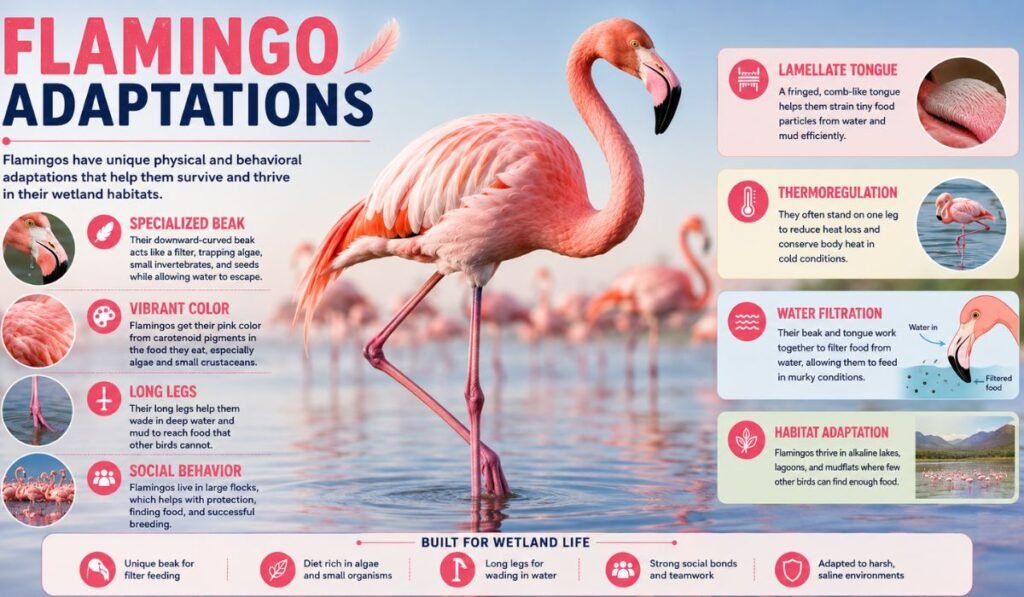
Flamingos have several physical adaptations that help them survive in wetland environments.
Long Legs
Their long legs allow them to walk through relatively deep shallow water while feeding. Their webbed feet can also help them move through soft mud and water.
Specialized Bill
Their downward-curved bills are one of their most important feeding adaptations. Fine structures inside the bill help filter food from water.
Long Neck
A long neck gives flamingos greater reach when feeding. They can position their heads close to the water while standing in shallow areas.
Salt Glands
Some flamingo species regularly consume salty water or live around saline lakes. Specialized glands help them remove excess salt from their bodies.
These adaptations explain why flamingos can thrive in environments that are challenging for many other birds.
Flamingo Facts About Flying
Despite their long legs and unusual body shape, flamingos are capable and powerful fliers.
They often need a running start before becoming airborne. Once in the air, they extend their necks and legs, creating a distinctive silhouette.
Flamingos may fly long distances between feeding and breeding areas. Large groups often fly together in organized formations.
Their flight is another example of how their body structure is adapted to both aquatic and aerial environments.
Are Flamingos Good Swimmers?
Flamingos are capable of swimming, although they spend much of their time walking or standing in shallow water.
Their partially webbed feet can help them move through water. Swimming may become especially useful when they encounter deeper sections of their habitat.
However, their long legs and feeding adaptations are particularly suited to shallow wetlands rather than deep-water environments.
Flamingo Social Life
Flamingos are extremely social birds. Large colonies may contain enormous numbers of individuals, and their synchronized movements can create spectacular scenes.
They may rest while standing on one leg, preen their feathers, feed together, or perform courtship displays as a group.
Some flamingo facts also show how important social interaction is during breeding. Group displays can involve many birds moving their heads and bodies in coordinated patterns.
How Long Do Flamingos Live?
Flamingos can live for several decades under favorable conditions. Their lifespan varies depending on species, environment, food availability, disease, predators, and other factors.
In the wild, survival can be challenging because young birds face predators and changing environmental conditions. Adults benefit from their social lifestyle and adaptations to specialized wetland habitats.
Threats Facing Flamingos
Although flamingos are well adapted to difficult environments, they can still face threats.
Important threats include:
- Habitat loss
- Pollution
- Water diversion
- Changes in water levels
- Disturbance near breeding colonies
- Climate-related environmental changes
- Human development near wetlands
Protecting wetlands is therefore important for flamingos and many other species that depend on these ecosystems.
Interesting Flamingo Facts
Here are some quick flamingo facts worth remembering:
- Flamingos get much of their pink coloration from carotenoid pigments in their diet.
- Flamingos are filter feeders.
- Their bills are specially adapted for filtering tiny food particles.
- Flamingos usually live in large social groups.
- A group of flamingos may be called a flamboyance.
- Flamingo chicks are usually grayish or whitish rather than bright pink.
- Flamingos can fly despite their long legs.
- Many flamingo species live around shallow lakes and wetlands.
- Flamingo parents feed their chicks a nutrient-rich secretion called crop milk.
- Flamingos can stand on one leg for extended periods.
- Some species tolerate highly salty or alkaline environments.
- Flamingos use vocalizations and body movements to communicate.
FAQ’
Why are flamingos pink?
Flamingos are pink mainly because their diet contains carotenoid pigments. These pigments are absorbed and contribute to the coloration of their feathers and skin.
What do flamingos eat?
Flamingos eat algae, tiny aquatic organisms, small crustaceans, insects, seeds, and other small food particles. They use their specialized bills to filter food from water.
Where do flamingos live?
Flamingos live in wetlands such as shallow lakes, lagoons, mudflats, estuaries, and coastal areas. Different species occur in different regions around the world.
Can flamingos fly?
Yes. Flamingos are capable fliers and can travel considerable distances between feeding, resting, and breeding areas.
Why do flamingos stand on one leg?
Standing on one leg may help flamingos conserve body heat and reduce heat loss through their legs. Scientists have proposed several explanations for this behavior.
Are flamingos social animals?
Yes. Flamingos are highly social and commonly live in large colonies. They feed, rest, communicate, and breed in groups.
What color are baby flamingos?
Baby flamingos are generally covered in soft grayish or whitish down. Their pink coloration develops later as they grow and consume foods containing carotenoid pigments.
Conclusion
Flamingos are remarkable birds with specialized bodies and fascinating social lives. Their long legs, curved bills, webbed feet, and filter-feeding abilities allow them to thrive in shallow wetlands and even challenging saline environments. Their famous pink color is closely connected to their diet, while their large colonies demonstrate how strongly social these birds are.
From their feeding adaptations and breeding behavior to their ability to survive in salty habitats, these flamingo facts reveal why flamingos are such unique members of the bird world. Protecting wetlands and breeding areas is essential to helping these beautiful birds continue to thrive in the future.

Hi, I’m Amelia, an SEO and content specialist with several years of experience researching and creating informative content for online audiences. At Animal Attack Facts, I focus on animal behavior, animal attacks on humans, and interesting facts about land animals, marine animals, birds, reptiles, and insects. My goal is to provide clear, useful, and engaging information that helps readers better understand wildlife and stay informed about animal encounters.
1 thought on “Flamingo Facts: Habitat, Diet, Color, and Behavior”