

Hawks are powerful birds of prey found in many parts of the world. They live in diverse environments, including forests, grasslands, deserts, mountains, and open fields. Their habitat provides the food, shelter, and nesting locations they need to survive. Although different hawk species prefer different environments, most choose areas where they can easily spot and capture prey.
Understanding the hawk habitat helps explain how these birds survive, hunt, reproduce and adapt to changing environmental conditions.
Where Do Hawks Live?
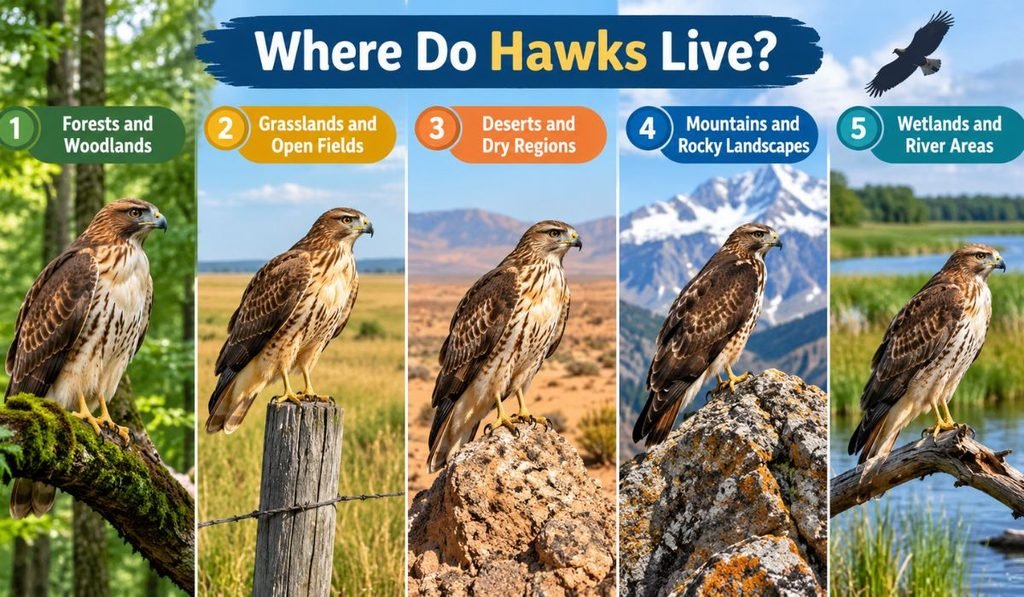
Hawks live on almost every continent except Antarctica. Their distribution depends on the species, climate, availability of prey, and access to suitable nesting sites. Some hawks remain in the same region throughout the year, while others migrate to warmer areas when temperatures drop or food becomes scarce.
Common hawk habitats include the following environments.
1. Forests and Woodlands
Forests provide excellent shelter and nesting opportunities for many hawk species. Tall trees offer secure places to build nests, rest, and raise young. Forests also support squirrels, small birds, rabbits, and other animals that hawks hunt.
Cooper’s hawks, for example, are well adapted to hunting among trees. Their relatively short, rounded wings and long tails help them maneuver through dense vegetation when pursuing prey.
Some forest-dwelling hawks also use woodland edges, where trees meet open spaces, because these areas provide both shelter and access to food.
2. Grasslands and Open Fields
Grasslands, meadows, and agricultural fields are important habitats for hawks that hunt in open environments. These landscapes make it easier for birds of prey to spot movement on the ground.
Red-tailed hawks frequently hunt over open fields, searching for mice, voles, rabbits, and other small animals. They may perch on fence posts, trees, or utility poles while watching for prey.
Open habitats also allow hawks to soar on rising air currents, helping them cover large areas without constantly flapping their wings.
3. Deserts and Dry Regions
Some hawks live in deserts and other dry environments where water and food may be limited. These birds survive by taking advantage of available prey, sheltered nesting locations, and favorable weather conditions.
Harris’s hawks inhabit parts of the southwestern United States, Mexico, and Central and South America. They can be found in arid scrublands, desert edges, and open woodland habitats.
Desert-dwelling hawks often hunt small mammals, reptiles, and birds. Their survival depends on finding suitable hunting grounds and adapting their activity to local temperatures.
4. Mountains and Rocky Landscapes
Mountainous areas provide hunting opportunities for hawks that live among cliffs, valleys, and high-elevation forests. Rocky ledges and steep slopes can offer secure nesting sites with good visibility.
Some hawks use elevated perches to observe the surrounding landscape. From these positions, they can detect prey moving through grasslands, valleys, and rocky terrain.
The availability of prey and suitable nesting locations influences how far up a mountain a particular species can live.
5. Wetlands and River Areas
Wetlands, riverbanks, and marsh edges attract hawks because these places support a variety of birds, rodents, reptiles, and other potential prey.
Hawks may hunt near water without depending on aquatic food sources. Their presence often reflects the abundance of small animals living in nearby vegetation.
Trees along rivers can also provide nesting locations and sheltered perches, making these areas valuable for some species.
Read Related Post: What Do Sea Lions Eat? Diet and Feeding Habits
What Makes a Good Hawk Habitat?
A suitable hawk habitat must provide several essential resources. Although individual species have different preferences, most hawks depend on a combination of food, shelter, nesting opportunities, and open hunting areas.
Abundant Prey
Food availability is one of the most important factors determining where hawks live. Depending on the species, their diet may include mice, rats, rabbits, squirrels, snakes, lizards, insects, and other birds.
Habitats with healthy populations of small animals can support resident hawks throughout the year. When prey becomes scarce, some hawks may travel farther to find food or move to another area.
Suitable Nesting Sites
Hawks need secure places to lay eggs and raise their chicks. Many species build nests high in trees, while others use cliffs, rocky ledges, or other elevated locations.
A good nesting site offers protection from many ground predators and provides access to nearby hunting grounds. Some hawk species reuse nests from previous breeding seasons, repairing them before laying eggs.
Perches and Open Hunting Areas
Perches allow hawks to watch for prey while conserving energy. Trees, branches, fence posts, and tall poles are common observation points.
Open spaces are equally valuable because they help hawks identify movement from a distance. Species that hunt from the air also benefit from landscapes that produce rising warm air currents, which support soaring flight.
Limited Disturbance
Hawks need suitable conditions to rest, feed, and reproduce. Excessive disturbance near nesting sites can interfere with breeding activities, while habitat destruction can reduce access to food and shelter.
Protected woodlands, grasslands, and other natural areas help maintain the resources hawks need to survive.
How Do Hawks Adapt to Their Habitat?
Hawks have physical features and hunting behaviors that help them survive in different environments. Their adaptations vary by species, allowing them to occupy habitats ranging from dense forests to open deserts.
Sharp Eyesight
Hawks have excellent vision that helps them detect prey from considerable distances. This ability is particularly useful in grasslands, open fields, and mountainous regions where animals may be visible across large areas.
Their eyesight also helps them judge distances when approaching prey.
Strong Talons and Curved Beaks
Hawks use powerful feet and sharp talons to capture and hold prey. Their hooked beaks help them tear food into manageable pieces.
These features are useful across many habitats because hawks must catch and consume animals to meet their energy needs.
Wings Adapted to Different Environments
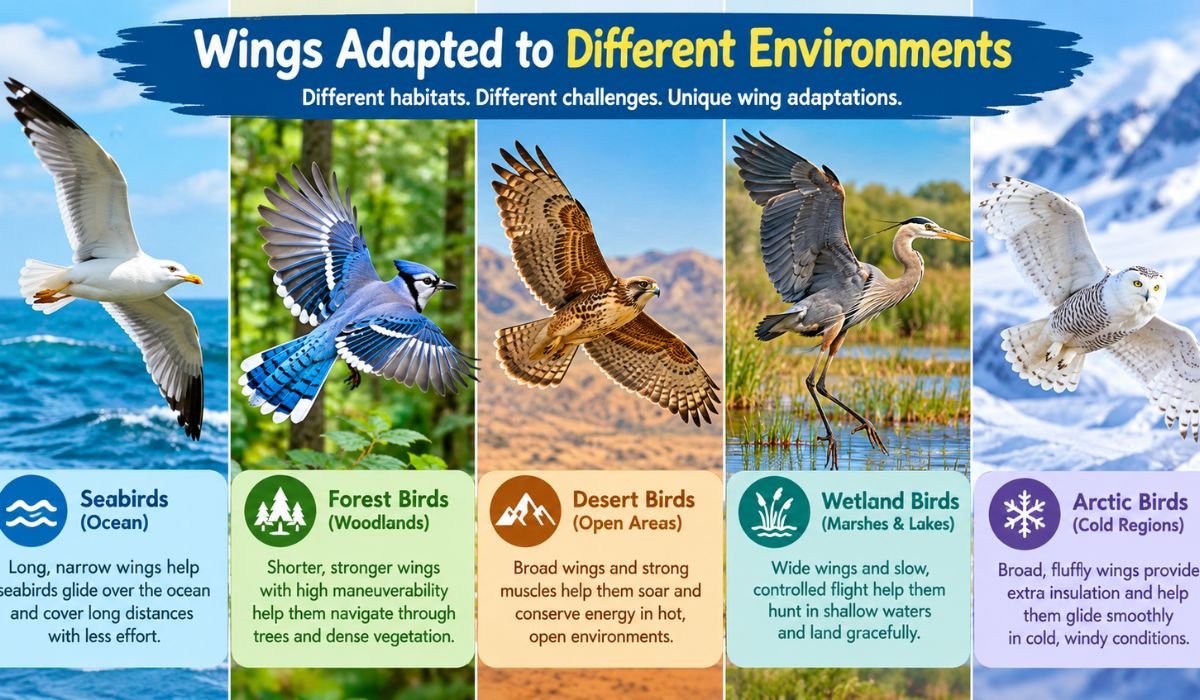
Wing shape influences how a hawk flies and hunts. Forest-dwelling species such as Cooper’s hawks have relatively short, rounded wings that help them maneuver between trees.
By comparison, red-tailed hawks have broader wings that support soaring over open landscapes. These differences help individual species use their environments efficiently.
Flexible Hunting Strategies
Hawks use several hunting techniques, including watching from a perch, gliding over open land, and pursuing prey through vegetation. The method depends on the species, the landscape, and the type of prey available.
This flexibility allows many hawks to use multiple habitat types rather than relying on a single environment.
Where Do Hawks Build Their Nests?
Most hawks build nests in elevated locations that provide protection and convenient access to food. Trees are common nesting sites, particularly for species that inhabit forests and woodlands.
Other species may nest on cliffs, rocky ledges, or tall structures when suitable natural locations are available. Nest placement depends on the hawk species and its surroundings.
Hawks generally use sticks and other plant materials to construct their nests. The female typically lays eggs, and both parents may contribute to protecting and feeding the young, depending on the species.
During the breeding season, hawks often become more protective of the area surrounding their nests. Disturbance during this period can affect their ability to raise chicks successfully.
Do Hawks Migrate to Find Better Habitats?
Some hawks migrate seasonally, while others remain in the same general area throughout the year. Migration patterns depend on the species, climate, food availability, and breeding requirements.
For example, many red-tailed hawks remain in their territories year-round, particularly in regions where prey remains available. Other populations move south during colder months when food becomes harder to find.
Broad-winged hawks are known for their long-distance seasonal migrations. They often travel in large groups called kettles, using rising air currents to help them move efficiently across long distances.
Migration allows these birds to reach favorable feeding and breeding areas as environmental conditions change.
How Human Activities Affect Hawk Habitats
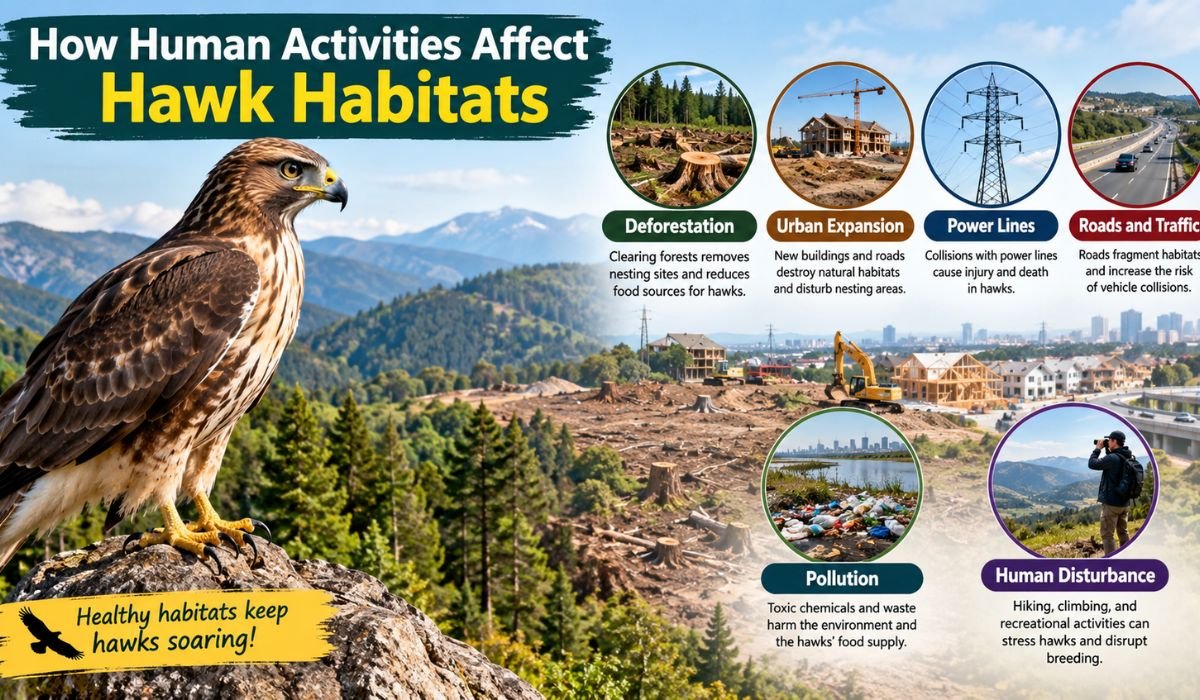
Human activities can significantly influence the places where hawks live and hunt. Urban development, deforestation, intensive agriculture, and the destruction of natural vegetation may reduce suitable nesting sites and feeding opportunities.
However, some hawks adapt to human-modified landscapes. Red-tailed hawks, for example, can live near farms, roadsides, and suburban areas when adequate prey and perching sites are available.
The use of pesticides can also affect hawks indirectly by reducing prey populations or exposing birds to harmful substances through the food chain. Collisions with vehicles and structures may create additional risks.
Habitat conservation helps protect hawk populations. Maintaining trees, preserving grasslands, reducing harmful chemical use, and protecting nesting areas can support these important predators.
Frequently Asked Questions
What is the most common habitat for hawks?
Many hawks live in forests, woodlands, grasslands, and open fields. The preferred habitat depends on the species. Red-tailed hawks often use open landscapes and woodland edges, while Cooper’s hawks are well suited to wooded environments.
Do hawks live in cities?
Yes, some hawks live in cities and suburban areas. Parks, mature trees, open spaces, and buildings can provide perches, nesting locations, and hunting opportunities. Urban habitats are suitable only when sufficient food and other resources are available.
Where do hawks sleep at night?
Hawks generally rest on sheltered branches or other secure perches at night. Trees and dense vegetation can provide protection from weather and disturbance. Roosting locations vary according to the species and local conditions.
Do hawks live in deserts?
Yes, certain hawk species inhabit deserts and dry scrublands. Harris’s hawks are one example. They hunt available prey and use suitable trees, shrubs, or other structures for resting and nesting.
What do hawks need to survive in their habitat?
Hawks need sufficient prey, suitable nesting and resting locations, and enough space to hunt. They also benefit from environments that support healthy prey populations and provide protection from excessive disturbance.
Conclusion
The hawk habitat includes a wide range of environments, from forests and grasslands to deserts, mountains, wetlands, and urban areas. Each species has particular needs that influence where it lives, hunts and raises its young.
Excellent eyesight, strong talons, specialized wings, and flexible hunting strategies help hawks survive in different landscapes. Protecting their habitats and maintaining healthy prey populations are essential for supporting hawk populations and preserving their role in natural ecosystems.

Hi, I’m Amelia, an SEO and content specialist with several years of experience researching and creating informative content for online audiences. At Animal Attack Facts, I focus on animal behavior, animal attacks on humans, and interesting facts about land animals, marine animals, birds, reptiles, and insects. My goal is to provide clear, useful, and engaging information that helps readers better understand wildlife and stay informed about animal encounters.
1 thought on “Hawk Habitat: Where Hawks Live and Hunt”