
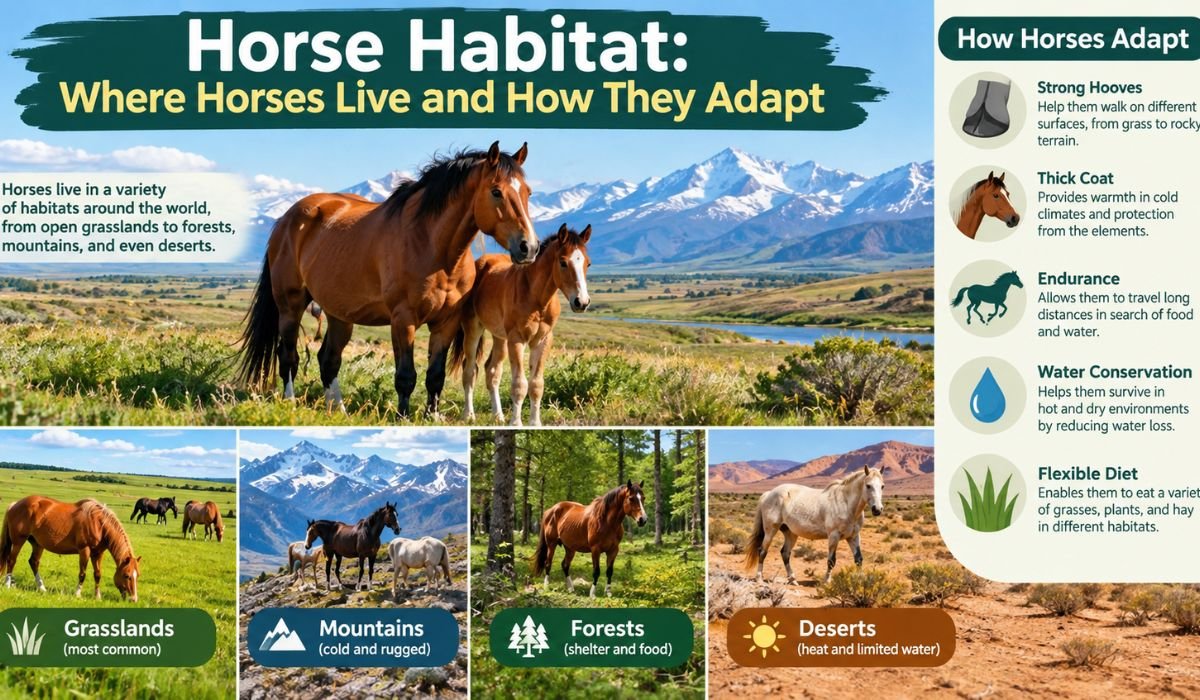
The horse habitat plays an important role in the health, behavior, and survival of horses. Horses are adaptable mammals that can live in different environments, including grasslands, open plains, mountainous regions, and human-managed farms. Although domestic horses often live in stables, pastures, and ranches, wild horses generally prefer open landscapes where they can find food, water, and enough space to move freely.
Understanding where horses live helps explain how they find food, respond to changing weather, avoid predators, and survive in different climates. In this article, we will explore the natural habitat of horses, the environments they prefer, and the adaptations that help them thrive.
What Is the Natural Habitat of Horses?
The natural habitat of horses includes open grasslands, steppes, and other areas with enough vegetation and water to support their needs. Horses evolved as grazing animals, making open landscapes especially suitable for their feeding habits and movement.
Wild horses need access to fresh grass, safe drinking water, and open areas where they can travel in groups. They also benefit from natural shelters, such as trees, hills, and rocky formations, which provide protection from harsh weather.
Today, most horses are domesticated and live in environments managed by humans. However, their basic habitat requirements remain similar to those of their wild ancestors.
Where Do Horses Live?
Horses live in several types of environments depending on whether they are wild, feral, or domesticated.
1. Grasslands and Open Plains
Grasslands are among the most suitable habitats for horses because they provide large amounts of grasses and other edible plants. These open environments also allow horses to move easily and notice potential threats from a distance.
Wild and feral horse populations often occupy grasslands where food and water are available throughout the year or during particular seasons.
2. Steppes and Semi-Arid Regions
Steppes are broad, open areas with limited rainfall and relatively short vegetation. Some wild and feral horses live in these environments because they can travel long distances to find food and water.
Horses living in semi-arid regions must cope with changing temperatures and seasonal shortages of vegetation. Their ability to graze on available plants helps them survive when preferred food sources are limited.
3. Mountains and Hilly Areas
Some horse populations live in mountainous and hilly regions. These habitats may contain grass-covered slopes, valleys, and sheltered areas that provide food and protection.
Horses in such environments must navigate uneven ground and steep slopes. Their strong legs, balanced movement, and sturdy hooves help them travel across different types of terrain.
4. Woodlands and Forest Edges
Although horses generally prefer open spaces, they can also use woodlands and forest edges. These areas may provide shade, shelter from wind, and additional vegetation.
Open woodland is often more suitable than dense forest because horses need space to move and access to grasses and other low-growing plants.
5. Farms, Ranches, and Pastures
Domestic horses commonly live on farms, ranches, and managed pastures. These environments provide grazing areas, fresh water, fencing, and shelter when properly maintained.
Some horses spend much of their time outdoors, while others have access to stables or barns. Regular exercise, appropriate nutrition, clean water, and protection from extreme weather are essential for their well-being.
Read Related Post: Chameleon Adaptations: How Chameleons Survive in Their Environment
Where Do Wild Horses Live Today?
Wild and feral horses are found in different parts of the world, particularly where suitable grazing land and water are available.
The Przewalski’s horse is a wild horse native to the grasslands and semi-desert regions of Central Asia. Conservation programs have helped restore populations in parts of Mongolia and other suitable areas.
Feral horses, which are descended from domesticated animals, live in several countries. Examples include mustangs in the western United States and brumbies in Australia. These horses occupy landscapes ranging from open grasslands to mountainous and semi-arid regions.
Their distribution depends on factors such as climate, food availability, water sources, land conditions, and human management.
What Type of Climate Do Horses Prefer?
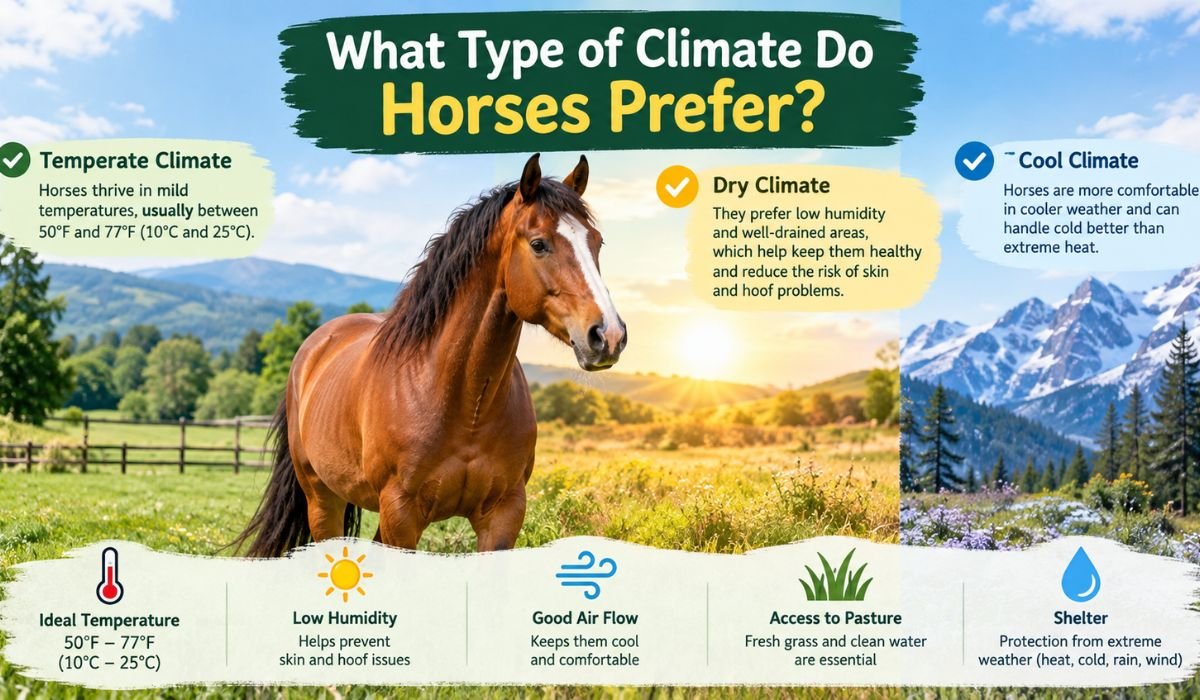
Horses can adapt to a range of climates, from cold mountainous regions to warm grasslands. Their ability to cope with different weather conditions depends on their breed, coat, health, access to shelter, and availability of food and water.
Cold Climates
Horses that experience cold weather can grow thicker winter coats that help retain body heat. Many breeds tolerate cold conditions well when they have adequate nutrition, dry shelter, and protection from severe wind and wet weather.
However, extremely cold conditions can still be challenging, especially when food is scarce or horses cannot escape harsh weather.
Warm and Hot Climates
In hot environments, horses rely on sweating and other natural cooling processes to regulate body temperature. Shade, ventilation, and access to clean drinking water help them cope with high temperatures.
Horses may also adjust their activity levels during particularly hot periods. Prolonged heat and humidity can increase the risk of overheating, making proper care essential.
Dry Climates
Horses living in dry regions must find sufficient water and vegetation despite limited rainfall. They may travel considerable distances to reach grazing areas and drinking sources.
Their ability to graze on available plants can help them cope with seasonal changes, but prolonged drought can reduce food supplies and create serious survival challenges.
How Do Horses Adapt to Their Habitat?
Horses have several physical and behavioral adaptations that help them survive in different environments.
1. Strong Legs and Hooves
Horses have powerful legs that support running, walking, and traveling across large areas. Their hooves protect their feet and help them move over grasslands, dirt paths, and many uneven surfaces.
Hoof condition is particularly important because damaged or poorly maintained hooves can make movement difficult.
2. Grazing Adaptations
Horses have specialized teeth that help them cut and grind grasses and other plant material. Their digestive system is adapted to a plant-based diet, allowing them to obtain energy from fibrous vegetation.
Because grazing plants vary with the seasons, horses benefit from habitats with diverse vegetation and reliable food sources.
3. Seasonal Coat Changes
Many horses develop thicker coats during colder months and shed much of this hair as temperatures rise. This seasonal change helps them adjust to different weather conditions.
The effectiveness of this adaptation varies with breed, climate, and individual health.
4. Speed and Alertness
Horses are prey animals, meaning they have evolved to recognize potential danger and respond quickly. Their strong running ability helps them move away from threats.
Their eyes are positioned on the sides of their heads, providing a wide field of vision that helps them detect movement around them.
5. Social Behavior
Horses are social animals that often live in groups. In natural settings, group living can improve awareness of potential threats and provide opportunities for social interaction.
Horses also communicate through body language, sounds, and physical contact. Their social behavior influences how they use space and respond to changes in their surroundings.
6. Water-Seeking Behavior
Water is essential for maintaining normal body functions. Horses may travel to rivers, streams, ponds, or other reliable water sources when these are available.
In dry regions, access to water can strongly influence where horses graze and how far they travel.
What Do Horses Eat in Their Habitat?
Horses are herbivores, meaning they eat plant material. Their natural diet consists mainly of grasses, although they may also consume leaves, herbs, and other suitable vegetation.
In grasslands, horses spend many hours grazing because their digestive systems are adapted to eating relatively small amounts of forage throughout the day.
Domestic horses may receive hay, pasture grass, and carefully selected supplementary feed depending on their workload, age, health, and body condition.
Fresh water is equally important. A horse’s water needs vary with temperature, activity, diet, and individual circumstances. Therefore, suitable horse habitats must provide dependable access to clean drinking water.
Why Is Habitat Important for Horses?
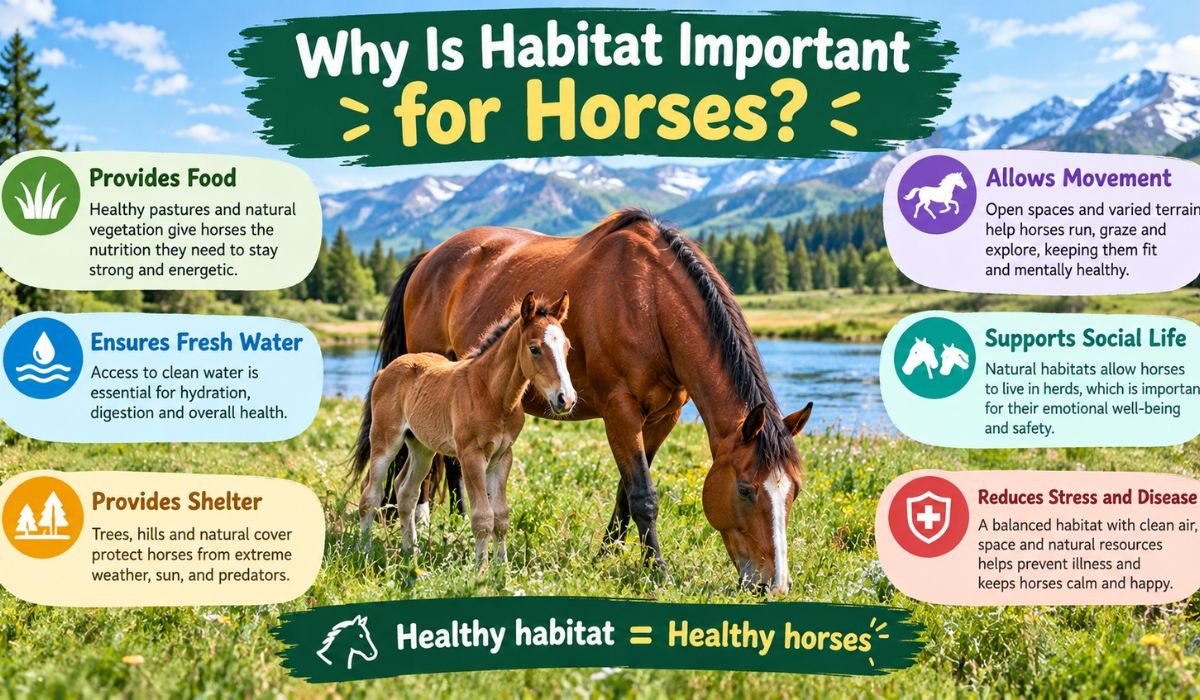
A suitable habitat supports horses’ physical health, natural behavior, and overall well-being. Without adequate space, food, water, and shelter, horses may experience stress and health problems.
Important habitat requirements include:
- Food availability: Sufficient grass, hay, or other appropriate forage.
- Clean water: Reliable access to drinking water throughout the day.
- Open space: Enough room to walk, graze, exercise, and interact with other horses.
- Shelter: Protection from severe weather, including extreme heat, cold, and heavy rain.
- Safe ground: Terrain that allows horses to move without excessive risk of injury.
- Social interaction: Opportunities to interact safely with other horses.
For domestic horses, responsible management helps meet these needs even when natural grazing conditions are limited.
Threats to Horse Habitats
Horse habitats can be affected by natural environmental changes and human activities.
Habitat Loss
The conversion of grasslands into agricultural land, roads, and developed areas can reduce the space available to wild and feral horses.
Drought and Water Shortages
Extended periods without rain can reduce vegetation and limit access to drinking water. These conditions may force horses to travel farther to find essential resources.
Competition for Resources
In some environments, horses compete with livestock and other animals for grass and water. Heavy grazing can also affect vegetation and soil conditions.
Extreme Weather
Severe heat, cold, storms, and wildfires can damage habitats and make food and water more difficult to find.
Human Disturbance
Road development, fencing, and other human activities may restrict movement between grazing areas and water sources. Conservation and responsible land management can help address some of these challenges.
Frequently Asked Questions About Horse Habitat
1. What is the natural habitat of horses?
The natural habitat of horses includes grasslands, open plains, steppes, and some mountainous regions. These environments provide grazing vegetation, water, and space to move.
2. Do horses live in forests?
Horses can live near woodlands and forest edges, but they generally prefer open areas with plenty of grass and room to move. Dense forests are usually less suitable for their typical grazing behavior.
3. Can horses survive in hot climates?
Yes, horses can live in hot climates if they have sufficient water, shade, and opportunities to cool down. Extreme heat and humidity can still pose health risks.
4. Where do wild horses live?
Wild and feral horses live in various regions, including parts of Central Asia, the western United States, and Australia. Their habitats depend on local environmental conditions and the history of their populations.
5. What do horses need in their habitat?
Horses need adequate food, clean drinking water, suitable space, safe ground, shelter from severe weather, and opportunities for social interaction.
6. Do domestic horses need a stable?
Not every domestic horse needs to remain inside a stable. Horses can spend substantial time outdoors when their pasture, fencing, shelter, and weather conditions are suitable. Some form of appropriate shelter should be available when conditions require it.
7. How do horses survive in winter?
Many horses grow thicker winter coats that help them retain heat. Access to adequate forage, clean water, and shelter helps them cope with cold weather.
Conclusion
The horse habitat varies from open grasslands and dry steppes to mountainous regions, woodlands, farms, and ranches. Horses are adaptable animals with strong legs, protective hooves, grazing teeth, seasonal coats, and social behaviors that help them live in different environments.
However, their ability to adapt does not mean they can thrive without essential resources. Food, clean water, suitable shelter, safe ground, and enough space are all important for their health and survival. Protecting natural grazing areas and providing responsible care for domestic horses helps ensure that these remarkable animals can continue to thrive in their environments.

Hi, I’m Amelia, an SEO and content specialist with several years of experience researching and creating informative content for online audiences. At Animal Attack Facts, I focus on animal behavior, animal attacks on humans, and interesting facts about land animals, marine animals, birds, reptiles, and insects. My goal is to provide clear, useful, and engaging information that helps readers better understand wildlife and stay informed about animal encounters.
1 thought on “Horse Habitat: Where Horses Live and How They Adapt”