
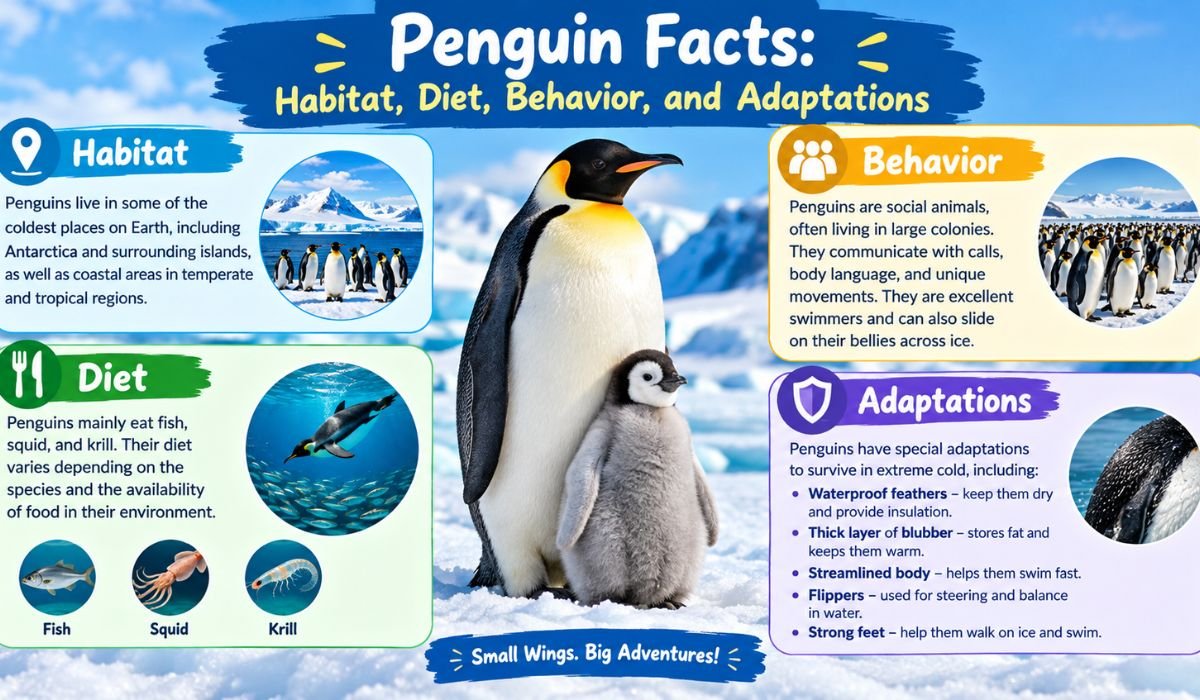
Penguins are fascinating flightless birds known for their upright posture, flipper-like wings, and remarkable ability to live in some of the coldest environments on Earth. Although many people associate penguins only with Antarctica, different species live across a wide range of habitats, including coastal areas of South America, Africa, Australia, and New Zealand. These birds are highly adapted to life in the water, where they spend much of their time hunting for food.
In this article, you will discover important penguin facts about their habitat, diet, behavior, physical adaptations, reproduction, and survival strategies.
What Are Penguins?
Penguins are flightless seabirds belonging to the family Spheniscidae. There are around 18 recognized penguin species, although the exact number can vary depending on scientific classification.
Unlike most birds, penguins cannot fly through the air. Instead, their wings have evolved into strong flippers that help them move efficiently underwater. Their streamlined bodies, powerful legs, and webbed feet also make them excellent swimmers.
One interesting fact is that not all penguins live in extremely cold climates. The Galápagos penguin, for example, lives near the equator. This demonstrates how different penguin species have developed adaptations suited to their particular environments.
Where Do Penguins Live?
Penguins mainly live in the Southern Hemisphere. Antarctica is home to several species, but penguins can also be found in warmer regions.
Their habitats include:
- Antarctic ice and coastal areas
- Subantarctic islands
- Rocky shorelines
- Temperate coastal regions
- Grass-covered islands
- Coastal areas around South America
- Southern Africa and Australia
- The Galápagos Islands
Emperor and Adélie penguins are strongly associated with Antarctica, while species such as African, Humboldt, and Galápagos penguins live in considerably warmer environments.
Penguins generally need access to the ocean because marine ecosystems provide most of their food. Many species also return to land or ice to rest, establish breeding colonies, and raise their chicks.
Penguin Diet and Feeding Habits
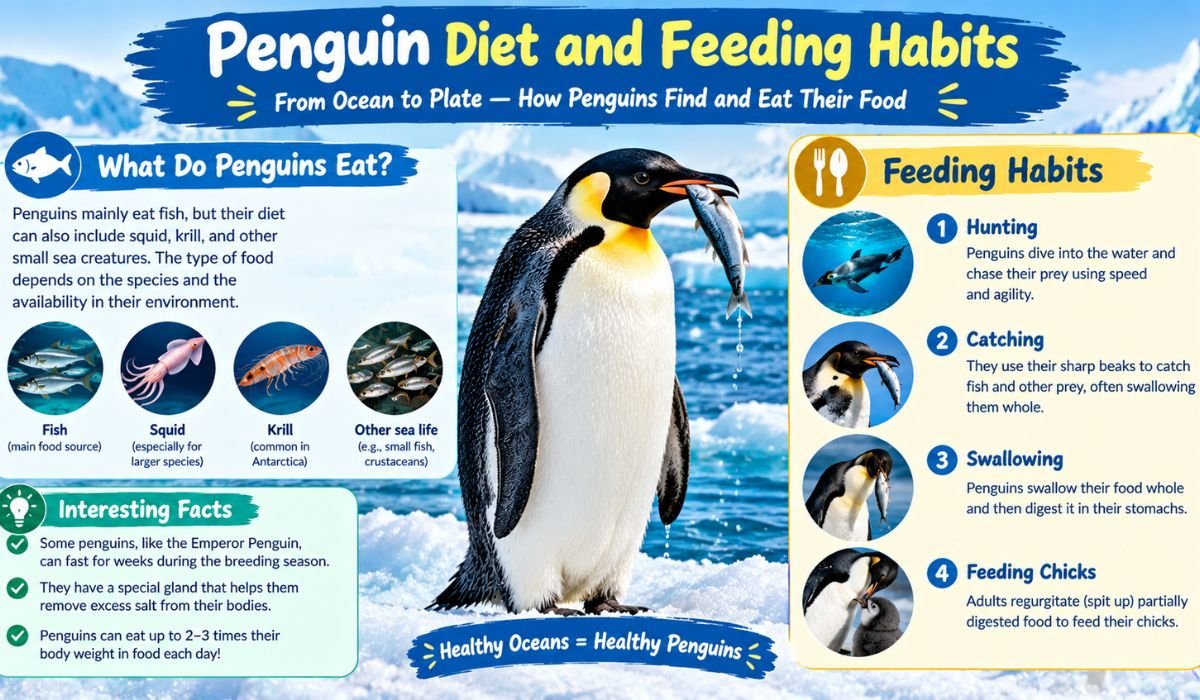
Most penguin facts about feeding show how closely these birds are connected to the ocean. Penguins are carnivores and primarily eat marine animals.
Their diet can include:
- Fish
- Krill
- Squid
- Small crustaceans
- Other small marine organisms
The exact diet depends on the species and its location. Penguins usually catch prey while swimming underwater. Their streamlined bodies allow them to move quickly, while their flippers provide powerful thrust.
Some penguins can dive surprisingly deep and remain underwater for considerable periods. Emperor penguins are particularly capable divers and can reach depths of hundreds of meters when searching for prey.
Penguins swallow most of their food underwater or soon after capturing it. Their hooked bills help them grasp slippery prey.
Read Related Post: Blue Whale Facts: Size, Habitat, Diet, and Behavior
How Do Penguins Swim?
Penguins are among the most specialized swimming birds. Their bodies are streamlined, reducing resistance as they move through water.
Instead of using their wings for flight, penguins use them like underwater flippers. They move their flippers in a powerful, controlled motion that helps propel them forward.
Their feet and tails are also important for steering and maintaining balance.
Some species can travel long distances through the ocean while searching for food. Penguins may also leap out of the water in a behavior called porpoising. This can help them move quickly and may make breathing easier during fast swimming.
Penguin Physical Adaptations
One of the most important penguin facts is that their bodies are specially designed for aquatic life and, in some species, extreme cold.
Dense Feathers
Penguins have dense, overlapping feathers that provide insulation and help keep water away from their skin. They regularly preen their feathers and spread oil produced by specialized glands over them, improving waterproofing.
Thick Fat Layer
Many penguins have a layer of body fat that provides insulation in cold environments. This fat can also serve as an energy reserve when food is difficult to find.
Streamlined Body
A streamlined body allows penguins to move efficiently through water. Their compact shape reduces drag and helps conserve energy during swimming.
Flipper-Like Wings
Penguin wings have become stiff, strong flippers. They are not suitable for flying through the air, but they are extremely useful underwater.
Countershading
Many penguins have dark backs and lighter undersides. This coloration is known as countershading. When viewed from above, their darker backs can blend with darker water. From below, their lighter bellies can make them less noticeable against brighter water near the surface.
Penguin Behavior and Social Life
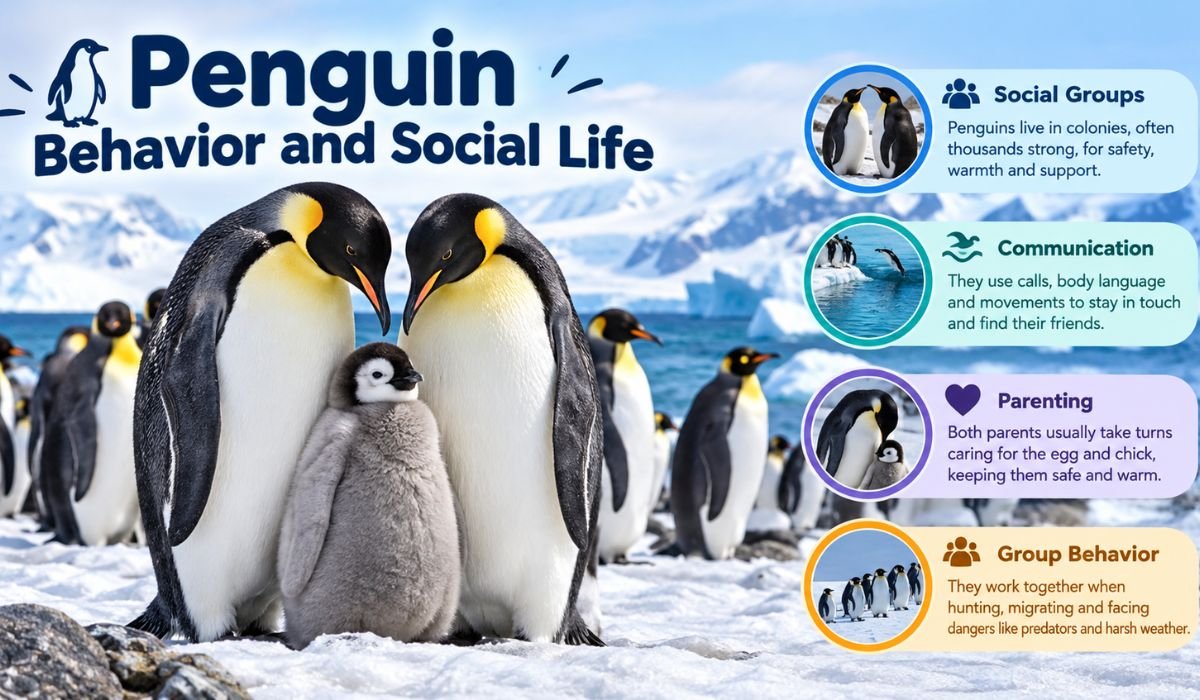
Penguins are often social animals and many species gather in large colonies. These colonies can contain thousands or even hundreds of thousands of birds.
Living in groups can provide advantages during breeding and may help penguins locate mates and establish nesting areas.
Penguins communicate using calls, body movements, and other behaviors. Individual birds can recognize members of their own species and, in some species, their partners and chicks.
During breeding season, penguins may become highly territorial. Some species defend small nesting areas, while others have different colony structures depending on their environment.
How Do Penguins Reproduce?
Penguin reproduction varies between species, but most penguins lay one or two eggs.
Breeding often takes place in colonies. Adults may work together to protect eggs and chicks, although the exact responsibilities differ among species.
Emperor penguins have one of the most remarkable breeding strategies among birds. The female lays a single egg and transfers it to the male. The male balances the egg on his feet and protects it with a fold of skin while the female travels toward the ocean to feed.
During this period, males can endure extremely cold Antarctic conditions while waiting for the females to return.
Other penguin species build nests from pebbles, vegetation, or other available materials. After hatching, chicks depend on their parents for warmth and food until they become more independent.
Penguin Chicks and Parenting
Penguin chicks are generally covered with soft down feathers after hatching. These feathers provide warmth but are not waterproof like the feathers of adult penguins.
Parents feed their chicks by bringing back partially digested food from the sea. As the chicks grow, they gradually develop their adult plumage.
Young penguins eventually undergo a process called molting, during which they replace their juvenile feathers with waterproof feathers suitable for swimming.
Parental care is an important part of penguin survival because young chicks are vulnerable to cold temperatures and predators.
What Do Penguins Do in Winter?
Winter survival is one of the most impressive penguin facts, especially for species living in Antarctica.
Emperor penguins are famous for forming tightly packed groups called huddles. By standing close together, they can reduce heat loss in freezing conditions and strong winds.
Birds within a huddle may continually change positions, allowing different individuals to spend time in warmer interior areas.
Penguins also have physiological adaptations that help them conserve body heat. Their feathers, fat, and body shape all contribute to insulation.
Not every penguin species experiences Antarctic winters, however. Penguins living in warmer regions use different strategies suited to their local climates.
What Eats Penguins?
Penguins face predators both in the ocean and on land.
Marine predators may include:
- Leopard seals
- Orcas
- Sea lions
- Large predatory fish
On land, eggs and chicks may be vulnerable to birds such as skuas and giant petrels, depending on the penguin’s location.
Adult penguins spend much of their time in the water, where marine predators pose the greatest threat. Their swimming ability, group behavior, and awareness help them avoid danger.
How Long Do Penguins Live?
Penguin lifespan varies by species and environmental conditions. Many penguins can live for more than a decade, while some individuals may survive considerably longer.
Survival depends on factors such as food availability, predation, disease, environmental conditions, and human impacts.
Young penguins generally face greater risks than healthy adults because they are less experienced and still developing their swimming and feeding abilities.
Are Penguins Endangered?
The conservation status of penguins varies considerably between species. Some populations are relatively stable, while others face significant threats.
Important threats can include:
- Climate change
- Changes in ocean conditions
- Declining food supplies
- Habitat disturbance
- Pollution
- Fishing activity
- Predation and disease
Changes in sea temperature and ocean ecosystems can affect the availability of fish and krill, which are important food sources for many penguins.
Conservation programs focus on protecting breeding colonies, reducing human disturbance, monitoring populations, and maintaining healthy marine ecosystems.
Interesting Penguin Facts
Here are some quick penguin facts worth remembering:
- Penguins are birds, even though they cannot fly.
- Their wings have evolved into flippers for swimming.
- Penguins are primarily found in the Southern Hemisphere.
- Not every penguin lives in Antarctica.
- The Galápagos penguin lives near the equator.
- Emperor penguins are the largest living penguin species.
- Penguins have waterproof feathers that help them survive in the water.
- Most penguins eat fish, krill, squid, or other marine animals.
- Many penguin species live and breed in colonies.
- Emperor penguins can survive extremely cold Antarctic conditions.
- Penguins use vocalizations and body movements to communicate.
- Some penguins can dive hundreds of meters beneath the ocean surface.
FAQ’s
What do penguins eat?
Penguins mainly eat fish, krill, squid, and other small marine animals. Their diet depends on their species, habitat, and the prey available in nearby waters.
Where do penguins live?
Penguins primarily live in the Southern Hemisphere. They can be found in Antarctica, subantarctic regions, South America, southern Africa, Australia, New Zealand, and the Galápagos Islands.
Can penguins fly?
No, penguins cannot fly through the air. Their wings have evolved into strong flippers that allow them to swim efficiently underwater.
Are all penguins black and white?
Most penguins have dark backs and lighter bellies, but different species can have additional colors and markings. Some have yellow, orange, or other distinctive features around their head and neck.
How do penguins stay warm?
Penguins stay warm using dense feathers, body fat, and specialized body structures. Antarctic species may also huddle together to conserve heat during extremely cold weather.
What is the largest penguin species?
The emperor penguin is the largest living penguin species. Adults can stand around 1 meter tall and have a substantial body weight, although size varies between individuals.
How long can penguins stay underwater?
Dive duration varies significantly by species and activity. Emperor penguins are especially capable divers and can remain underwater for many minutes while searching for prey.
Do penguins live only in cold places?
No. One of the most surprising penguin facts is that some species live in relatively warm environments. Galápagos penguins live near the equator, while African penguins inhabit coastal areas of southern Africa.
Conclusion
Penguins are highly specialized birds with remarkable adaptations for life in and around the ocean. Their streamlined bodies, waterproof feathers, flipper-like wings, and insulating features allow them to survive in environments ranging from Antarctic ice to warmer coastal regions.
From their unusual swimming abilities to their complex social behavior and dedicated parental care, penguin facts reveal how diverse and adaptable these birds can be. Although different species face different environmental challenges, protecting healthy marine ecosystems and breeding habitats is essential for their long-term survival.
Understanding penguin facts can help us appreciate these unique birds and the important role they play in marine ecosystems.

Hi, I’m Amelia, an SEO and content specialist with several years of experience researching and creating informative content for online audiences. At Animal Attack Facts, I focus on animal behavior, animal attacks on humans, and interesting facts about land animals, marine animals, birds, reptiles, and insects. My goal is to provide clear, useful, and engaging information that helps readers better understand wildlife and stay informed about animal encounters.
1 thought on “Penguin Facts: Habitat, Diet, Behavior, and Adaptations”