
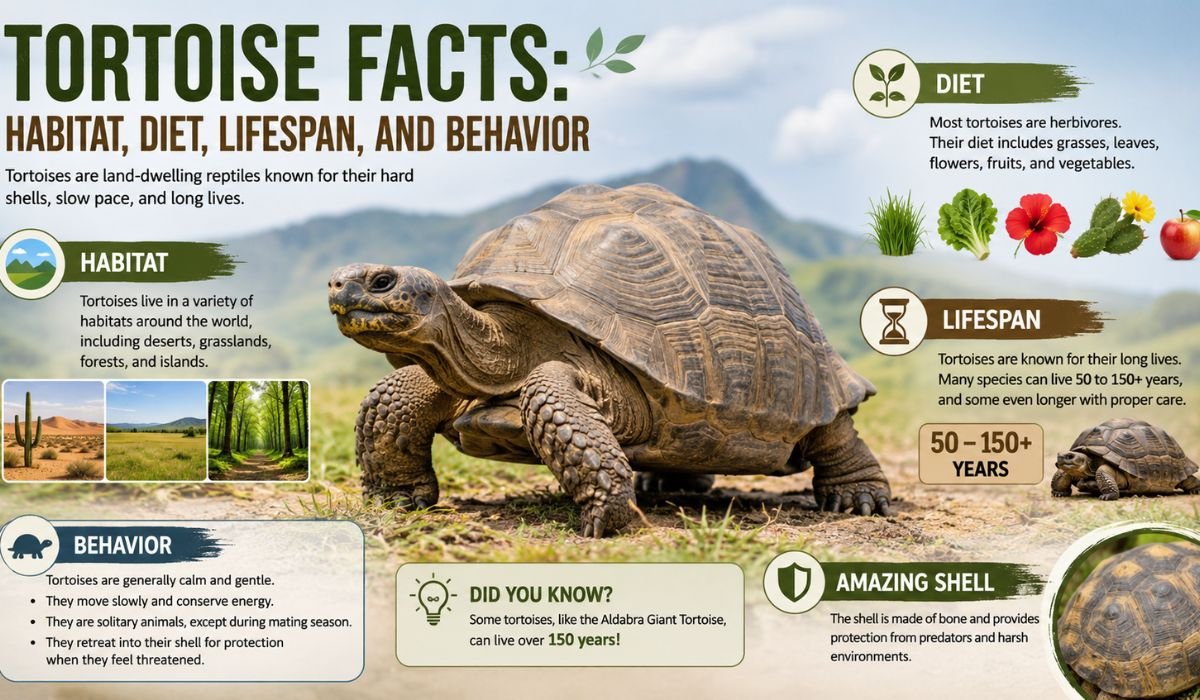
Tortoises are fascinating land-dwelling reptiles known for their hard shells, slow movements, and remarkable longevity. Found in different environments around the world, these animals have adapted to deserts, grasslands, forests, and islands. Unlike turtles, tortoises generally spend most or all of their lives on land. Learning tortoise facts can reveal how these reptiles survive harsh environments, find food, avoid predators, and live for many decades.
From their unique body structure to their interesting feeding habits, tortoises have many characteristics that make them different from other reptiles. Some species are small enough to fit in your hands, while giant tortoises can weigh hundreds of kilograms. Their slow pace may seem unusual, but it is an effective lifestyle that helps them conserve energy.
What Is a Tortoise?
A tortoise is a land-dwelling reptile belonging to the family Testudinidae. Tortoises are closely related to turtles, but they are generally better adapted to life on land. Their feet are usually sturdy and column-like, helping them walk across soil, sand, rocks, and other terrestrial surfaces.
One of the most important tortoise facts is that their shells are part of their skeleton. The shell consists mainly of a domed carapace on the back and a flatter plastron underneath. The shell provides protection from predators and environmental hazards.
Tortoise vs. Turtle
Although tortoises and turtles are related, they are not exactly the same. Tortoises typically have strong legs designed for walking on land, while many turtles have more specialized feet or flippers for swimming.
Most tortoises also have high, rounded shells and spend their lives away from water. However, there can be exceptions, so habitat and body structure are better indicators than simply looking at appearance.
Where Do Tortoises Live?
Tortoises live in a wide variety of terrestrial habitats. Depending on the species, they may be found in deserts, dry grasslands, savannas, forests, scrublands, and tropical islands.
Desert tortoises are adapted to environments with little rainfall and extreme temperatures. They can spend considerable amounts of time in burrows, where conditions are often more stable than on the surface.
Other species live in warmer tropical regions with more vegetation and moisture. Giant tortoises are particularly famous for inhabiting islands such as the Galápagos and Aldabra.
How Tortoises Survive Different Habitats
Their ability to survive different environments is one of the most interesting tortoise facts. Many species regulate their activity according to temperature and weather conditions. During very hot periods, some tortoises become less active and seek shelter.
Their shells also provide protection from the environment. Some species have strong, rounded shells that help shield their bodies from predators and physical hazards.
Read Related Post: Flamingo Facts: Habitat, Diet, Color, and Behavior
What Do Tortoises Eat?
Most tortoises are herbivores, meaning their diets are primarily based on plants. Depending on the species and habitat, they may eat grasses, leaves, flowers, weeds, fruits, and other vegetation.
A plant-based diet provides tortoises with nutrients while allowing them to feed on abundant vegetation. Species living in dry environments may eat plants that are specially adapted to survive with limited water.
Do Tortoises Drink Water?
Yes, tortoises need water, although their water requirements vary by species and habitat. Some obtain part of their water from the plants they eat, while others drink directly when water is available.
Tortoises living in dry regions have adaptations that help them survive periods when water is scarce. They may take advantage of rainfall or temporary water sources when available.
How Long Do Tortoises Live?
One of the most remarkable tortoise facts is their extraordinary lifespan. Many tortoise species can live for several decades, and some individuals may survive for more than 100 years under suitable conditions.
Giant tortoises are particularly famous for their longevity. Their slow growth, relatively slow metabolism, and generally peaceful lifestyle may contribute to their long lives, although lifespan varies considerably between species and individuals.
Why Do Tortoises Live So Long?
Scientists believe several biological and lifestyle factors may contribute to tortoise longevity. Many tortoises have slow metabolisms and relatively low activity levels compared with many other animals.
Their protective shells also provide significant defense against predators. By reducing some of the risks faced by smaller, more vulnerable animals, tortoises may have more opportunities to survive and reproduce over long periods.
Tortoise Behavior
Tortoises are generally quiet and deliberate animals. Their behavior is strongly influenced by temperature, food availability, habitat, and the time of year.
They often spend time searching for vegetation, resting, basking, or looking for shelter. Despite their reputation for being extremely slow, tortoises can become surprisingly active when conditions are favorable.
Another interesting part of tortoise facts is that these reptiles can recognize aspects of their surroundings and may develop familiar movement patterns within their habitat.
Are Tortoises Social Animals?
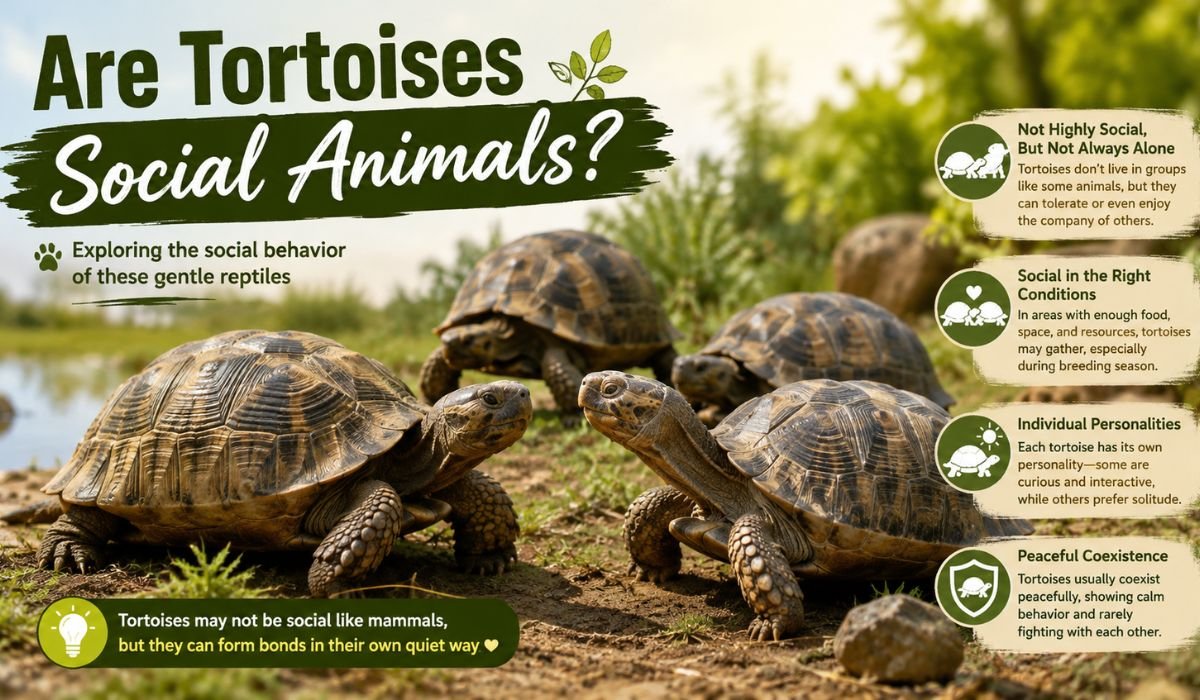
Most tortoise species are not highly social animals. They often live independently and may only interact regularly with other tortoises during breeding periods or when food and suitable habitat bring them together.
However, behavior differs among species. Some tortoises may tolerate or interact with others more frequently than others.
Tortoise Shell Adaptations
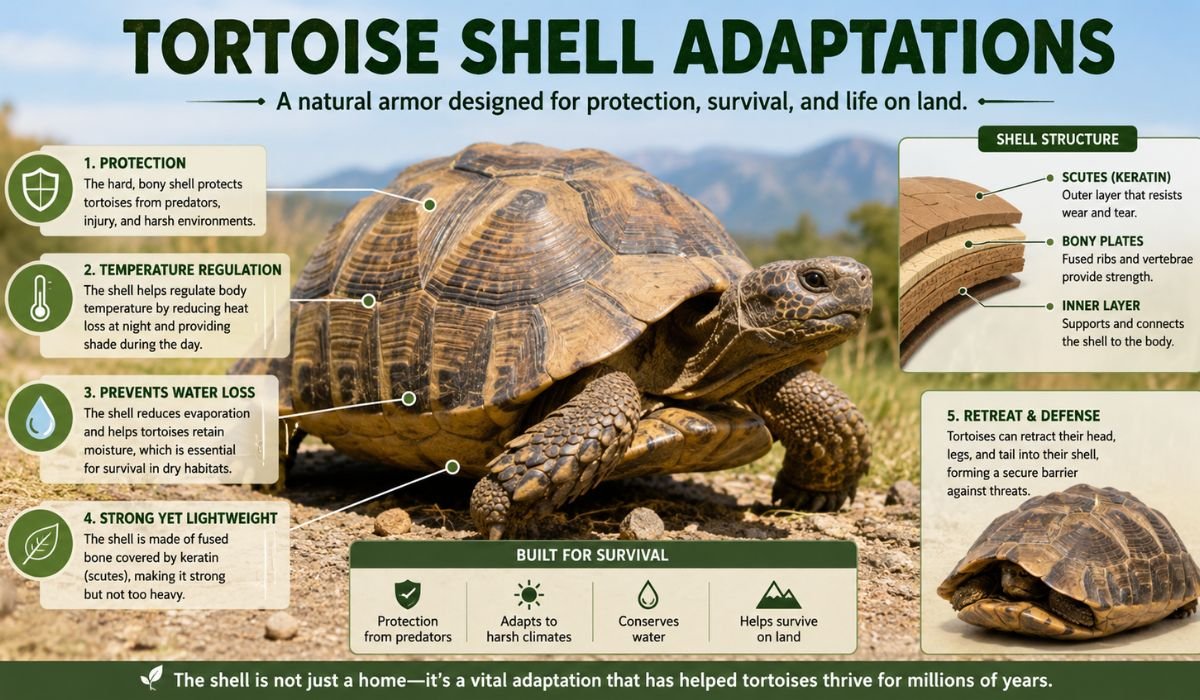
The shell is perhaps the most recognizable feature of a tortoise. It provides physical protection and is an important part of the animal’s body.
The upper section is called the carapace, while the lower section is called the plastron. These structures are connected and contain bones that are part of the tortoise’s skeleton.
Some tortoises have very high-domed shells, while others have shells with different shapes suited to their particular environments. Shell color and patterns also vary between species.
Can a Tortoise Leave Its Shell?
No. A tortoise cannot simply leave its shell because the shell is attached to its skeleton. Ribs and vertebrae are incorporated into the shell structure.
This is another important point among tortoise facts: the shell is not just external armor. It is a living part of the tortoise’s body.
How Do Tortoises Defend Themselves?
The shell is their main defense. When threatened, many tortoises can retract their head, legs, and tail into the protective shell.
Some species have especially strong or heavily armored shells that make them difficult for predators to attack. Their ability to hide vulnerable body parts provides an effective defensive strategy.
However, young tortoises can be more vulnerable because their shells are smaller and may not provide the same level of protection as those of adults.
Tortoise Reproduction and Babies
Tortoises reproduce by laying eggs. Females typically dig nests in suitable soil and deposit their eggs before covering them.
The number of eggs varies by species. After incubation, young tortoises hatch and begin life independently. In many species, parents provide little or no care after the eggs are laid.
Young tortoises face many dangers, including predators and environmental conditions. Their survival depends on finding food, shelter, and suitable temperatures.
Famous Giant Tortoises
Giant tortoises are among the most impressive members of the tortoise family. The Galápagos Islands and Aldabra Atoll are particularly well known for their giant tortoise populations.
These animals can reach enormous sizes compared with many other tortoises. Their large bodies and long lifespans have made them important symbols of island ecosystems.
The giant tortoise is also an excellent example of how isolated environments can influence the evolution of animals over long periods.
Are Tortoises Endangered?
The conservation status of tortoises varies greatly between species. Some populations are relatively stable, while others face serious threats.
Habitat loss, illegal wildlife collection, introduced predators, climate change, and human activity can all affect tortoise populations. Island species can be especially vulnerable because they may have small geographic ranges.
Protecting natural habitats and enforcing wildlife conservation laws are important steps toward protecting threatened tortoise species.
Interesting Tortoise Facts
Here are some quick tortoise facts to remember:
- Tortoises are reptiles adapted primarily to life on land.
- Most tortoises are herbivores.
- Their shells are connected to their skeletons.
- Many tortoise species can live for several decades.
- Some tortoises can live for more than 100 years.
- Tortoises can retract parts of their bodies into their shells.
- Giant tortoises can become extremely large.
- Tortoises live in habitats ranging from deserts to tropical forests.
- Their activity is strongly affected by temperature.
- Different tortoise species have different shell shapes, sizes, and colors.
FAQ’s
How long can a tortoise live?
Many tortoises can live for several decades, while some species and individuals can survive for more than 100 years. Lifespan depends on species, genetics, environment, and overall conditions.
What do tortoises eat?
Most tortoises primarily eat plant material such as grasses, leaves, flowers, and other vegetation. Their exact diet depends on the species and its natural habitat.
Are tortoises turtles?
Tortoises are members of the broader turtle group, but the terms are not interchangeable. Tortoises are generally specialized for living on land, while many turtles spend significant time in water.
Can tortoises swim?
Most tortoises are not adapted for swimming like aquatic turtles. Their heavy bodies and land-adapted feet make them primarily terrestrial animals.
Why do tortoises have shells?
Their shells provide protection for the body. When threatened, many tortoises can retract their head and limbs, using the shell as a defensive barrier.
Are tortoises fast?
Tortoises are generally slow-moving animals. Their bodies and lifestyle are designed more for conserving energy and surviving over long periods than for moving quickly.
Conclusion
Tortoises are remarkable reptiles with unique adaptations that help them survive on land. Their protective shells, plant-based diets, temperature-sensitive behavior, and impressive longevity make them fascinating animals to study. From desert species to giant island tortoises, each species has evolved characteristics suited to its environment.
These tortoise facts show that being slow does not mean being poorly adapted. Tortoises have survived for millions of years because their bodies and behaviors are remarkably suited to their lifestyles. Their long lives and important roles in ecosystems also make conservation essential, particularly for species threatened by habitat loss and human activity.

Hi, I’m Amelia, an SEO and content specialist with several years of experience researching and creating informative content for online audiences. At Animal Attack Facts, I focus on animal behavior, animal attacks on humans, and interesting facts about land animals, marine animals, birds, reptiles, and insects. My goal is to provide clear, useful, and engaging information that helps readers better understand wildlife and stay informed about animal encounters.
1 thought on “Tortoise Facts: Habitat, Diet, Lifespan, and Behavior”