
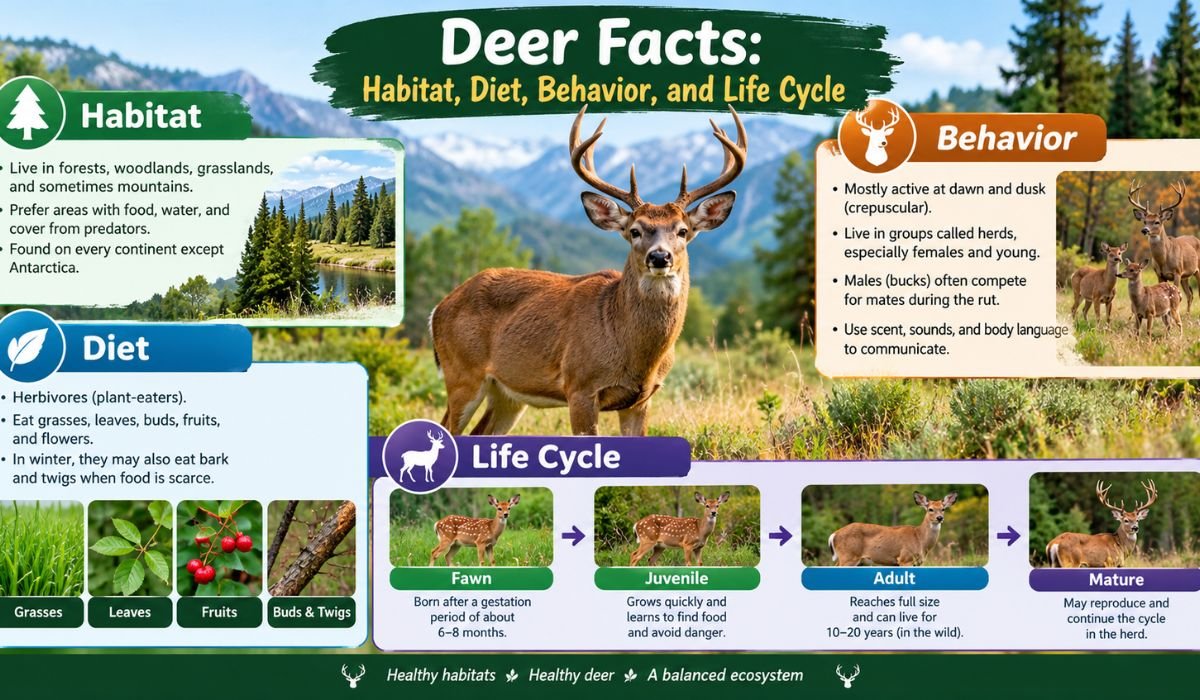
Deer are among the most widely recognized hoofed mammals in the world. They live in forests, grasslands, mountains, wetlands, and even areas close to human settlements. Known for their graceful movements, strong legs, and, in many species, impressive antlers, deer have adapted to a wide range of environments. These herbivorous mammals belong to the family Cervidae, which includes many different species and sizes.
Learning about deer facts reveals how these animals survive, communicate, find food, raise their young, and adapt to seasonal changes. From their specialized digestive systems to their remarkable ability to escape predators, deer have several interesting characteristics that help them thrive in the wild.
What Are Deer?
Deer are hoofed mammals belonging to the Cervidae family. There are more than 40 recognized species of deer, ranging from the tiny pudu to the enormous moose, which is the largest member of the deer family.
Most deer have long legs, compact bodies, and split hooves that help them move across different types of terrain. Many male deer grow antlers, although the size and shape of these structures vary greatly between species.
One important distinction in deer facts is that antlers are not permanent. Unlike horns, antlers are usually shed and regrown each year by males of species that possess them.
Deer Habitat
Deer are highly adaptable animals and can live in many different habitats. Their preferred environment depends on the species and the availability of food, water, shelter, and safe areas for raising young.
Common deer habitats include:
- Forests and woodlands
- Grasslands and savannas
- Mountain regions
- Wetlands and marshes
- Shrublands
- Tundra and cold northern regions
- Agricultural landscapes
Many deer prefer areas where different habitats meet. Forest edges, for example, can provide both vegetation for feeding and dense cover for protection.
Some species have adapted particularly well to environments influenced by humans. They may be found near farms, parks, roads, and suburban areas when suitable food and shelter are available.
What Do Deer Eat?
Deer are herbivores, meaning their diet consists primarily of plant material. Depending on the species and season, they may consume grasses, leaves, shoots, fruits, flowers, nuts, bark, and other vegetation.
Their diet changes throughout the year. During warmer months, deer may have access to fresh leaves, grasses, flowers, and other nutritious plants. In colder months, when vegetation becomes scarce, they may rely more heavily on woody plants, twigs, bark, and evergreen vegetation.
These feeding habits are an important part of deer facts because their food choices are closely connected to their habitat and seasonal survival.
Deer are ruminants. They have a specialized digestive system that allows them to process fibrous plant material. They initially swallow food and later regurgitate and rechew it before completing digestion.
Deer Behavior
Deer generally have cautious and alert behavior. They use their senses of smell, hearing, and vision to detect potential threats.
Many species are most active around dawn and dusk, although activity patterns can vary depending on predators, weather, human activity, and local conditions.
Some deer live in relatively small groups, while others form larger herds. Social behavior also changes depending on the season. Females and their young may form groups, while adult males can spend more time alone outside the breeding season.
When threatened, deer can respond quickly. Their powerful legs allow them to run at considerable speeds, jump over obstacles, and move through difficult terrain.
Read Related Post: Praying Mantis Facts: Habitat, Diet, Behavior, and Life Cycle
Antlers and Their Purpose
Antlers are one of the most recognizable features associated with deer. They are made of bone and are typically grown by males in many deer species.
Antler growth is influenced by hormones, age, nutrition, and genetics. During growth, new antlers are covered by a soft layer called velvet, which supplies blood and nutrients to the developing bone.
Once the antlers mature, the velvet dries and is removed.
Antlers serve several purposes. During the breeding season, males may use them when competing with other males for access to females. They can also play a role in displays that communicate strength and social status.
Not every deer species follows exactly the same pattern. In reindeer, for example, females can also grow antlers.
How Do Deer Communicate?
Communication is another fascinating area of deer facts. Deer communicate through sounds, body movements, scents, and visual signals.
Different species can produce various vocalizations, including alarm calls, contact sounds, and calls used between mothers and young.
Scent marking is also important. Deer have scent-producing glands in different parts of their bodies, and these scents can provide information about identity, reproductive condition, and territory.
Body language can communicate alertness or aggression. A deer may raise its tail, change its posture, or make sudden movements when it detects danger.
Deer Reproduction and Mating
The breeding season of many deer species occurs during autumn, although timing varies according to species and location.
During this period, males may compete for access to females. They can display their antlers, make vocalizations, mark areas with scent, and sometimes fight other males.
After mating, the female carries the developing offspring for several months. The exact gestation period varies among species.
Female deer generally give birth to one or more young, depending on the species. Newborn deer are often called fawns.
Deer Life Cycle
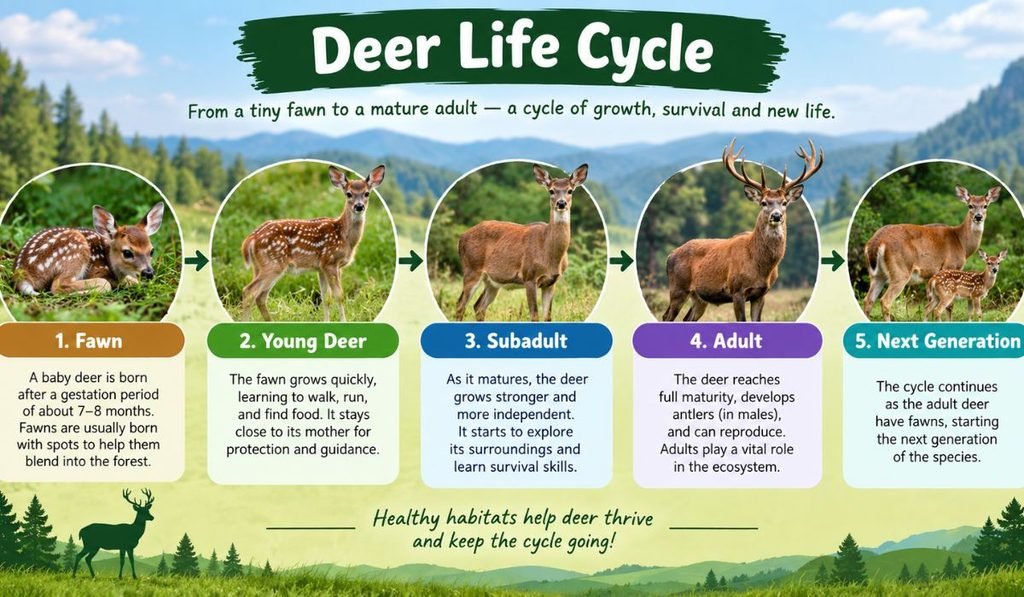
The life cycle of deer begins with birth. Young fawns are generally small and vulnerable when they are born, so mothers provide protection and nourishment.
A newborn fawn may have spots that help it blend into vegetation. In many species, the mother keeps the young hidden for a period while she feeds nearby.
As the fawn grows stronger, it becomes increasingly mobile and begins exploring its surroundings. It gradually transitions from depending heavily on its mother to eating more solid vegetation.
Young deer eventually reach sexual maturity, although the age at which this occurs differs between species.
Adults continue to grow and develop according to their species, sex, environment, and available nutrition. Males of antlered species generally shed and regrow their antlers as part of their yearly cycle.
How Do Deer Survive in the Wild?
Several adaptations help explain the success of deer in different environments. Their long legs allow them to run quickly and cross challenging terrain. Their split hooves provide stability, while their strong senses help them identify danger.
Camouflage is another useful adaptation. Many deer have brown, gray, or reddish coats that can blend into forests and grasslands.
Their digestive system also allows them to obtain nutrients from fibrous vegetation that many other animals cannot efficiently process.
Seasonal changes can create challenges, particularly when food becomes scarce. Deer respond by changing their feeding behavior and using available vegetation more efficiently.
Deer Predators
Wild deer can face a variety of predators depending on where they live. Predators may include wolves, mountain lions, bears, large cats, crocodilians, and other carnivores.
Young deer are especially vulnerable because they are smaller and less experienced.
Their best defenses include alertness, camouflage, speed, agility, and the protection provided by groups or suitable habitat. When danger is detected, deer may suddenly flee using powerful leaps and rapid changes in direction.
Human activity can also create serious risks for wild deer. Habitat loss, vehicle collisions, hunting, fencing, and changes in natural landscapes can affect different deer populations.
Interesting Deer Facts
Here are some additional deer facts that show how diverse and adaptable these animals are:
- Deer belong to the mammal family Cervidae.
- Most male deer species grow antlers.
- Antlers are made of bone and are usually shed annually.
- Reindeer are unusual because females can also grow antlers.
- Deer are herbivores and feed on many types of vegetation.
- They are ruminants with specialized digestive systems.
- Many deer are most active around dawn and dusk.
- Young deer are commonly called fawns.
- Some deer species live in forests, while others occupy grasslands, mountains, wetlands, or cold northern environments.
- Deer communicate using sounds, scents, and body language.
- Their powerful legs help them run and jump over obstacles.
- Many deer have excellent hearing and a strong sense of smell.
- Some species can adapt to landscapes near humans.
- Antler size and shape vary considerably among species.
- Deer play important roles in their ecosystems by feeding on vegetation and serving as prey for predators.
FAQ’s
What do deer eat?
Deer mainly eat plants, including grasses, leaves, shoots, flowers, fruits, nuts, twigs, and bark. Their exact diet depends on their species, habitat, and the season.
Where do deer live?
Deer live in many habitats, including forests, grasslands, mountains, wetlands, shrublands, and cold northern regions. Some species also live close to human settlements.
Do all deer have antlers?
No. In species where antlers occur, they are generally grown by males. Reindeer are a notable exception because both males and females can grow antlers.
What is a baby deer called?
A young deer is commonly called a fawn. Depending on the species and region, other terms may sometimes be used for young deer.
How long do deer live?
Lifespan varies significantly by species and environmental conditions. Wild deer may face predators, disease, food shortages, hunting, and habitat-related dangers, all of which can influence survival.
Are deer herbivores?
Yes. Deer are herbivores and primarily eat plant material. Their specialized digestive system helps them process fibrous vegetation.
How do deer protect themselves?
Deer rely mainly on alert senses, camouflage, speed, agility, and their ability to quickly flee from danger. Some species also benefit from living in groups.
Conclusion
Deer are adaptable herbivorous mammals with specialized physical and behavioral traits that help them survive in diverse environments. From their seasonal diets and complex digestive systems to their antlers, communication methods, and reproductive cycles, there is much to discover about these animals.
These deer facts also highlight the important role deer play in ecosystems. They influence vegetation through feeding and provide an important food source for many predators. Understanding their habitat, behavior, diet, and life cycle can help us better appreciate these remarkable mammals and the environments they inhabit.

Hi, I’m Amelia, an SEO and content specialist with several years of experience researching and creating informative content for online audiences. At Animal Attack Facts, I focus on animal behavior, animal attacks on humans, and interesting facts about land animals, marine animals, birds, reptiles, and insects. My goal is to provide clear, useful, and engaging information that helps readers better understand wildlife and stay informed about animal encounters.
1 thought on “Deer Facts: Habitat, Diet, Behavior, and Life Cycle”