
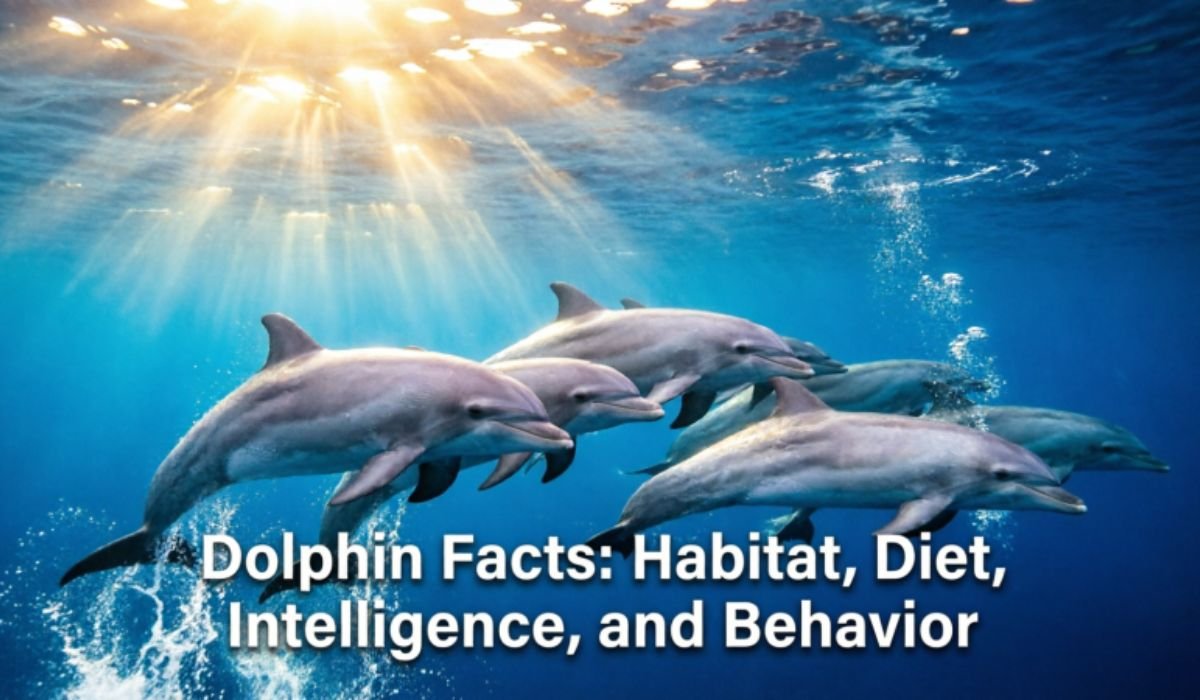
Dolphins are among the most fascinating marine mammals on Earth. Known for their intelligence, playful behavior, and impressive communication skills, dolphins have captured human attention for centuries. These highly social animals live in oceans and some freshwater environments, forming groups called pods that can range from a few individuals to dozens or even hundreds.
Learning dolphin facts can help us understand how these animals survive, communicate, hunt, and interact with one another. Although dolphins are often associated with friendly behavior, they are also skilled predators with remarkable adaptations that help them thrive in challenging aquatic environments.
What Are Dolphins?
Dolphins are aquatic mammals belonging to the order Cetacea, which also includes whales and porpoises. There are more than 40 recognized species of dolphins, ranging from the familiar bottlenose dolphin to species adapted to rivers and coastal waters.
Like other mammals, dolphins breathe air through lungs rather than using gills. They must regularly return to the water’s surface to breathe through a blowhole located on top of their heads.
One of the most interesting dolphin facts is that dolphins are warm-blooded animals. They give birth to live young and nurse their calves with milk, just like land mammals.
Their streamlined bodies, powerful tails, and specialized senses make them exceptionally well adapted to life in water.
Where Do Dolphins Live?
Dolphins can be found in oceans and seas around much of the world. Many species prefer warm tropical and temperate waters, although some live in colder regions.
Different dolphin species occupy different habitats. Some spend most of their lives in open oceans, while others prefer coastal areas, bays, estuaries, and continental shelves. A few species, including river dolphins, are adapted to freshwater environments.
Ocean Habitats
Many dolphins live in saltwater environments and can travel considerable distances in search of food. Bottlenose dolphins, for example, may live near coastlines or in deeper offshore waters depending on the population.
River Habitats
River dolphins are among the most specialized dolphins. They inhabit freshwater river systems and have adaptations that help them navigate murky water. Their long snouts and flexible necks can help them locate prey in complicated underwater environments.
What Do Dolphins Eat?
Dolphins are carnivores, meaning they primarily eat other animals. Their diet depends on their species, habitat, and available prey.
Common foods include fish, squid, shrimp, and other marine organisms. Larger dolphin species may consume a wider variety of prey.
Dolphins often work together when hunting. A pod may cooperate to gather fish into a concentrated group, making it easier for individual dolphins to catch them.
Their teeth are mainly used to grab prey rather than chew it. Dolphins generally swallow their food whole or in manageable pieces.
One fascinating dolphin fact is that some dolphins use coordinated hunting strategies that demonstrate impressive teamwork. Different members of a pod may appear to take different roles during a hunt.
How Intelligent Are Dolphins?
Dolphin intelligence is one of the main reasons these animals receive so much scientific attention. Their brains are relatively large compared with their body size, and they demonstrate sophisticated learning and problem-solving abilities.
Dolphins can learn from experience, remember information, imitate behaviors, and respond to complex signals. Researchers have also observed dolphins using tools in certain populations.
For example, some bottlenose dolphins have been observed carrying marine sponges over their snouts while searching for food along the seafloor. The sponge may protect the sensitive snout from rough surfaces as the dolphin investigates the bottom.
Another important dolphin fact is that dolphins can recognize themselves in mirrors, a behavior associated with advanced cognitive abilities.
However, scientists continue to study exactly how dolphin intelligence compares with that of other highly intelligent animals. Intelligence is complex and cannot be measured using only one characteristic.
Read Related Post: Tiger Facts: Habitat, Diet, Behavior, and More
How Do Dolphins Communicate?
Communication is essential to dolphin social life. Dolphins produce clicks, whistles, and other sounds to interact with members of their groups.
Their whistles may help dolphins maintain contact, especially when individuals become separated.
One of the most remarkable dolphin facts is that bottlenose dolphins appear to develop individual signature whistles. These sounds can function somewhat like individual identifying calls, allowing dolphins to recognize one another.
Dolphins also communicate through body movements. Leaping, tail slapping, touching, and other physical behaviors can convey information or help maintain social bonds.
Echolocation: A Dolphin’s Super Sense
Dolphins use echolocation to locate and identify objects underwater. They produce high-frequency clicking sounds that travel through the water. When the sounds encounter an object, echoes return to the dolphin.
By interpreting these echoes, dolphins can gather information about the location, distance, movement, and sometimes characteristics of objects around them.
Echolocation is especially useful in dark or murky water where vision may be limited.
This ability is one of the most impressive dolphin facts because it allows dolphins to navigate and hunt in environments where ordinary eyesight may not provide enough information.
Dolphin Social Behavior
Dolphins are highly social animals. They commonly live in groups called pods, although pod size and social structure vary among species.
Members of a pod may cooperate while traveling, hunting, protecting young, and responding to threats. Dolphins can also form long-term social relationships.
Young dolphins learn many behaviors by observing older members of their group. This type of social learning helps transmit useful behaviors from one generation to another.
Dolphins may also show behaviors associated with cooperation and social bonding, although scientists are careful not to interpret these behaviors using human emotions without evidence.
How Do Dolphins Sleep?
Dolphins face a unique challenge because they need to breathe air while sleeping. They cannot simply enter a normal deep sleep for a long period without surfacing.
Instead, dolphins use a behavior called unihemispheric sleep. During this type of sleep, one side of the brain rests while the other remains active enough to help control breathing and monitor the surroundings.
This allows dolphins to continue surfacing for air while also getting necessary rest.
This is another fascinating dolphin fact that demonstrates how their bodies are specially adapted to aquatic life.
Dolphin Reproduction and Calves
Dolphins give birth to live young after a pregnancy that can last many months, depending on the species.
A dolphin usually gives birth to one calf at a time. The calf stays close to its mother and depends on her for milk, protection, and learning during its early life.
Mother dolphins help their calves learn important survival behaviors, including how to swim, breathe efficiently, communicate, and eventually find food.
The strong relationship between mothers and calves is an important part of dolphin social life.
How Fast Can Dolphins Swim?
Dolphins are powerful swimmers. Their streamlined bodies reduce resistance as they move through the water, while their muscular tails provide propulsion.
Some species can reach impressive speeds over short distances. Their ability to accelerate quickly helps them escape predators, pursue prey, and travel efficiently.
Dolphins may also leap out of the water. Scientists believe these jumps can have several purposes, including communication, social behavior, navigation, and reducing drag while traveling.
Do Dolphins Have Natural Predators?
Adult dolphins are powerful predators themselves, but they can still face threats from larger marine predators.
Depending on the species and location, young or vulnerable dolphins may be at risk from large sharks and other predators. Calves are generally more vulnerable than healthy adults.
Living in groups can provide some protection because multiple dolphins can watch for danger and respond collectively.
Human activities can also pose significant threats to dolphin populations. Entanglement in fishing gear, habitat degradation, pollution, underwater noise, and reduced food availability can affect dolphins in different parts of the world.
Are Dolphins Friendly to Humans?

Dolphins are often portrayed as naturally friendly toward humans, but this is an oversimplification.
Wild dolphins are intelligent, curious animals that may sometimes approach boats or interact with people. However, they remain wild animals and should be observed responsibly.
Feeding, chasing, touching, or attempting to swim closely with wild dolphins can interfere with their natural behavior and may put both animals and people at risk.
A responsible approach is to observe dolphins from a safe distance and avoid disturbing them.
Interesting Dolphin Facts
Here are some additional dolphin facts worth knowing:
- Dolphins are mammals, not fish.
- They breathe air through blowholes.
- Dolphins use echolocation to locate objects and prey.
- Many dolphins live in social groups called pods.
- They communicate using clicks, whistles, and body movements.
- Some dolphins use tools while searching for food.
- Dolphins have highly streamlined bodies designed for swimming.
- Female dolphins nurse their calves with milk.
- Dolphins use specialized sleep patterns that allow them to keep breathing.
- Different dolphin species have different diets and habitats.
- Dolphins can learn behaviors from other members of their groups.
- Some dolphin species live in freshwater rivers.
- Bottlenose dolphins are among the most widely studied dolphin species.
- Dolphins can cooperate during hunting and other activities.
Why Are Dolphins Important to Marine Ecosystems?
Dolphins play important roles as predators in aquatic ecosystems. By feeding on fish and other marine animals, they participate in food webs and help maintain ecological relationships.
Healthy dolphin populations can also provide useful information about the condition of marine environments. Because dolphins depend on healthy habitats and sufficient prey, changes in their populations may reflect broader environmental problems.
Protecting dolphins therefore involves protecting the ecosystems they depend on.
How Can Dolphins Be Protected?
Conservation efforts can help reduce threats to dolphin populations. Important measures include reducing accidental capture in fishing equipment, protecting important habitats, limiting pollution, and maintaining healthy fish populations.
People can also help by avoiding activities that disturb wild dolphins and supporting responsible marine tourism.
Protecting oceans, rivers, and coastal ecosystems benefits dolphins as well as countless other species.
FAQs About Dolphin Facts
Are dolphins mammals?
Yes. Dolphins are mammals because they breathe air, are warm-blooded, give birth to live young, and nurse their calves with milk.
What do dolphins eat?
Dolphins mainly eat fish, squid, shrimp, and other aquatic animals. Their exact diet varies between species and habitats.
How do dolphins communicate?
Dolphins communicate using whistles, clicks, body movements, and other sounds. Some species use individual signature whistles for recognition.
How do dolphins find prey?
Dolphins can use echolocation to detect objects and prey underwater. They also rely on vision and other senses.
Do dolphins sleep?
Yes. Dolphins sleep using a specialized pattern called unihemispheric sleep, which allows part of the brain to rest while the animal remains able to surface and breathe.
How intelligent are dolphins?
Dolphins demonstrate advanced learning, memory, communication, cooperation, and problem-solving abilities. Their intelligence is an active area of scientific research.
Do all dolphins live in the ocean?
No. Most dolphins are marine animals, but some dolphin species are adapted to freshwater river systems.
How long do dolphins live?
Lifespan varies significantly by species and population. Some dolphins can live for several decades under suitable conditions.
Conclusion
Dolphins are remarkable marine mammals with complex social lives, sophisticated communication abilities, and highly specialized adaptations. Their echolocation, intelligence, cooperative hunting, and unusual sleeping patterns make them especially interesting animals to study.
These dolphin facts also show why protecting dolphins requires protecting the aquatic environments where they live. Healthy oceans, rivers, and coastal habitats provide dolphins with food, shelter, and opportunities to reproduce.
Understanding dolphin facts is not only fascinating but also helps us appreciate the importance of responsible wildlife observation and marine conservation. From their powerful swimming abilities to their advanced communication and social behavior, dolphins remain some of the most extraordinary animals in the aquatic world.

Hi, I’m Amelia, an SEO and content specialist with several years of experience researching and creating informative content for online audiences. At Animal Attack Facts, I focus on animal behavior, animal attacks on humans, and interesting facts about land animals, marine animals, birds, reptiles, and insects. My goal is to provide clear, useful, and engaging information that helps readers better understand wildlife and stay informed about animal encounters.
1 thought on “Dolphin Facts: Habitat, Diet, Intelligence, and Behavior”