

Walruses are large marine mammals that live in the cold Arctic regions of the Northern Hemisphere. Their diet mainly consists of bottom-dwelling animals found on the ocean floor. Walruses are skilled foragers that use their sensitive whiskers to locate food beneath the sand and mud.
Understanding the walrus diet helps explain how these massive marine mammals survive in cold waters and obtain enough energy to maintain their large bodies.
What Do Walruses Eat?
Walruses primarily eat marine invertebrates, especially clams and other shellfish. They search for food along the seafloor in shallow Arctic waters, where many of their preferred prey species live.
Common foods in a walrus’s diet include:
- Clams: One of the most important food sources for walruses.
- Mussels: Shellfish that provide valuable nutrients and energy.
- Worms: Marine worms found in sediment on the ocean floor.
- Snails: Small marine mollusks that walruses can find while foraging.
- Crabs: Crustaceans that may be eaten when available.
- Shrimp: Small crustaceans that can contribute to their diet.
- Sea cucumbers: Bottom-dwelling marine animals consumed occasionally.
Although clams are a major part of their diet, walruses are opportunistic feeders. The specific foods they eat depend on prey availability, location, and environmental conditions.
How Do Walruses Find Their Food?
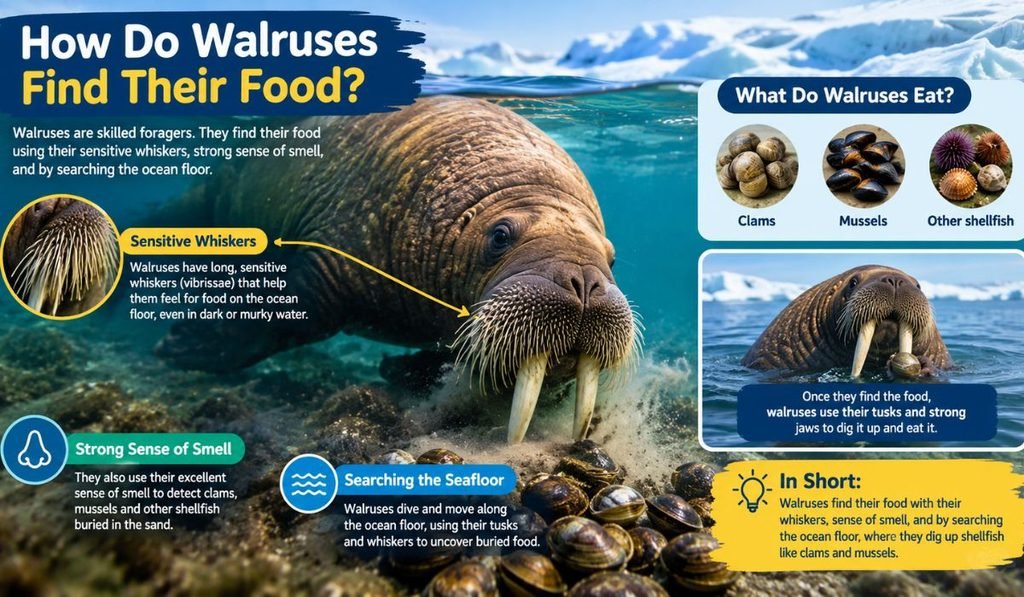
Walruses have specialized features that help them locate food in the dark and murky waters of the Arctic.
Using Sensitive Whiskers
Walruses have long, stiff whiskers called vibrissae. These sensitive whiskers help them detect the shapes and movements of animals hidden beneath seafloor sediment.
By sweeping their whiskers across the ocean bottom, walruses can locate clams and other small marine animals even when visibility is poor.
Searching the Ocean Floor
Walruses usually forage in relatively shallow waters where their preferred prey is abundant. They dive underwater and investigate patches of sand and mud to find food.
Their feeding behavior allows them to exploit rich seafloor habitats that support large populations of shellfish and other invertebrates.
Using Their Mouths to Extract Prey
Once a walrus finds a clam, it can use powerful suction to remove the soft animal from its shell. This technique helps it eat shellfish efficiently without needing to crush every shell.
Their strong mouths and specialized feeding behavior make them well adapted to eating animals buried in seafloor sediment.
Do Walruses Eat Fish?
Walruses can eat fish, but fish are not usually the main component of their diet. They generally prefer clams and other bottom-dwelling invertebrates.
When available, fish may provide additional nutrition. However, walruses typically rely on the abundant marine invertebrates found in their Arctic feeding grounds.
Their preference for seafloor prey distinguishes their feeding habits from those of many other marine mammals that primarily hunt fish.
Read Related Post: What Do Rhinos Eat? Rhinoceros Diet and Feeding Habits
Do Walruses Eat Seals?
Walruses are not primarily seal hunters, but some individuals occasionally prey on seals.
These events are uncommon compared with their usual feeding behavior. Most walruses obtain their food by searching for shellfish and other invertebrates on the ocean floor.
Certain walruses may also consume other marine mammals under particular circumstances, but this behavior is not representative of the species as a whole.
How Much Do Walruses Eat Each Day?
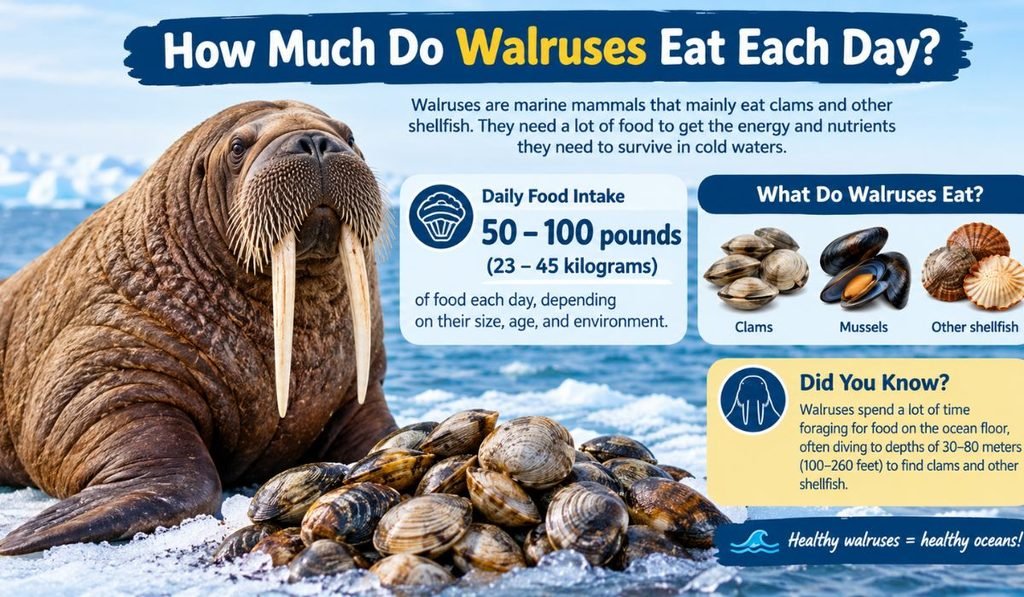
Walruses need substantial amounts of food to support their large bodies and maintain their energy reserves in the Arctic environment.
Their daily food intake varies according to body size, age, season, activity level, and prey availability. Many walruses spend considerable time diving and foraging to meet their nutritional needs.
Because clams and other invertebrates can be relatively small, walruses often need to consume large numbers of prey animals during feeding periods.
The amount they eat can also change with seasonal conditions and the accessibility of productive feeding areas.
How Does the Walrus Diet Change With the Seasons?
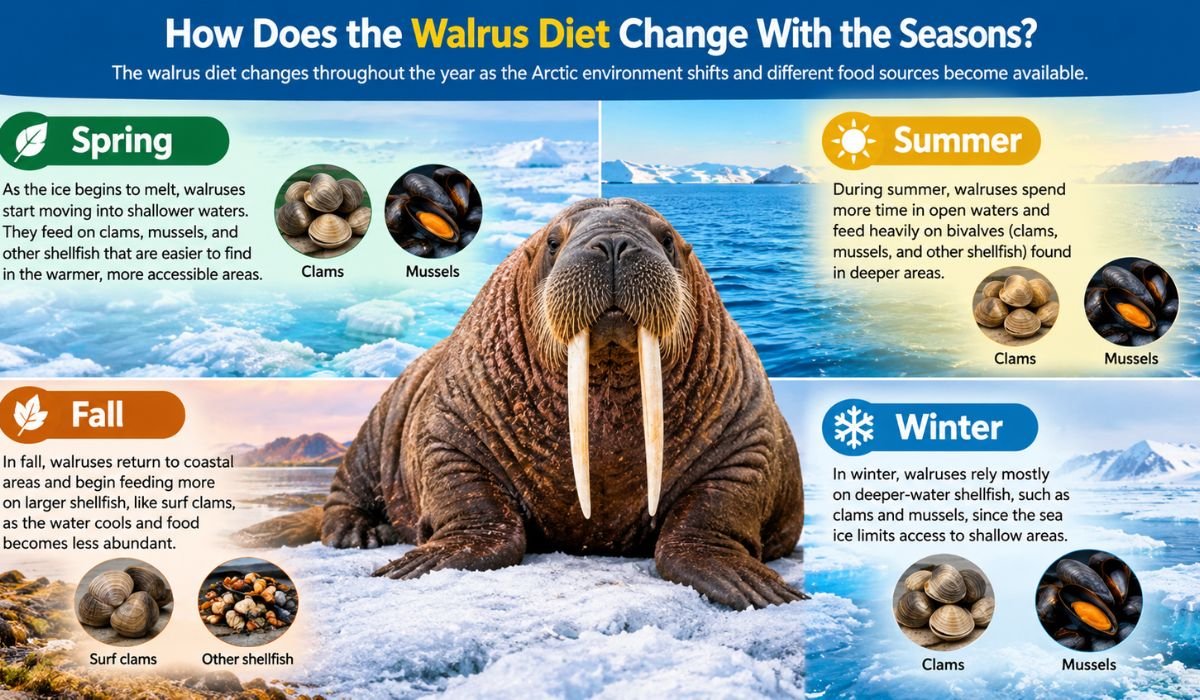
Seasonal changes in the Arctic can influence where walruses find food and how easily they can reach it.
Summer Feeding Habits
During summer, walruses may gather near productive coastal areas and shallow waters where shellfish are abundant. They forage on the seafloor and build energy reserves that help support their needs throughout the year.
Winter Feeding Habits
During winter, walruses continue feeding in suitable marine habitats, often relying on areas where they can access the seafloor through openings in the sea ice.
The availability of food and access to feeding grounds can influence their movements and diving behavior.
Effects of Melting Sea Ice
Declining Arctic sea ice can change walrus access to traditional feeding areas. Some walruses may travel farther or spend more time resting on land when suitable ice platforms are unavailable.
These changes can increase the challenges of reaching food, especially in areas where prey resources are limited or distant from resting sites.
Why Is the Walrus Diet Important?
The walrus diet is essential for survival in one of the world’s coldest environments. Their food provides the nutrients and energy needed to maintain body functions, support reproduction, and build insulating fat reserves.
Walruses also play an important role in Arctic marine ecosystems. By disturbing seafloor sediments while searching for prey, they can affect the distribution of nutrients and influence the habitats of other marine organisms.
Their dependence on bottom-dwelling animals also makes them sensitive to changes in seafloor ecosystems and the availability of their preferred prey.
Frequently Asked Questions About Walrus Diet
What is a walrus’s favorite food?
Clams are among the walrus’s most important and preferred foods. Walruses also eat other shellfish, marine worms, crabs, and various bottom-dwelling invertebrates.
Are walruses carnivores?
Yes. Walruses are carnivorous marine mammals because they eat animals rather than plants as their primary food source.
Do walruses eat plants?
Plants are not a significant part of the walrus diet. They mainly consume marine animals found on or within the ocean floor.
Do walruses chew their food?
Walruses often use suction to remove the soft tissue from shellfish rather than crushing their shells. Their feeding method helps them consume prey efficiently.
Where do walruses find food?
Walruses mainly find food on the ocean floor in shallow Arctic and subarctic waters. They use their sensitive whiskers to locate prey buried in sediment.
Do baby walruses eat the same food as adults?
Young walruses initially depend on their mothers’ milk. As they grow and become more independent, they gradually learn to forage for shellfish and other marine invertebrates.
Conclusion
The walrus diet consists mainly of clams, mussels, marine worms, crabs, and other bottom-dwelling animals. Walruses use their sensitive whiskers to locate prey and specialized suction-feeding techniques to obtain food from shellfish.
Their feeding habits help them survive in the Arctic while contributing to the balance of marine ecosystems. Protecting their feeding grounds and the wider Arctic environment is important for the long-term survival of walrus populations.

Hi, I’m Amelia, an SEO and content specialist with several years of experience researching and creating informative content for online audiences. At Animal Attack Facts, I focus on animal behavior, animal attacks on humans, and interesting facts about land animals, marine animals, birds, reptiles, and insects. My goal is to provide clear, useful, and engaging information that helps readers better understand wildlife and stay informed about animal encounters.
1 thought on “What Do Walruses Eat? Walrus Diet and Feeding Habits”