

The rhino diet mainly consists of grass, leaves, branches, shrubs, and other plant materials. Rhinoceroses are herbivores, meaning they eat plants rather than other animals. However, their food choices vary depending on the species, habitat, and availability of vegetation.
Some rhinos prefer grazing on open grasslands, while others use their flexible lips to browse leaves and branches from bushes and trees. Understanding what rhinos eat helps explain how these powerful mammals survive in different environments.
What Do Rhinos Eat?
Rhinos eat a variety of plants depending on their species and natural surroundings. Their diet generally includes the following foods:
- Grass: An important food source for white rhinos and other grazing species.
- Leaves: Many rhinos browse leaves from shrubs and trees.
- Branches and twigs: Some species eat young branches and woody vegetation.
- Shrubs: Bushes provide leaves, shoots, and other nutritious plant materials.
- Fruits: Certain rhinos occasionally consume fallen fruits when available.
- Aquatic and wetland plants: Rhinos living near wetlands may feed on suitable vegetation growing in these habitats.
The amount and type of food a rhino consumes depend on its body size, feeding habits, and the plants available in its environment.
Rhino Diet by Species
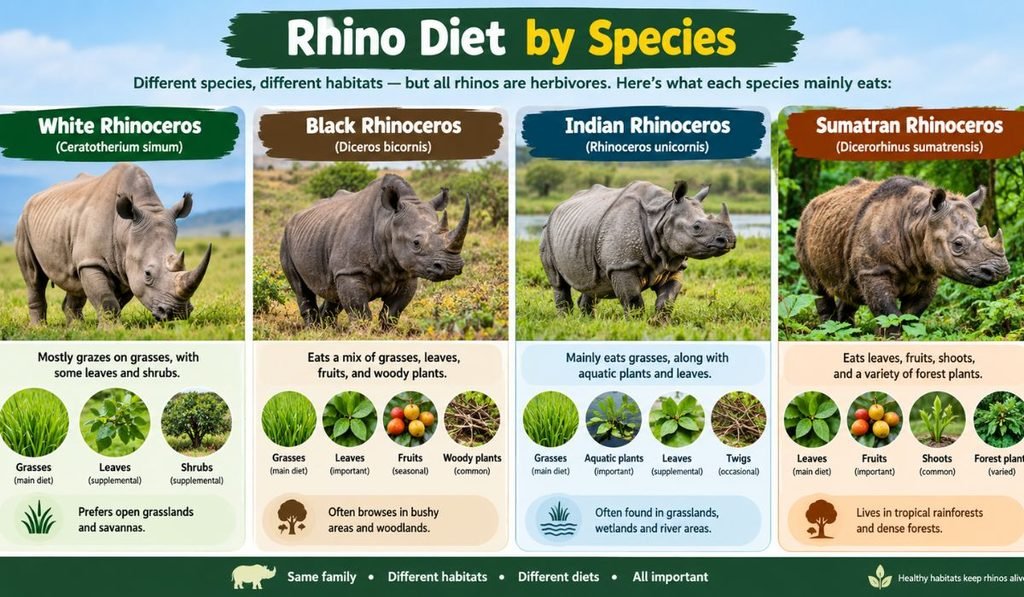
There are five living rhino species, and each has distinct feeding preferences.
1. White Rhino Diet
White rhinos primarily eat grass. They are grazers that spend much of their feeding time on open grasslands and savannas.
Their wide, square-shaped mouths help them crop grass close to the ground. They can consume large quantities of vegetation to meet their energy requirements.
White rhinos generally prefer short grasses, although their diet changes with seasonal conditions and food availability.
2. Black Rhino Diet
Black rhinos mainly eat leaves, shoots, twigs, and other woody plants. They are browsers rather than grazers.
Their pointed, prehensile upper lips help them grasp and pull leaves from bushes and branches. This adaptation allows them to feed efficiently in areas with dense shrubs and woodland vegetation.
Black rhinos may also eat fruits and other plant materials when these are available.
3. Indian Rhino Diet
Indian rhinos primarily feed on grasses, but their diet can also include leaves, aquatic plants, shrubs, and fallen fruits.
They often live in grasslands and wetland habitats where tall grasses and water-loving plants are abundant.
Their feeding habits may change according to the season, allowing them to use different plant resources throughout the year.
4. Javan Rhino Diet
Javan rhinos are browsers that feed mainly on leaves, shoots, twigs, and young branches.
They inhabit tropical forests, where they can find a variety of plant species. Their diet includes vegetation from shrubs, small trees, and other forest plants.
Because they live in dense forests, their feeding habits are closely connected to the availability of suitable vegetation.
5. Sumatran Rhino Diet
Sumatran rhinos eat leaves, fruits, shoots, twigs, and other forest vegetation.
They inhabit tropical forests and use their flexible lips to select different types of plant material. Fruits can be an important part of their diet when available.
Their varied feeding habits help them obtain nutrients from the diverse vegetation found in their forest habitats.
Read Related Post: Iguana Habitat: Where Iguanas Live and How They Survive
How Much Do Rhinos Eat in a Day?

Rhinos are large mammals that need substantial amounts of food to maintain their body weight and energy levels. The amount they eat varies by species, body size, food quality, and environmental conditions.
A large white rhino may consume roughly 30–60 kilograms of grass and other vegetation per day, although actual intake can vary considerably.
Smaller species and browsing rhinos consume different quantities depending on their size and the nutritional value of their food.
Rhinos typically spend many hours feeding throughout the day. Some also feed during cooler nighttime hours, particularly when temperatures are high.
How Do Rhinos Find and Eat Their Food?
Rhinos use their senses and specialized mouth structures to locate and consume vegetation.
Grazing and Browsing
Grazing rhinos, such as white rhinos, feed mainly on grasses growing close to the ground. Browsing rhinos, such as black rhinos, select leaves and branches from shrubs and trees.
These different feeding strategies allow rhinos to use a wide range of habitats.
The Role of Their Lips
A rhino’s lip shape is adapted to its feeding habits. White rhinos have broad, square lips suited to grazing, while black rhinos have pointed, flexible lips that help them grasp leaves and twigs.
Other rhino species also use their lips to select and pull vegetation.
Teeth and Digestion
Rhinos have strong teeth that help them process plant material. Their digestive systems are adapted to a herbivorous diet, allowing them to obtain nutrients from grasses, leaves, and other vegetation.
Because plant foods differ in fiber and nutritional value, rhinos may need to consume large amounts of vegetation to meet their daily requirements.
Where Do Rhinos Find Their Food?
Rhinos live in different habitats, and the vegetation in each environment influences their diet.
- Grasslands and savannas: Provide grasses for grazing rhinos.
- Woodlands: Offer leaves, shoots, and branches for browsing species.
- Tropical forests: Supply a variety of leaves, fruits, and young plants.
- Wetlands: Provide grasses and other moisture-loving vegetation.
Seasonal rainfall also affects food availability. During periods of abundant rain, plants may grow rapidly, while dry seasons can reduce the supply of fresh vegetation.
Do Rhinos Drink Water?

Yes, rhinos drink water when it is available. Their water requirements depend on their species, diet, climate, and activity level.
Many rhinos drink regularly from rivers, ponds, waterholes, or other natural sources. Some also spend time near water to cool themselves and protect their skin from excessive heat.
In dry environments, rhinos may travel considerable distances to find water. Access to reliable water sources is particularly important during hot weather and droughts.
Do Rhinos Eat Meat?
No, rhinos are herbivores and naturally feed on plants rather than meat.
Their mouths, teeth, and digestive systems are adapted for consuming vegetation. Grass, leaves, shoots, and other plant materials provide the nutrients they need to survive.
Although rhinos are large and powerful animals, their natural feeding behavior is focused on finding and consuming plants.
FAQ’s
1. What is the main food in a rhino diet?
Grass is the main food for white rhinos, while black rhinos and several other species primarily browse on leaves, shoots, and branches.
2. Are rhinos herbivores?
Yes, all five living rhino species are herbivores. They obtain their food from grasses and other plant materials.
3. Do rhinos eat fruits?
Yes, some rhino species eat fruits when they are available. Fruits can supplement their diets alongside leaves, grasses, and other vegetation.
4. How many kilograms of food does a rhino eat daily?
A large white rhino may eat approximately 30–60 kilograms of vegetation per day. Food intake varies according to species, body size, and food availability.
5. Do all rhinos eat grass?
No. White rhinos mainly graze on grass, whereas black rhinos, Javan rhinos, and Sumatran rhinos primarily browse on leaves, shoots, and woody vegetation. Indian rhinos eat grasses as well as other plants.
6. Do rhinos eat at night?
Yes, rhinos may feed during the day and at night. Their feeding schedules can change with temperature, habitat conditions, and food availability.
7. What do baby rhinos eat?
Baby rhinos initially depend on their mother’s milk. As they grow, they gradually begin eating grasses, leaves, and other vegetation before becoming fully independent.
Conclusion
The rhino diet consists mainly of grass, leaves, branches, shoots, and other plant materials. White rhinos are primarily grazers, while black, Javan, and Sumatran rhinos are mainly browsers. Indian rhinos consume grasses along with a variety of other vegetation.
These feeding adaptations allow different rhino species to survive in grasslands, savannas, wetlands, and tropical forests. Protecting their natural habitats is essential to ensuring that rhinos continue to have access to the food and water they need.

Hi, I’m Amelia, an SEO and content specialist with several years of experience researching and creating informative content for online audiences. At Animal Attack Facts, I focus on animal behavior, animal attacks on humans, and interesting facts about land animals, marine animals, birds, reptiles, and insects. My goal is to provide clear, useful, and engaging information that helps readers better understand wildlife and stay informed about animal encounters.
1 thought on “What Do Rhinos Eat? Rhinoceros Diet and Feeding Habits”