
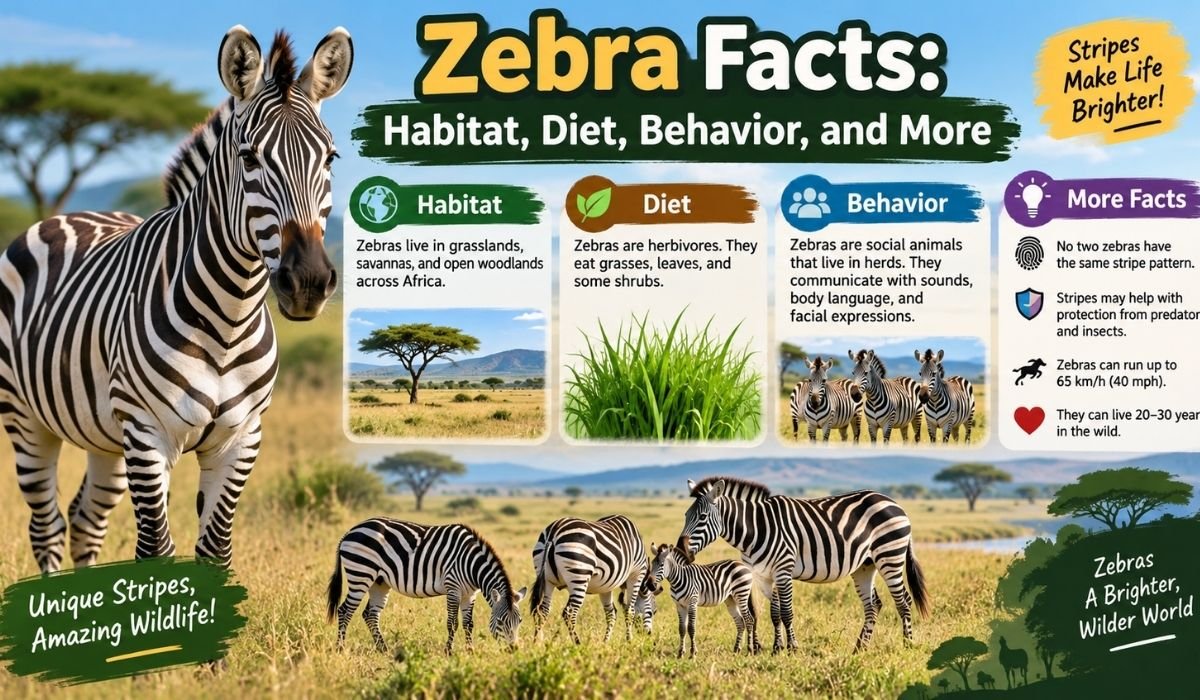
Zebras are among the most recognizable animals in the world, thanks to their distinctive black-and-white stripes and fascinating social behavior. These African mammals belong to the horse family and are closely related to horses and donkeys. Although they may look similar at first glance, zebras have unique adaptations that help them survive in some of Africa’s toughest environments. In this guide to zebra facts, we will explore their habitat, diet, behavior, species, physical features, reproduction, and other interesting characteristics.
What Are Zebras?
Zebras are wild members of the horse family, known for their striped coats and strong, muscular bodies. Unlike domesticated horses, zebras have never been successfully domesticated on a large scale. Their natural habitats include grasslands, savannas, woodlands, and mountainous regions across Africa.
There are three main living zebra species: the plains zebra, mountain zebra, and Grevy’s zebra. Each species has different physical characteristics, habitats, and social behaviors.
One of the most interesting zebra facts is that every zebra has a unique stripe pattern. Similar to human fingerprints, no two zebras have exactly the same arrangement of stripes.
Zebra Species
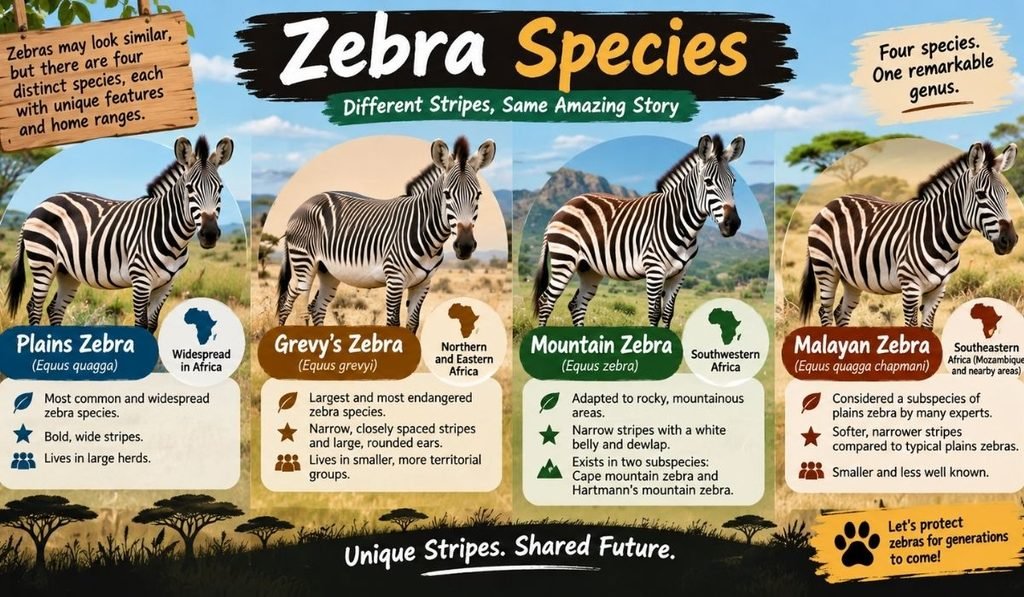
There are three recognized species of zebras, and each has adapted to a different environment.
Plains Zebra
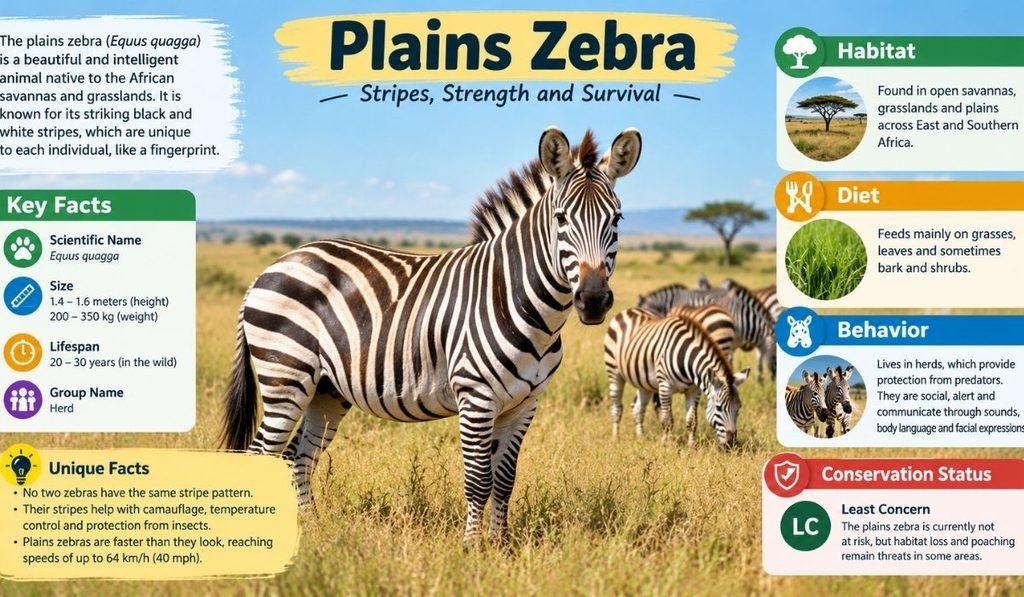
The plains zebra is the most common zebra species. It lives mainly in eastern and southern Africa, where it can be found in open grasslands, savannas, and lightly wooded areas.
Plains zebras often form large herds, especially when food and water are plentiful. They frequently migrate with other grazing animals in search of fresh vegetation and water.
Mountain Zebra
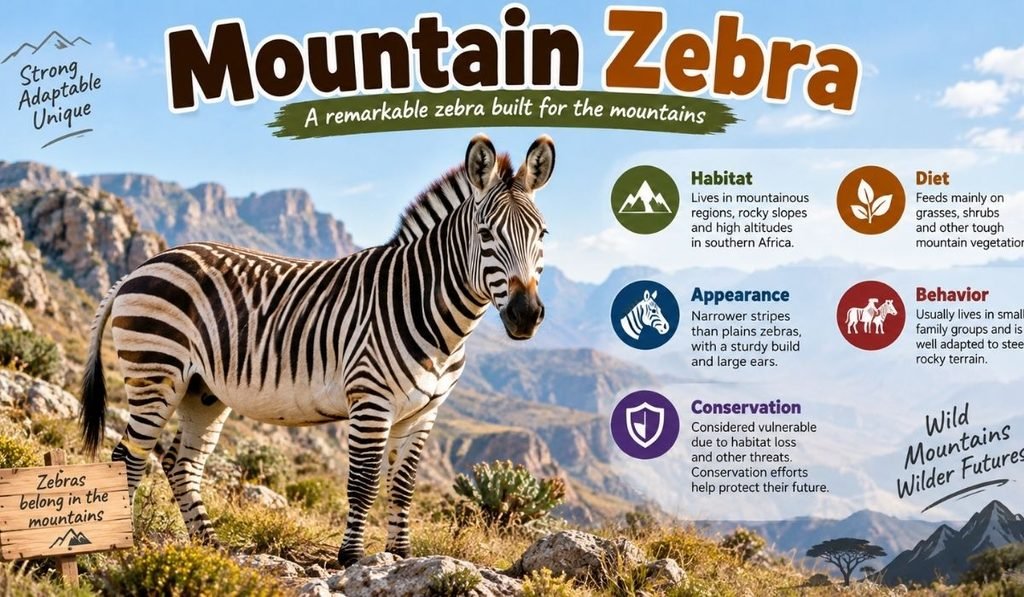
Mountain zebras are adapted to rocky and mountainous environments. They are generally smaller than plains zebras and have a distinctive dewlap, or loose fold of skin, beneath the neck.
They live mainly in southwestern Africa and are excellent climbers. Their strong legs and sure footing help them move across steep and rocky terrain.
Read Related Post: Peacock Facts: Feathers, Habitat, Diet, and Behavior
Grevy’s Zebra
Grevy’s zebra is the largest zebra species. It has narrow, closely spaced stripes and large, rounded ears. Grevy’s zebras are mainly found in northern Kenya and parts of Ethiopia.
Unlike plains zebras, Grevy’s zebras do not usually form large, permanent herds. Females and their young may move independently, while males establish territories.
Zebra Habitat
Zebras live in several types of African environments. Their habitats include grasslands, savannas, shrublands, open woodlands, and mountainous regions.
Plains zebras generally prefer areas with abundant grass and access to water. Mountain zebras are better suited to dry, rocky landscapes, while Grevy’s zebras can survive in relatively dry environments.
Habitat availability is extremely important to zebra populations because these animals often need to travel long distances to find food and water. Seasonal changes can cause zebras to migrate between different areas.
One important point among zebra facts is that access to water can strongly influence their movements. During dry seasons, zebras may travel considerable distances between grazing areas and water sources.
What Do Zebras Eat?
Zebras are herbivores, meaning they eat plants rather than other animals. Grass makes up most of their diet, although they may also consume leaves, bark, shoots, and other vegetation when necessary.
Plains zebras are particularly well adapted to eating grass. Their teeth are designed for cutting and grinding tough vegetation.
Zebras spend many hours grazing because grass generally provides less concentrated energy than meat or other high-energy foods. Their digestive systems allow them to process large amounts of plant material.
During periods when fresh grass is limited, zebras may eat tougher or less nutritious vegetation. Their ability to adapt their diet helps them survive changing seasonal conditions.
Why Do Zebras Have Stripes?
The zebra’s stripes are one of its most famous characteristics, but scientists have studied several possible functions of this unusual pattern.
Research suggests that stripes may help reduce biting by certain insects, particularly horseflies and other biting flies. The pattern may make it more difficult for insects to land successfully.
Stripes may also help zebras recognize one another. Since every zebra has a slightly different stripe pattern, individuals may use visual cues to identify members of their group.
Another fascinating part of zebra facts is that the stripes may provide some camouflage when zebras gather together. A large moving herd can make it difficult for predators to focus on one individual.
Zebra Behavior
Zebras are social animals, although their social structures vary between species.
Plains zebras commonly live in family groups consisting of a stallion, several females, and their young. Several family groups may come together to form much larger herds.
Zebras communicate using sounds, body movements, facial expressions, and physical contact. They may use vocalizations to alert other members of their group to danger.
They also show social behaviors such as grooming. Mutual grooming can help strengthen relationships between individuals and may also help remove dirt and parasites from the coat.
When threatened, zebras can run quickly and use their strong legs to escape predators.
How Fast Can Zebras Run?
Zebras are fast and powerful runners. They can reach speeds of roughly 40 miles per hour for short periods.
Their speed is particularly important because they share their habitats with predators such as lions, hyenas, African wild dogs, and crocodiles.
Zebras also have considerable stamina and can travel long distances when searching for food and water. During migrations, some populations cover hundreds of miles.
Their running ability is one of the most useful adaptations highlighted by zebra facts, especially in environments where avoiding predators is essential for survival.
Zebra Predators
Zebras face several natural predators in Africa. Lions are among their most important predators, but hyenas, African wild dogs, leopards, and crocodiles can also prey on zebras.
Young foals are especially vulnerable because they are smaller and less experienced than adults.
Zebras use several strategies to reduce the risk of predation. Living in groups allows more individuals to watch for danger, while adults may protect young animals when predators approach.
Their strong legs can also deliver powerful kicks, which can discourage predators.
Zebra Reproduction and Babies
Female zebras usually give birth to one foal after a long pregnancy. The newborn is able to stand and walk relatively soon after birth, which is important because zebra herds need to remain mobile.
A foal stays close to its mother and gradually learns how to recognize members of its social group.
Young zebras depend on their mothers for milk and protection during their early development. As they grow, they begin eating grass and other vegetation.
The bond between a mother and her young is an important part of zebra social life.
How Long Do Zebras Live?
In the wild, zebras can live for several decades, although their lifespan varies depending on species, habitat, food availability, disease, and predation.
Zebras living under human care may sometimes live longer because they have regular access to food, water, veterinary care, and protection from predators.
Wild zebras face many challenges throughout their lives, including drought, habitat loss, competition for resources, and predation.
Are Zebras Endangered?
The conservation status of zebras differs between species.
Plains zebras remain relatively widespread, although some populations have declined because of habitat loss, hunting, competition with livestock, and other human-related pressures.
Mountain zebras have experienced significant conservation challenges, but some populations have recovered because of protected areas and conservation programs.
Grevy’s zebra is the most threatened of the three living zebra species. Habitat degradation, competition for water and food, disease, and human activities have contributed to its decline.
Protecting grasslands, maintaining water sources, reducing illegal hunting, and supporting wildlife conservation programs are important for the future of zebra populations.
Interesting Zebra Facts
Here are some quick zebra facts that show just how fascinating these animals are:
- Zebras are herbivorous mammals.
- They belong to the horse family.
- There are three living zebra species.
- Every zebra has a unique stripe pattern.
- Zebras are native to Africa.
- Plains zebras are the most widespread species.
- Grevy’s zebra is the largest zebra species.
- Mountain zebras are adapted to rocky terrain.
- Zebras can run at speeds of around 40 miles per hour.
- Zebras communicate through sounds and body language.
- Many zebras live in social groups.
- Foals can stand and walk soon after birth.
- Zebras can travel long distances in search of food and water.
- Grass makes up most of the diet of many zebra species.
- Zebras face predators including lions and hyenas.
FAQ’s
What are the most interesting zebra facts?
Some of the most interesting zebra facts include their unique stripe patterns, strong social behavior, impressive running ability, and adaptations to African grasslands. Every zebra has a distinctive pattern of stripes.
Why do zebras have black and white stripes?
One major explanation is that stripes can help reduce biting from certain insects. Researchers have also suggested that stripes may help with individual recognition and create visual confusion when zebras move together in groups.
Where do zebras live?
Zebras live in Africa. Depending on the species, they can be found in grasslands, savannas, shrublands, woodlands, and mountainous areas.
What do zebras eat?
Zebras mainly eat grass and other plant material. They may also consume leaves, shoots, bark, and other vegetation when preferred food is scarce.
Are zebras horses?
Zebras are not horses, but they are closely related. Both zebras and horses belong to the horse family, Equidae. Donkeys also belong to the same family.
How fast can a zebra run?
A zebra can reach approximately 40 miles per hour in short bursts. Speed helps zebras escape predators and travel across large areas in search of resources.
How many zebra species are there?
There are three living zebra species: the plains zebra, mountain zebra, and Grevy’s zebra. They differ in size, stripe patterns, habitat preferences, and social behavior.
Conclusion
Zebras are remarkable African mammals with unique stripes, strong social relationships, and impressive survival adaptations. From their ability to travel long distances to their specialized grazing habits, every aspect of their lives is suited to their environment. Learning zebra facts gives us a better understanding of these animals and the importance of protecting their natural habitats.
Although zebras continue to face threats such as habitat loss, drought, predators, and human activity, conservation efforts can help protect their populations. Preserving African grasslands and maintaining safe access to food and water are essential for ensuring that these iconic striped animals continue to thrive in the wild.

Hi, I’m Amelia, an SEO and content specialist with several years of experience researching and creating informative content for online audiences. At Animal Attack Facts, I focus on animal behavior, animal attacks on humans, and interesting facts about land animals, marine animals, birds, reptiles, and insects. My goal is to provide clear, useful, and engaging information that helps readers better understand wildlife and stay informed about animal encounters.
1 thought on “Zebra Facts: Habitat, Diet, Behavior, and More”