
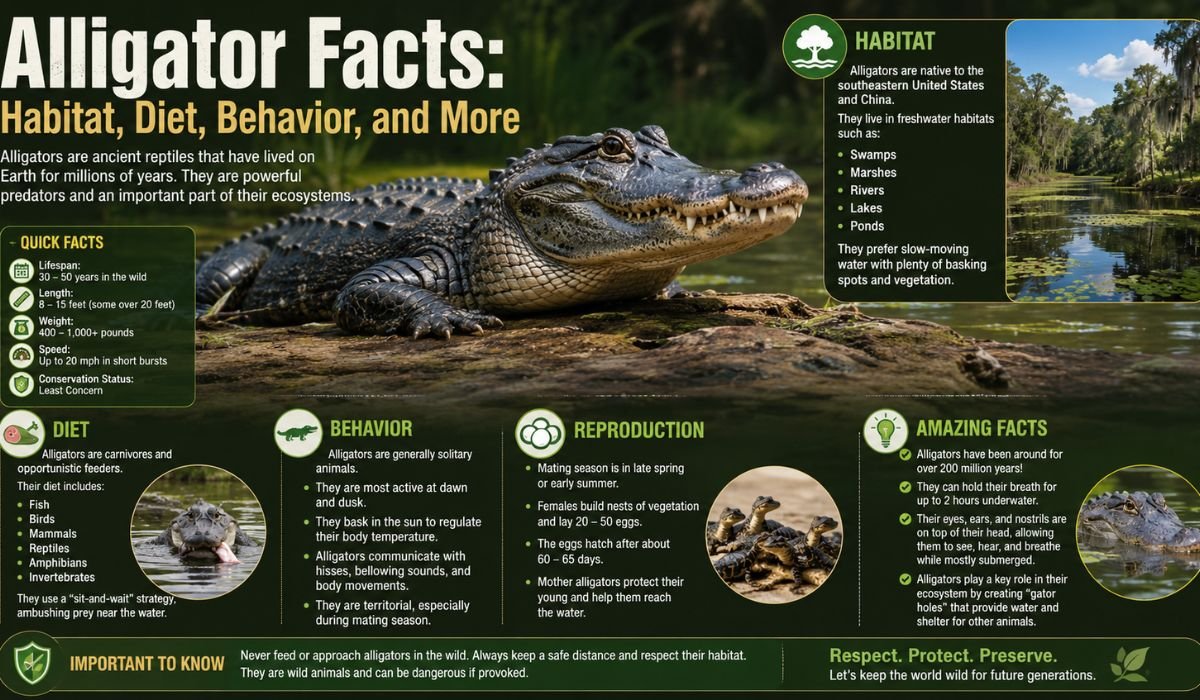
Alligators are powerful reptiles that have lived for millions of years, making them fascinating survivors of major environmental changes. These semi-aquatic animals are best known for their strong jaws, armored bodies, and ability to thrive in wetlands. Learning alligator facts can help explain how these reptiles hunt, communicate, reproduce, and survive in changing habitats.
Today, only two living alligator species are recognized: the American alligator and the Chinese alligator. Although they share many characteristics, they live in very different parts of the world and have different conservation histories.
Alligator Facts: Species and Classification
The American alligator is the larger and more widely distributed species. It is native to the southeastern United States, especially wetlands, lakes, rivers, swamps, and marshes. The Chinese alligator is much smaller and is native to a limited area around the lower Yangtze River in China.
One of the useful alligator facts is that the American alligator was once considered threatened because of hunting and habitat loss. Legal protection and conservation programs helped its populations recover in many areas. The Chinese alligator, however, remains one of the world’s most endangered crocodilian species.
American Alligator
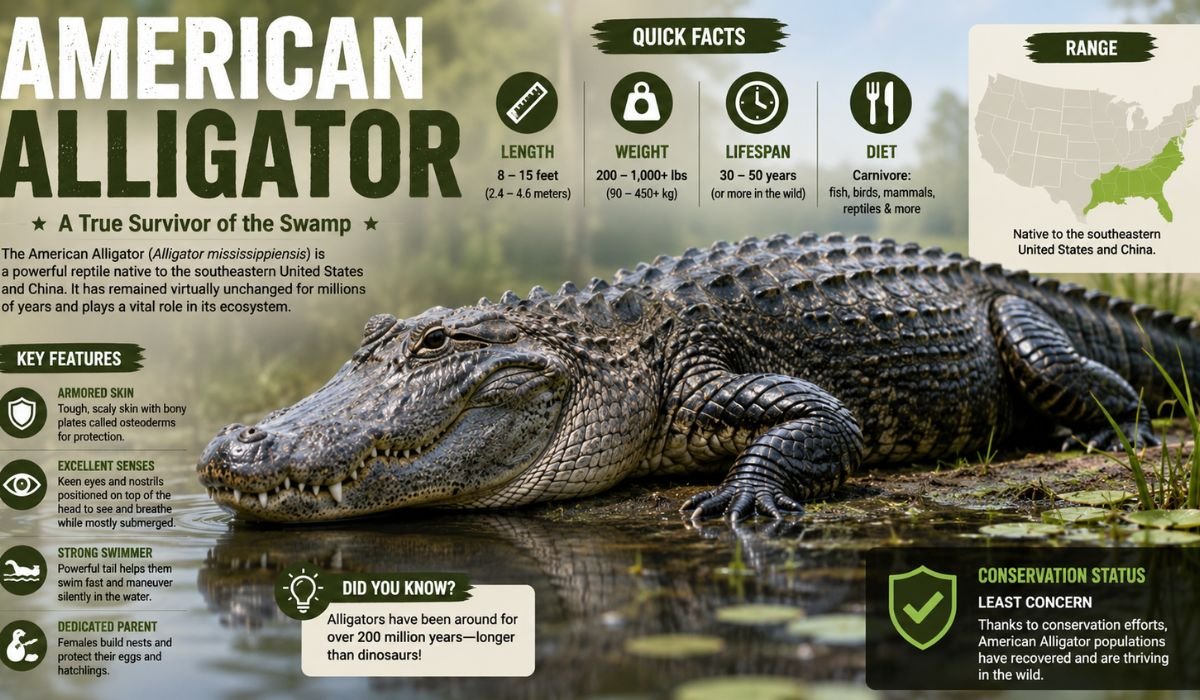
These alligator facts help explain why the American species is the best-known member of the group.
The American alligator can become very large, with males generally growing larger than females. Its broad, rounded snout distinguishes it from the narrower, more V-shaped snout commonly associated with crocodiles. Adults can live for several decades under suitable conditions.
Chinese Alligator
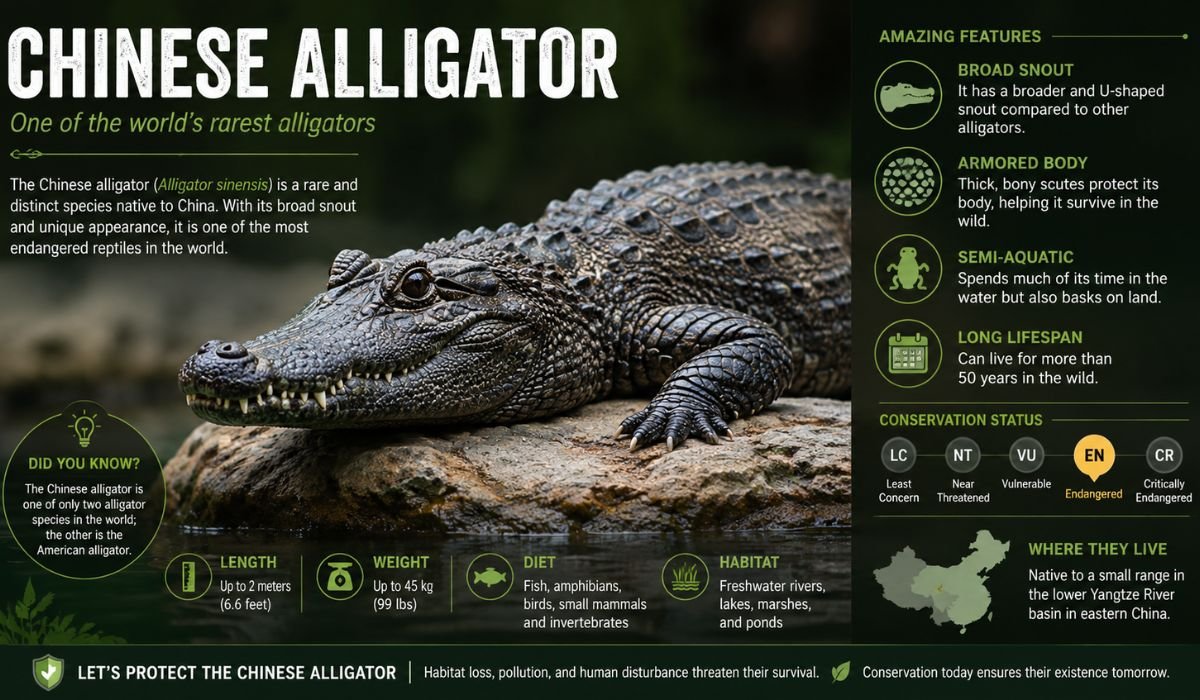
The Chinese alligator is considerably smaller and has a more compact body. It spends much of its time in slow-moving freshwater environments and may use burrows for shelter. Habitat loss and the reduction of suitable wetlands have made conservation especially important for this species.
Read Related Post: Owl Facts: Habitat, Diet, Behavior, and Adaptations
Habitat and Distribution
Alligators prefer freshwater or mildly brackish environments where food, cover, and suitable temperatures are available. American alligators can be found in ponds, marshes, swamps, canals, rivers, and lakes across parts of the southeastern United States.
A key point among alligator facts is that these reptiles are highly adaptable. They may live in natural wetlands as well as human-modified waterways when conditions are suitable. They often choose areas with shallow water, vegetation, muddy banks, and places where they can bask.
Alligators are ectothermic, meaning their body temperature is influenced by the environment. They may bask in the sun to warm themselves and move into water or shade when they become too warm. During colder periods, they become less active and may remain in sheltered areas.
Alligator Diet and Hunting
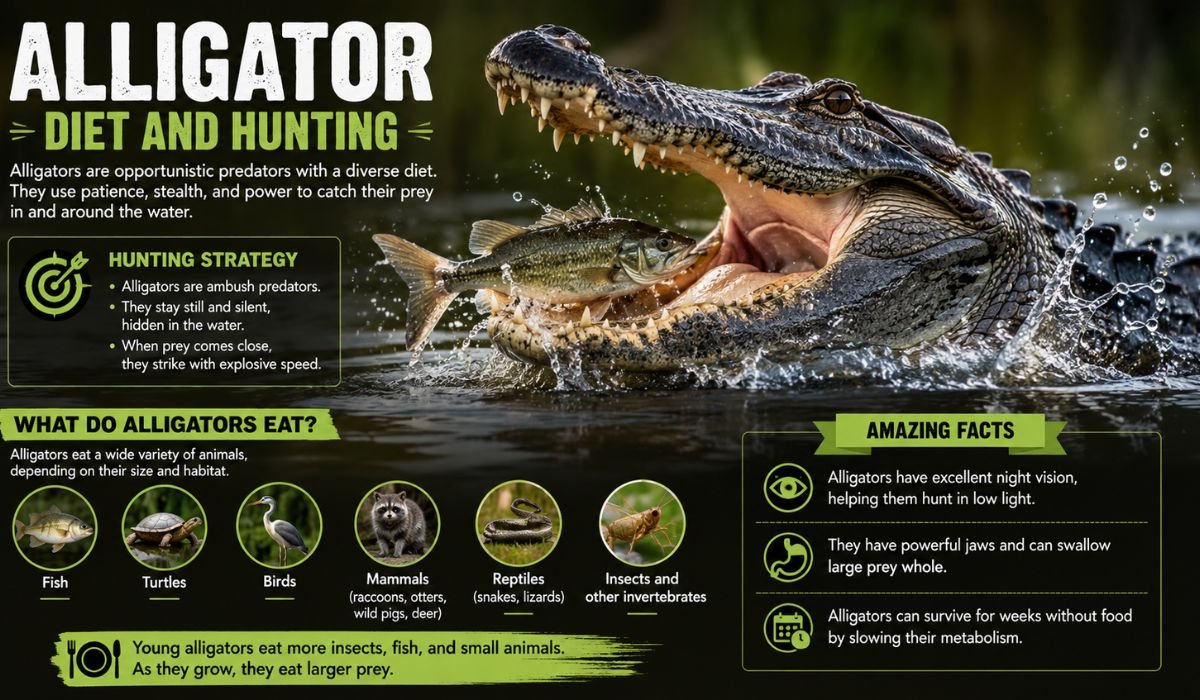
Alligators are opportunistic predators. Their diet changes with age, body size, habitat, and what prey is available. Young alligators often eat insects, small fish, crustaceans, frogs, and other small animals. Larger individuals can take fish, turtles, birds, mammals, and other suitable prey.
Their powerful jaws are designed to grab and hold prey. They do not chew food in the same way humans do. Instead, they may swallow smaller prey whole or tear larger food into manageable pieces.
Among interesting alligator facts is their ability to remain remarkably still while waiting for an opportunity to feed. Their eyes, nostrils, and ears are positioned high on the head, allowing them to stay partly submerged while monitoring their surroundings.
Behavior and Communication
Despite their intimidating appearance, alligators have complex behaviors. They communicate through body movements, sounds, postures, and chemical signals. Adults may use vocalizations during courtship, territorial interactions, or other social situations.
Young alligators can produce calls that help their mothers locate them. Adults may also make low-frequency sounds that can travel through water and surrounding environments.
Basking is another common behavior. Alligators often leave the water and rest on banks or other warm surfaces. This helps regulate their body temperature and can also support digestion and normal body functions.
Physical Adaptations
Alligators have several adaptations that make them effective aquatic predators. Their muscular tails provide strong propulsion in water, while their webbed feet help with movement. Their eyes and nostrils are positioned so they can remain mostly underwater while still seeing and breathing.
Their skin is protected by tough scales and bony plates called osteoderms. These structures provide protection and contribute to the animal’s armored appearance.
Another fascinating point among alligator facts is their powerful bite. Their jaws can generate tremendous force when closing, allowing them to capture and hold prey effectively. However, the muscles used to open the jaws are much less powerful than those used to close them.
Reproduction and Baby Alligators
Alligator breeding usually occurs during warmer months. Males may attract females through vocalizations, movements, and displays. After mating, the female builds a nest from vegetation, soil, and other materials.
The nest provides warmth as plant material decomposes. The female lays a clutch of eggs and generally remains nearby to protect the nest from predators and disturbance.
Temperature during incubation influences the sex of developing alligator hatchlings. This is an important example of how environmental conditions can affect reproduction in reptiles.
When the eggs hatch, young alligators make calls that can signal their presence. The mother may respond and help protect the hatchlings as they begin life in the water. Young alligators face many predators, so surviving the early years is challenging.
Lifespan and Growth
Alligators grow throughout much of their lives, although their growth rate slows as they become older. Young animals generally grow faster when food and environmental conditions are favorable.
Some alligators can live for several decades. Their long lifespan gives them many opportunities to reproduce, but survival still depends on food availability, habitat quality, disease, injuries, and human activity.
One of the lesser-known alligator facts is that size does not increase at the same rate throughout an individual’s life. Growth is usually faster when an alligator is young and gradually slows with age.
Alligators and Crocodiles
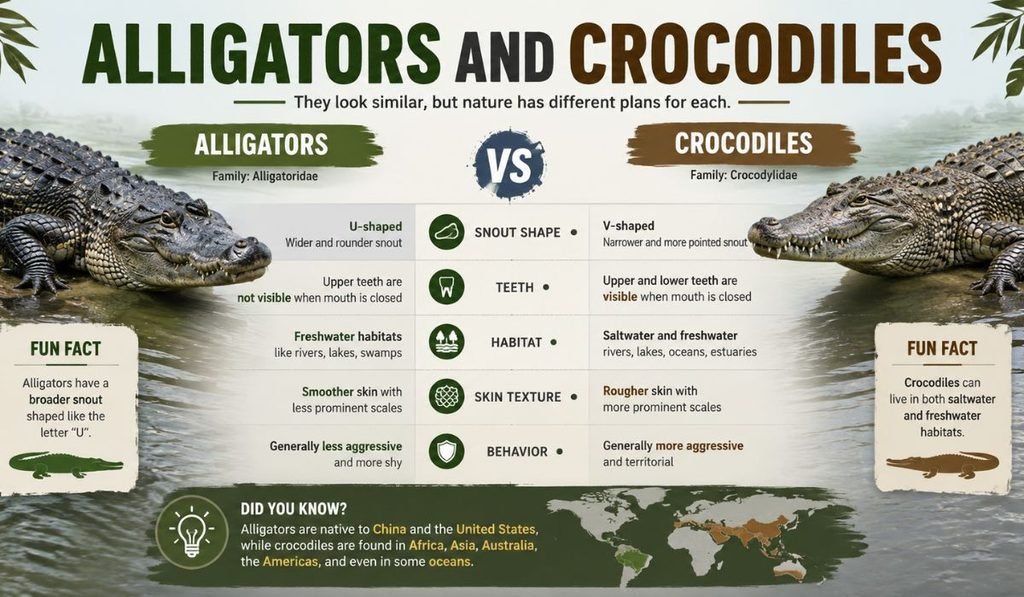
Alligators and crocodiles are closely related, but they are not the same animal. Alligators typically have broader, U-shaped snouts, while many crocodiles have longer, narrower snouts. Another commonly used difference is how the lower teeth appear when the mouth is closed.
Alligators are also generally associated with freshwater habitats, although American alligators can tolerate some brackish conditions. Crocodiles are often more tolerant of saltwater environments.
These differences help identify the two groups, although individual species can vary.
Role in the Ecosystem
Alligators play an important role in wetland ecosystems. As predators, they influence populations of fish, reptiles, birds, and mammals.
Alligator-made holes and depressions can hold water during dry periods. These small wet areas may provide valuable habitat for fish, turtles, birds, insects, and other wildlife.
By participating in food webs and modifying their surroundings, alligators contribute to the health and diversity of wetland environments.
Conservation and Human Interaction
Conservation has played an important role in the recovery of American alligator populations. Habitat protection, regulated hunting, public education, and legal protections have helped maintain populations across much of their range.
The Chinese alligator faces a much more serious conservation challenge because of its extremely limited natural habitat. Captive breeding and habitat protection are among the approaches used to support its survival.
An important part of responsible alligator facts is understanding that wild animals should be observed from a safe distance. Feeding wild alligators can make them associate people with food and may increase the risk of dangerous encounters. Local wildlife rules should always be followed.
FAQ’s
Are alligators dangerous?
Alligators are wild predators and can be dangerous, especially when people approach, feed, or disturb them. Keeping a safe distance and following local wildlife guidance reduces the risk of conflict.
What do alligators eat?
One of the most useful alligator facts is that their diet changes with age and available prey.
They eat a wide range of prey, including fish, insects, frogs, turtles, birds, crustaceans, and mammals. Their diet changes as they grow.
Where do alligators live?
American alligators live mainly in the southeastern United States, while Chinese alligators have a very restricted range in China. Both species depend heavily on freshwater habitats.
How long can alligators live?
Alligators can live for several decades when conditions are favorable. Their lifespan varies depending on species, habitat, health, and other environmental factors.
How do alligators stay warm?
Because they are ectothermic, alligators rely on external heat. They commonly bask in sunlight to warm their bodies and move into water or shade to cool down.
Conclusion
Taken together, these alligator facts show how closely the animals are connected to healthy wetlands.
Alligators are remarkable reptiles with specialized adaptations for life in wetlands. From their powerful jaws and armored skin to their hunting strategies, nesting behavior, and role in ecosystems, they have many features worth studying. These alligator facts also show why protecting wetland habitats is important for both wildlife and people.
The American alligator demonstrates how conservation can help a species recover, while the Chinese alligator highlights the serious consequences of habitat loss. Understanding these animals encourages safer human-wildlife interactions and supports greater appreciation for the ecosystems they help shape.

Hi, I’m Amelia, an SEO and content specialist with several years of experience researching and creating informative content for online audiences. At Animal Attack Facts, I focus on animal behavior, animal attacks on humans, and interesting facts about land animals, marine animals, birds, reptiles, and insects. My goal is to provide clear, useful, and engaging information that helps readers better understand wildlife and stay informed about animal encounters.
1 thought on “Alligator Facts: Habitat, Diet, Behavior, and More”