
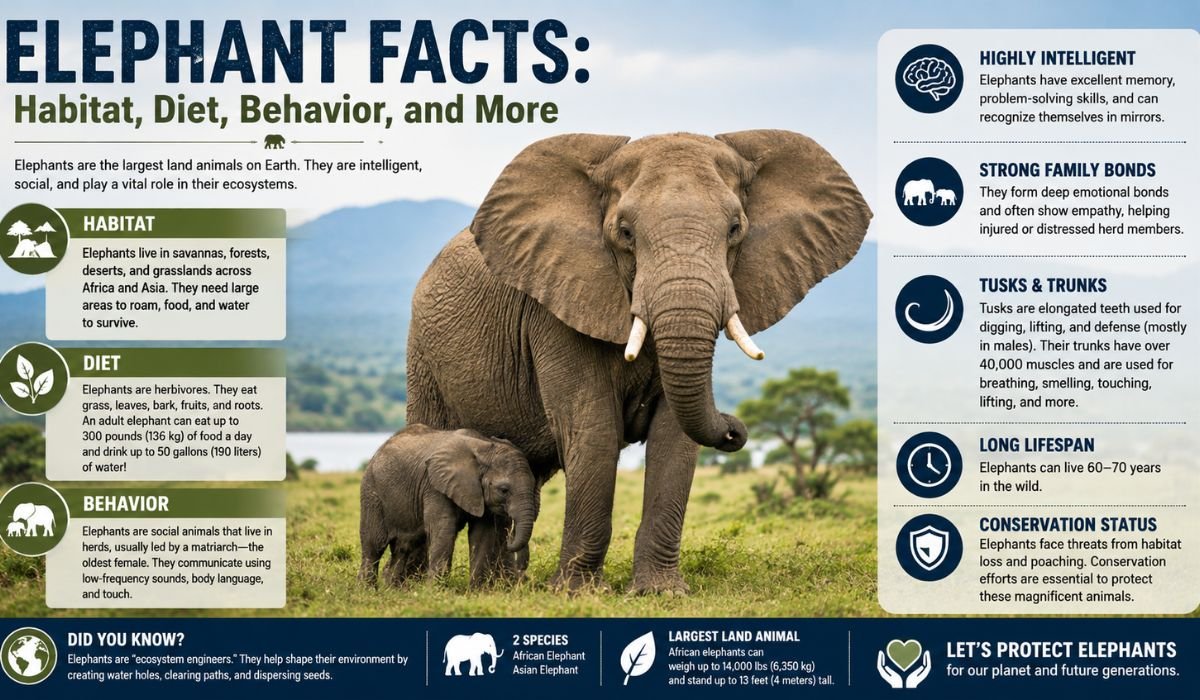
Elephants are among the largest land animals on Earth and are known for their intelligence, social behavior, remarkable memory, and powerful trunks. From the African savannas to Asian forests, these gentle giants play an important role in their ecosystems. Learning elephant facts can help us understand how these animals live, communicate, find food, and survive in challenging environments.
There are three living elephant species: the African savanna elephant, African forest elephant, and Asian elephant. Although they share many characteristics, each species has adaptations suited to its habitat. In this guide, we will explore elephant facts about habitat, diet, behavior, physical features, communication, reproduction, and conservation.
Elephant Facts About Species and Physical Features
Elephants belong to the family Elephantidae. The African savanna elephant is the largest living elephant species, while the African forest elephant is smaller and adapted to dense forests. The Asian elephant is generally smaller than African elephants and has distinctive physical features.
One of the most recognizable elephant facts is that elephants have long trunks. The trunk is a flexible combination of the nose and upper lip and is used for breathing, smelling, drinking, feeding, touching, and moving objects. An elephant’s trunk contains thousands of muscles, allowing it to perform both powerful and delicate movements.
Elephants also have large ears that help regulate body temperature. African elephants generally have larger ears than Asian elephants. Their ears can release heat when blood flows through the many blood vessels close to the surface.
Another interesting feature is the elephant’s tusks. Tusks are elongated teeth that can be used for digging, moving objects, stripping bark, and defense. In species and populations where tusks occur, their size and presence can vary.
Elephant Habitat
Elephants live in a variety of environments. African savanna elephants are commonly associated with grasslands, savannas, woodlands, and areas near water. African forest elephants live primarily in the tropical forests of central and western Africa. Asian elephants inhabit forests, grasslands, scrublands, and other landscapes across parts of South and Southeast Asia.
Habitat is one of the most important elephant facts because these animals need large areas to find enough food and water. Their movements can cover considerable distances, especially when seasonal conditions change.
Water availability strongly influences elephant movements. Elephants may visit rivers, lakes, wetlands, and watering holes to drink and cool themselves. They can also travel long distances between feeding and drinking areas.
Unfortunately, habitat loss and fragmentation have reduced suitable elephant habitat in many regions. Roads, agriculture, settlements, and other forms of development can divide landscapes into smaller areas, making it harder for elephant populations to move safely.
Read Related Post: Alligator Facts: Habitat, Diet, Behavior, and More
What Do Elephants Eat?
Elephants are herbivores, meaning they eat plant material rather than hunting other animals. Their diet can include grasses, leaves, fruits, bark, roots, branches, and other vegetation. The exact foods available depend on the species and its environment.
A useful elephant fact is that these animals can spend many hours each day feeding because of their enormous energy requirements. Their trunks help them collect food from the ground and reach vegetation higher up.
Their strong molar teeth grind tough plant material, helping elephants process the large amounts of vegetation they consume.
Elephant Behavior and Social Life
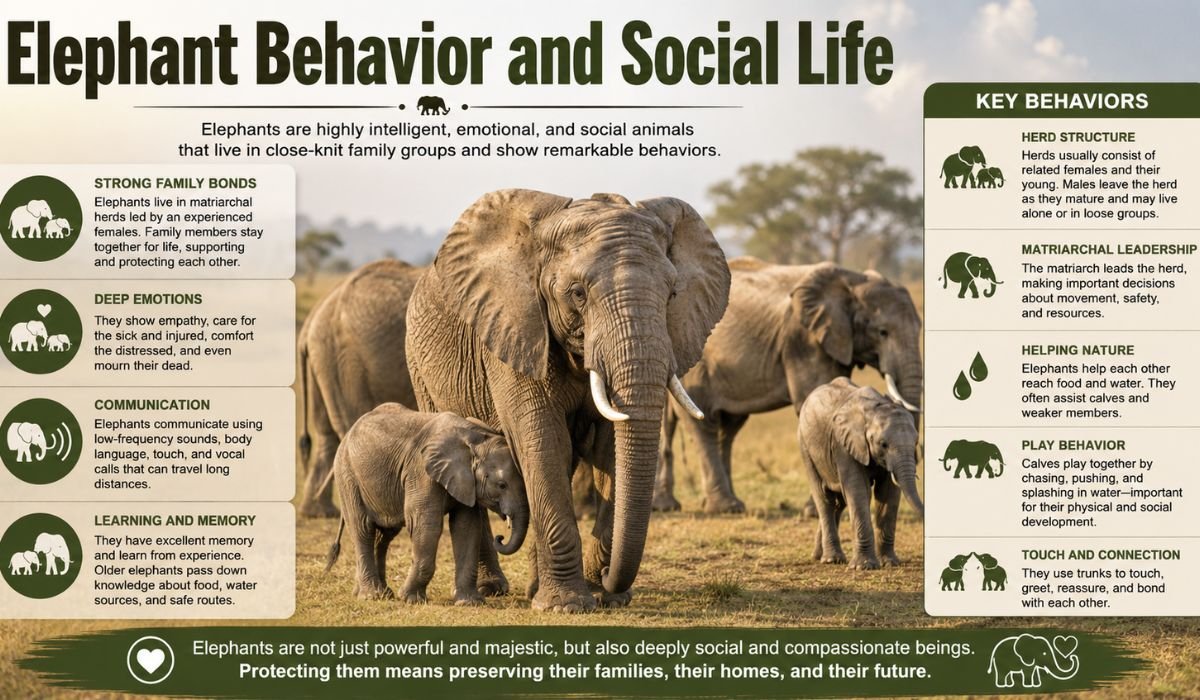
Elephants are highly social animals. Female elephants and their young commonly live in family groups, which are often led by an experienced adult female called a matriarch. Adult males usually become more independent as they mature and may spend much of their time alone or in male groups.
Social relationships are central to elephant facts about behavior. Elephants can recognize and remember other individuals, maintain family bonds, and cooperate in different situations.
Elephants also show behaviors associated with curiosity and problem-solving. Their large brains and complex social lives have made them an important subject of scientific research.
How Do Elephants Communicate?
Communication is another fascinating area of elephant facts. Elephants use sounds, body movements, touch, and chemical signals to communicate with one another.
They produce a variety of vocalizations, including the familiar trumpet. They can also produce very low-frequency sounds known as infrasound. Some of these sounds can travel long distances, allowing elephants to communicate even when members of a group are not close together.
Body language is important too. An elephant may use its ears, trunk, posture, or movements to signal excitement, alertness, aggression, or other social information.
Touch also strengthens relationships. Elephants may use their trunks to touch or greet members of their family group.
Elephant Reproduction and Baby Elephants
Female elephants have a long pregnancy compared with most other mammals. An elephant pregnancy lasts roughly 22 months, making it one of the longest gestation periods among land mammals.
Most mothers give birth to a single calf. Newborn calves are dependent on their mothers and other members of the family group for protection and guidance. Young elephants gradually learn how to use their trunks effectively and how to find suitable food and water.
One of the most heartwarming elephant facts is the importance of allomothering, where other females in the family group may help care for and protect calves. This cooperative behavior can provide young elephants with additional support as they grow.
How Intelligent Are Elephants?
Elephants are widely recognized for impressive cognitive abilities. They can learn, remember locations and individuals, solve problems, and adapt their behavior to different situations.
Memory is particularly important for elephants because experienced individuals can help groups navigate familiar landscapes and locate resources. Older members may have valuable knowledge about water sources and seasonal conditions.
Are Elephants Dangerous?
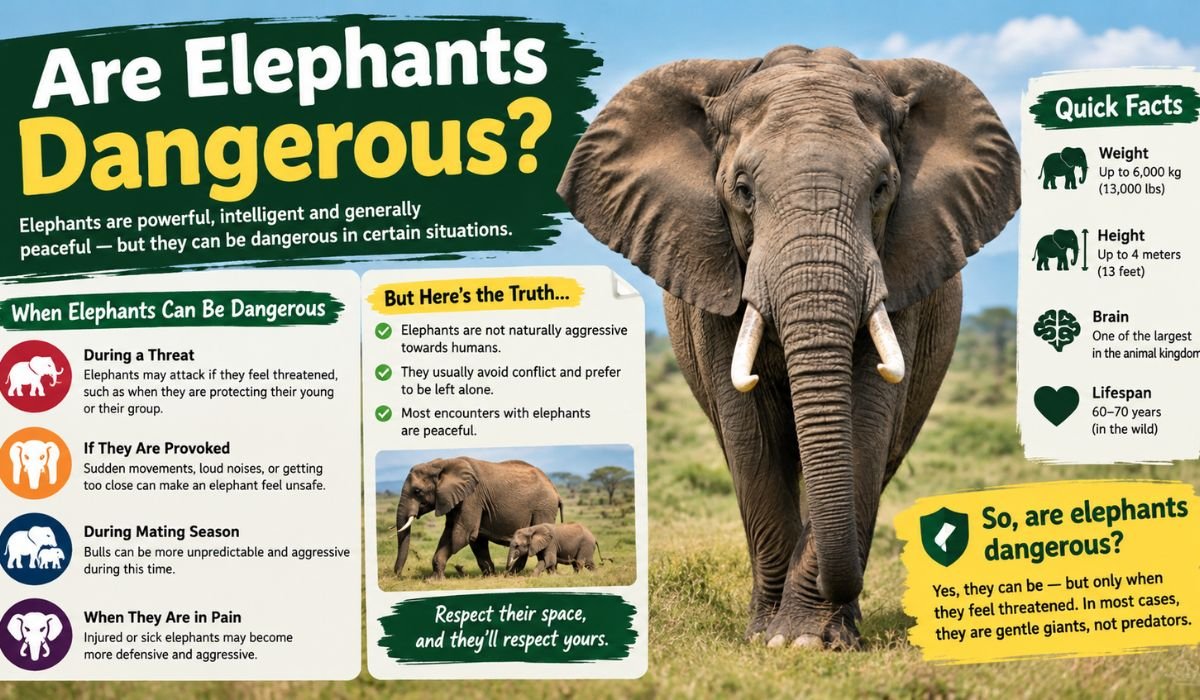
Despite their generally social and peaceful nature, elephants are powerful wild animals and can become dangerous when they feel threatened, surprised, or stressed. This is especially important to remember when people encounter elephants in the wild.
Understanding elephant facts about behavior can help explain why responsible wildlife viewing is important. People should keep a safe distance, avoid blocking an elephant’s path, and follow instructions from trained guides or wildlife authorities.
Why Are Elephants Important to Ecosystems?
Elephants are often described as ecosystem engineers because their activities can change habitats in ways that benefit other species. They can knock down vegetation, create pathways, dig for water, and disperse seeds through their movements and waste.
This ecological role is one of the most important elephant facts to understand. Protecting elephants can therefore help protect many other plants and animals that share their ecosystems.
Threats and Elephant Conservation
Elephants face several major threats. Habitat loss and fragmentation can reduce access to food, water, and migration routes. Illegal killing for ivory has also harmed elephant populations, while conflict can occur when elephants and people compete for space and resources.
Conservation programs focus on protecting habitats, reducing illegal wildlife trade, improving connections between fragmented habitats, and helping communities live more safely alongside elephants.
Interesting Elephant Facts
Here are some quick elephant facts to remember:
- There are three living elephant species: African savanna, African forest, and Asian elephants.
- Elephants are the largest living land animals.
- Their trunks are used for breathing, smelling, drinking, feeding, and touching.
- Elephants are herbivores and eat a wide variety of plant material.
- Female elephants often live in family groups led by a matriarch.
- Adult males commonly live more independently after reaching maturity.
- Elephant pregnancy lasts about 22 months.
- Elephants communicate using sounds, touch, body language, and chemical signals.
- Some elephant calls contain very low frequencies that can travel long distances.
- Elephants can play an important role in shaping their ecosystems.
FAQ’s
How many elephant species are there?
There are three recognized living elephant species: the African savanna elephant, African forest elephant, and Asian elephant. They differ in size, habitat, and physical characteristics.
What do elephants eat?
Elephants eat plants, including grasses, leaves, fruits, bark, roots, and branches. Their diets vary according to species, habitat, and seasonal food availability.
Where do elephants live?
African elephants live in parts of sub-Saharan Africa, while Asian elephants are found in parts of South and Southeast Asia. Their habitats include forests, grasslands, savannas, and other landscapes.
How long is an elephant pregnant?
An elephant pregnancy lasts approximately 22 months. This long development period allows the calf to be relatively well developed at birth.
Why are elephants important?
Elephants influence vegetation, disperse seeds, create pathways, and help shape habitats. Their presence can affect many other species within an ecosystem.
Conclusion
Elephants are extraordinary animals with complex social lives, strong family bonds, impressive physical abilities, and important ecological roles. From their powerful trunks and distinctive communication to their long pregnancies and remarkable memories, there is much to discover about them.
These elephant facts show why elephants deserve protection and careful study. Conserving their habitats, reducing human-wildlife conflict, and stopping illegal ivory trade can help ensure that future generations continue to see these remarkable animals in the wild.

Hi, I’m Amelia, an SEO and content specialist with several years of experience researching and creating informative content for online audiences. At Animal Attack Facts, I focus on animal behavior, animal attacks on humans, and interesting facts about land animals, marine animals, birds, reptiles, and insects. My goal is to provide clear, useful, and engaging information that helps readers better understand wildlife and stay informed about animal encounters.
1 thought on “Elephant Facts: Habitat, Diet, Behavior, and More”