
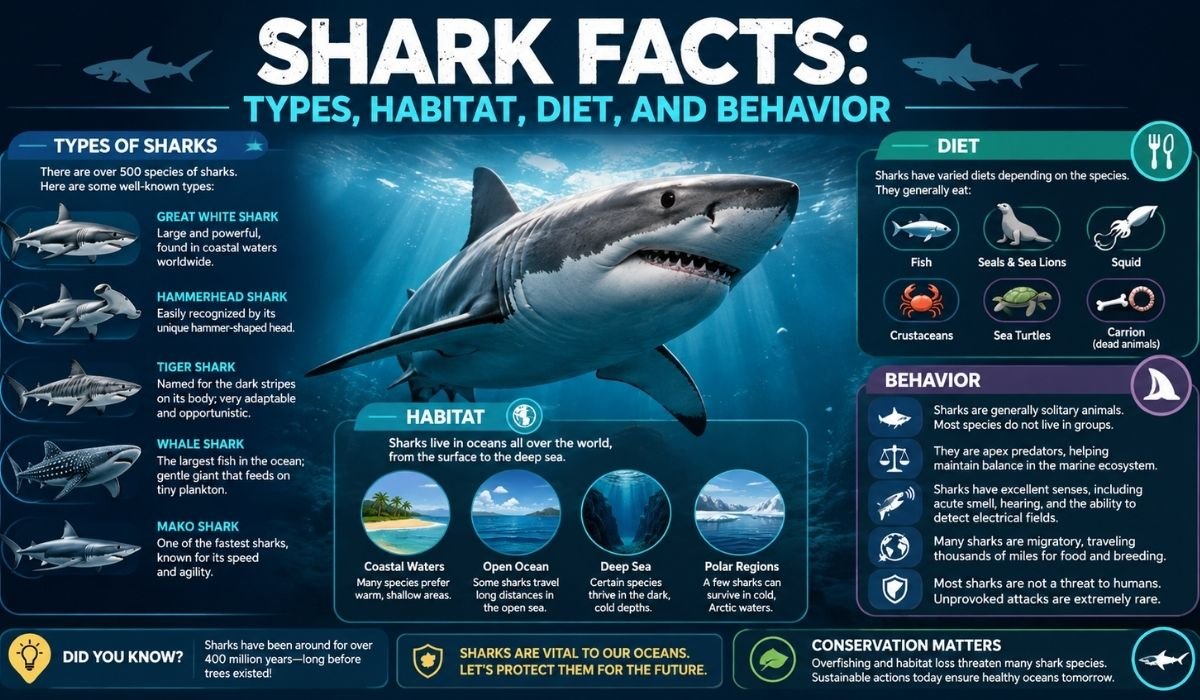
Sharks are among the most fascinating animals in the ocean. They have lived in Earth’s seas for hundreds of millions of years and have developed remarkable adaptations that help them survive in different marine environments. From the enormous whale shark to the powerful great white shark, different species have unique body shapes, diets, behaviors, and habitats.
In this guide, we explore shark facts about their types, habitats, diet, behavior, physical adaptations, reproduction, and role in marine ecosystems. Whether you are interested in sharks for their unusual biology or simply want to learn more about these famous predators, these facts provide a useful overview of their lives beneath the waves.
What Are Sharks?
Sharks are cartilaginous fish, meaning their skeletons are made primarily of cartilage rather than hard bone. They belong to the class Chondrichthyes, which also includes rays and skates.
One of the most interesting shark facts is that sharks have existed for an extremely long time. Their ancestors appeared long before dinosaurs dominated Earth. Modern sharks have evolved into hundreds of different species, ranging from small deep-sea species to massive filter-feeding sharks.
Sharks breathe using gills and generally need water to pass over their gill structures so they can obtain oxygen. Their streamlined bodies, fins, teeth, and highly developed senses make them well adapted to life in the ocean.
Shark Facts About Different Types
There are hundreds of known shark species, and they vary greatly in size, appearance, behavior, and feeding habits.
Great White Shark
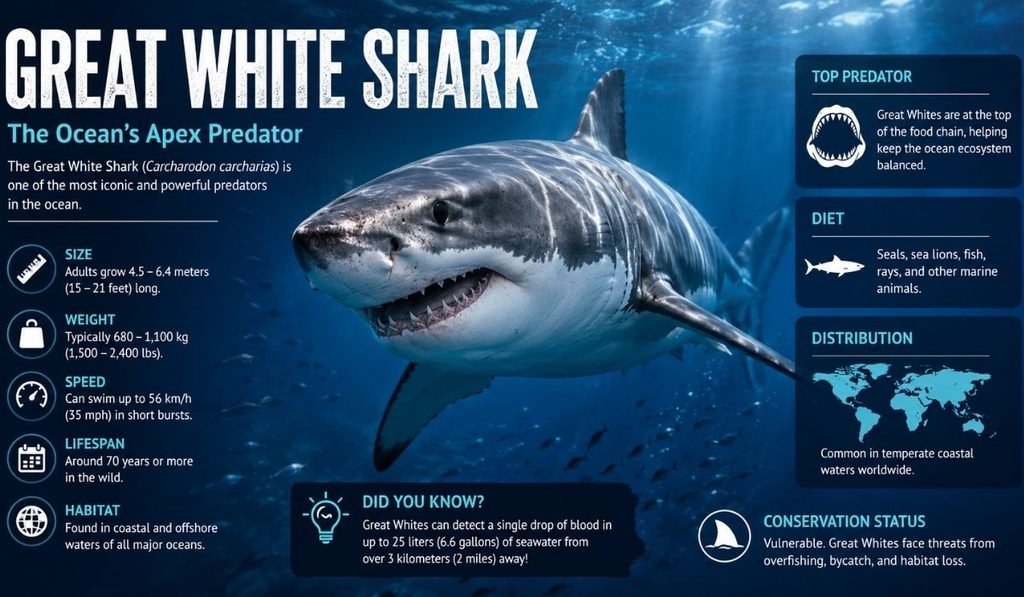
The great white shark is one of the best-known shark species. It is a powerful predator with a streamlined body, large jaws, and rows of sharp teeth. Great white sharks are found in several coastal and offshore regions around the world.
They commonly feed on fish and marine animals, with larger individuals often hunting seals and other marine mammals.
Read Related Post: Elephant Facts: Habitat, Diet, Behavior, and More
Whale Shark
The whale shark is the largest living shark species and one of the largest fish in the world. Despite its enormous size, it is generally a gentle filter feeder.
Whale sharks consume plankton, tiny fish, and other small organisms by filtering food from large amounts of water. They can be found in warm tropical and subtropical oceans.
Hammerhead Sharks
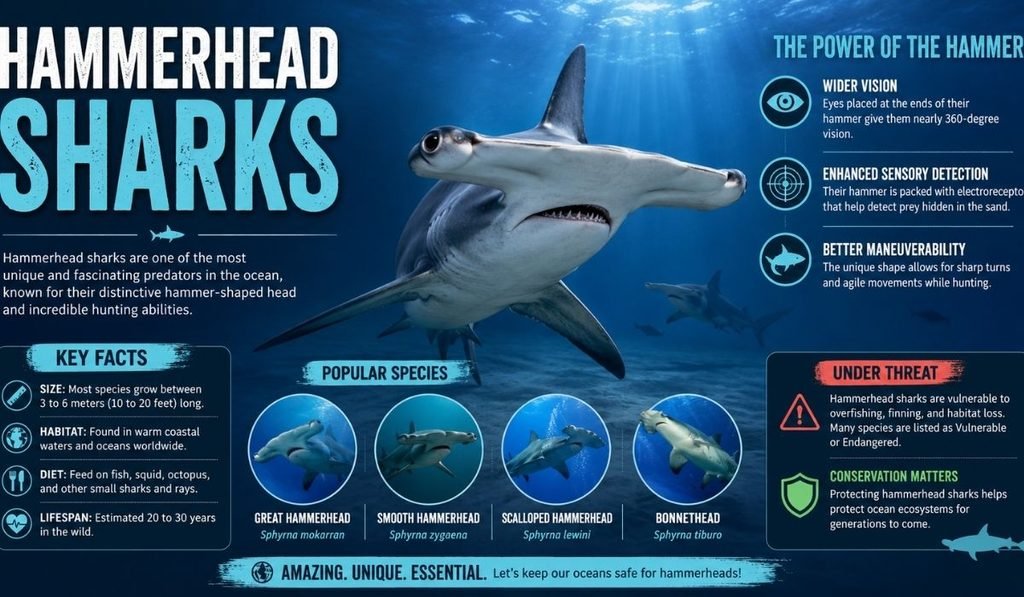
Hammerhead sharks are recognizable because of their unusual hammer-shaped heads. Several species belong to the hammerhead group.
Tiger Shark
Their distinctive head shape may provide advantages when locating prey and sensing their surroundings. Hammerheads can inhabit coastal waters, continental shelves, and deeper marine environments depending on the species.
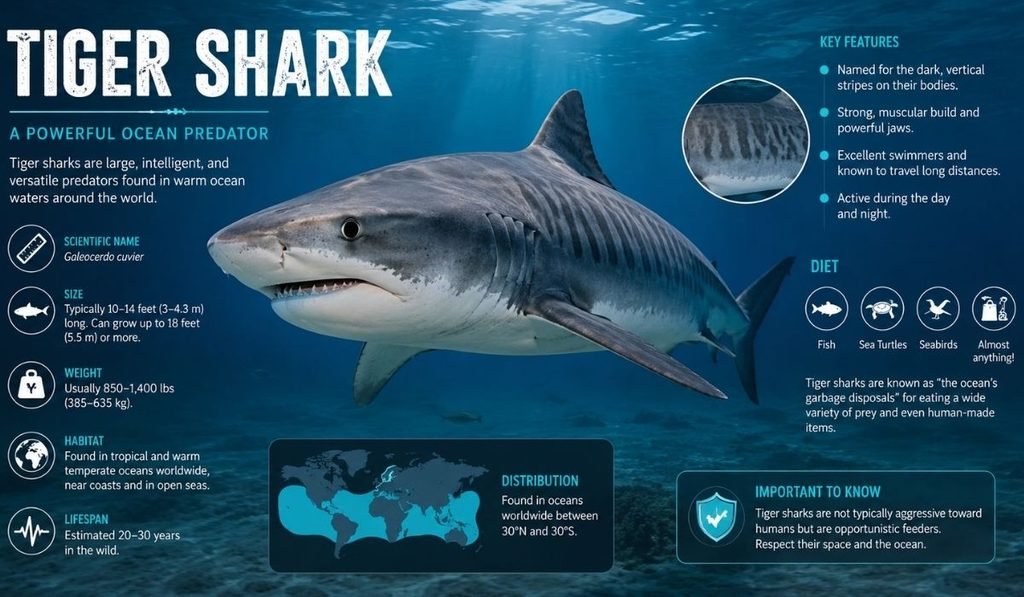
Tiger sharks are large predators named for the dark vertical patterns that are particularly noticeable in younger individuals. They are widely distributed in warm and temperate waters.
Tiger sharks have varied diets and may consume fish, turtles, seabirds, and other marine animals.
Shark Habitat
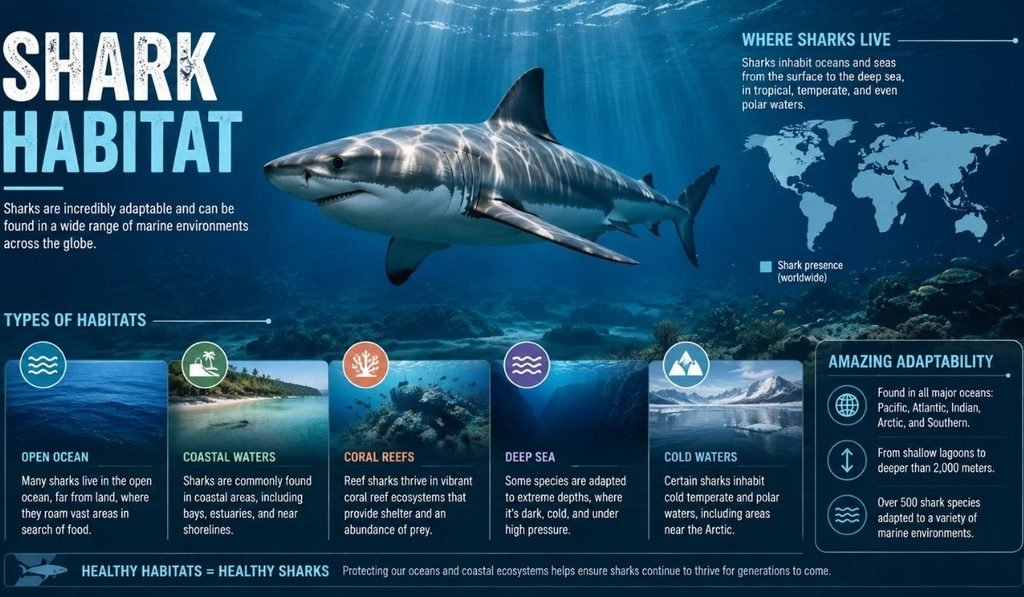
Sharks live in almost every major ocean and can occupy a wide range of marine habitats. Some species prefer shallow coastal waters, while others spend much of their lives in the open ocean or deep sea.
Habitat preferences often depend on the species. Reef-associated sharks may remain near coral reefs and rocky areas, while pelagic sharks can travel across large areas of open water.
Some sharks are adapted to colder environments, whereas others are mainly found in warm tropical waters. Their ability to occupy such different habitats is one reason sharks are found across much of the world’s oceans.
Young sharks may also use shallow coastal habitats as nursery areas. These locations can provide food and protection during early stages of life.
What Do Sharks Eat?
Shark diets vary significantly between species. Many people think every shark is a large predator that hunts big animals, but this is not true.
Some sharks primarily eat fish, squid, crustaceans, or other smaller marine animals. Larger predatory species may hunt seals, sea turtles, seabirds, or other marine mammals.
The whale shark and other filter-feeding sharks have a completely different feeding strategy. Instead of chasing large prey, they consume plankton and tiny organisms by filtering seawater.
Some shark species are opportunistic feeders and can consume a wide variety of available foods. Their teeth and jaws are generally adapted to the type of food they eat.
Shark Behavior
Shark behavior differs considerably among species. Some sharks are mostly solitary, while others may gather in groups when feeding, migrating, or reproducing.
Many sharks are active swimmers and can travel long distances. Certain species undertake seasonal migrations to reach feeding or breeding areas.
Another fascinating aspect of shark facts is their ability to use sophisticated senses to locate prey and navigate their surroundings. Sharks can detect chemical signals in water and are sensitive to vibrations and movements.
Their behavior is influenced by factors such as food availability, water temperature, reproduction, age, and environmental conditions.
How Sharks Communicate
Sharks do not communicate in the same way humans do, but they can respond to body movements, chemical signals, environmental changes, and other sensory information.
Changes in posture or swimming behavior may also play a role in interactions between sharks.
Shark Senses and Adaptations
Sharks have several specialized adaptations that help them survive in marine environments.
Their sense of smell is highly developed, allowing them to detect certain chemicals in the water. They also have a sensory system called the lateral line, which helps detect vibrations and movements around their bodies.
Sharks possess another remarkable sensory ability through structures called the ampullae of Lorenzini. These organs allow them to detect weak electrical signals produced by other animals.
Their streamlined bodies reduce resistance as they swim, while fins help provide stability, steering, and movement.
Many sharks also continuously replace lost or damaged teeth. This is particularly useful for species that regularly use their teeth while feeding.
How Do Sharks Reproduce?
Shark reproduction varies among species. Depending on the species, sharks may lay eggs, give birth to live young, or produce eggs that develop inside the mother’s body before the young are born.
The number of offspring also differs greatly. Some species produce relatively few young, while others may have larger litters.
Young sharks are generally born or hatch with the basic characteristics needed to survive independently. Unlike many mammals, sharks do not typically provide extended parental care after birth.
Slow growth and relatively late maturity in some shark species can make certain populations vulnerable when numbers decline.
Are Sharks Important to the Ecosystem?
Sharks play important roles in marine ecosystems. Many shark species are predators that help influence the abundance and behavior of other marine animals.
By feeding on different species, sharks can contribute to the natural balance of marine food webs. Their presence can influence where prey animals feed, move, and gather.
Not every shark is a top predator, however. Filter-feeding sharks have different ecological roles because they consume plankton and small organisms.
Protecting healthy shark populations is therefore important not only for sharks themselves but also for the broader marine ecosystems in which they live.
Are Sharks Dangerous to Humans?
Sharks are powerful wild animals, but the idea that they constantly seek out humans is inaccurate. Most shark species do not pose a significant threat to people.
Shark encounters with humans are uncommon compared with the enormous number of people who enter the ocean each year. Many shark species are also too small or have diets that do not include large marine mammals.
It is still important to treat sharks as wild animals and give them plenty of space. Avoiding attempts to touch, chase, feed, or otherwise disturb wildlife is a sensible way to reduce risks for both people and animals.
Interesting Shark Facts
Here are several interesting shark facts to remember:
- Sharks are cartilaginous fish rather than bony fish.
- Sharks have existed for hundreds of millions of years.
- There are hundreds of recognized shark species.
- The whale shark is the largest living shark species.
- Some sharks are filter feeders rather than active hunters.
- Sharks can detect vibrations and movement in the water.
- Some sharks can detect weak electrical signals produced by other animals.
- Many sharks continuously replace lost teeth.
- Shark species live in tropical, temperate, and cold marine environments.
- Some sharks travel long distances during migrations.
- Shark diets range from plankton and small fish to larger marine animals.
- Different shark species have very different behaviors and habitats.
FAQ’s
How many shark species are there?
There are hundreds of recognized shark species, and scientists continue to study and classify shark diversity. These species range from tiny sharks to enormous filter feeders.
What is the largest shark?
The whale shark is the largest living shark species. It is a filter feeder that primarily consumes plankton and other small organisms.
What do sharks eat?
Shark diets depend on the species. They may eat fish, squid, crustaceans, plankton, sea turtles, seabirds, or marine mammals.
Where do sharks live?
Sharks live throughout the world’s oceans. Different species occupy coastal waters, coral reefs, open ocean environments, deep-sea habitats, and other marine regions.
Are all sharks dangerous?
No. Most shark species are not considered dangerous to humans. Sharks have diverse diets and behaviors, and many species are relatively small or feed on organisms that are not humans.
How long have sharks existed?
Shark ancestors appeared hundreds of millions of years ago. Their long evolutionary history makes them one of the oldest major groups of vertebrate animals still living today.
Conclusion
Sharks are remarkably diverse marine animals with specialized adaptations, complex behaviors, and important ecological roles. From the enormous whale shark to the highly recognizable hammerhead and great white shark, each species has developed characteristics suited to its environment and lifestyle.
These shark facts show that sharks are much more diverse than their reputation as ocean predators suggests. They can be predators, filter feeders, coastal residents, deep-water species, or long-distance travelers. Understanding their habitats, diets, senses, and behaviors helps us appreciate their importance in healthy marine ecosystems and the need to protect ocean biodiversity.

Hi, I’m Amelia, an SEO and content specialist with several years of experience researching and creating informative content for online audiences. At Animal Attack Facts, I focus on animal behavior, animal attacks on humans, and interesting facts about land animals, marine animals, birds, reptiles, and insects. My goal is to provide clear, useful, and engaging information that helps readers better understand wildlife and stay informed about animal encounters.
1 thought on “Shark Facts: Types, Habitat, Diet, and Behavior”